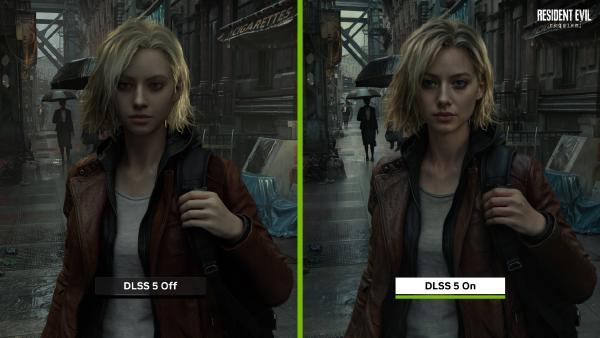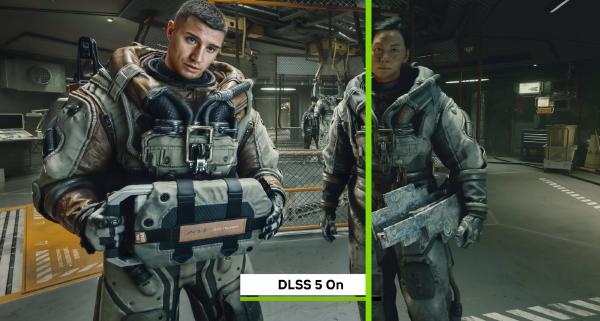
NVIDIA’s recent announcement regarding DLSS 5, showcased at the GTC 2026 event, has generated considerable buzz in , particularly for its potential to elevate graphics performance across various titles. As first reported by Wccftech, recent discussions suggest that this iteration of Deep Learning Super Sampling could feature a driver-level toggle, allowing gamers to activate or deactivate the technology with ease.
During a livestream hosted by PC World, attendees had the opportunity to view several demos utilizing DLSS 5. Captured footage of games such as Hogwarts Legacy from Avalanche Software, Starfield and Oblivion Remastered from Bethesda, and the latest Assassin’s Creed installment from Ubisoft demonstrated the impressive capabilities of the new technology. Notably, NVIDIA’s Zorah Tech demo, created in Unreal Engine 5, also showcased the enhanced visuals made possible by DLSS 5.
PC World’s Adam reported that he could seamlessly toggle DLSS 5 on and off during gameplay, a feature that could drastically alter how players interact with graphical settings. This flexibility promises to offer users greater control over their visual experiences, potentially enhancing performance without sacrificing quality.
The core advantage of DLSS 5 lies in its ability to utilize advanced AI algorithms to upscale lower-resolution images in real time, thereby providing players with smoother framerates and improved image fidelity. By incorporating a driver-level toggle, NVIDIA would effectively streamline the user experience, allowing both casual gamers and hardcore enthusiasts to customize their settings on the fly.
In terms of performance benchmarks, early impressions suggest that DLSS 5 could provide significant gains across a variety of hardware configurations. Tests conducted during the event indicated improved frame rates in graphically demanding titles, demonstrating that even older GPUs might benefit from the new technology. As DLSS continues to evolve, it is clear that NVIDIA aims to maintain its competitive edge in the realm of graphics performance.
However, the transition to a driver-level toggle will depend on several factors, including compatibility with existing hardware and the overall impact on system resources. As more developers begin to implement DLSS 5 in their titles, the real-world implications of this feature will likely become clearer.
NVIDIA’s commitment to enhancing gaming experiences goes beyond just raw performance. By focusing on user-friendly features like the potential driver-level toggle, the company is actively shaping how players engage with their favorite games. The feedback gathered from GTC 2026 could play a pivotal role in refining DLSS 5 before its wider rollout.
As we look forward to the future of graphics technology, the inclusion of DLSS 5 across major titles promises to reshape the gaming landscape. With its blend of performance and flexibility, NVIDIA is positioning itself as a leader in the next generation of visual fidelity.
NVIDIA, a titan in the graphics processing unit market, has long been at the forefront of gaming technology development. The introduction of DLSS 5 is just one more step in its ongoing mission to enhance the gaming experience across a variety of platforms and titles.
Image credit: Wccftech
This article was generated with AI assistance and reviewed for accuracy.