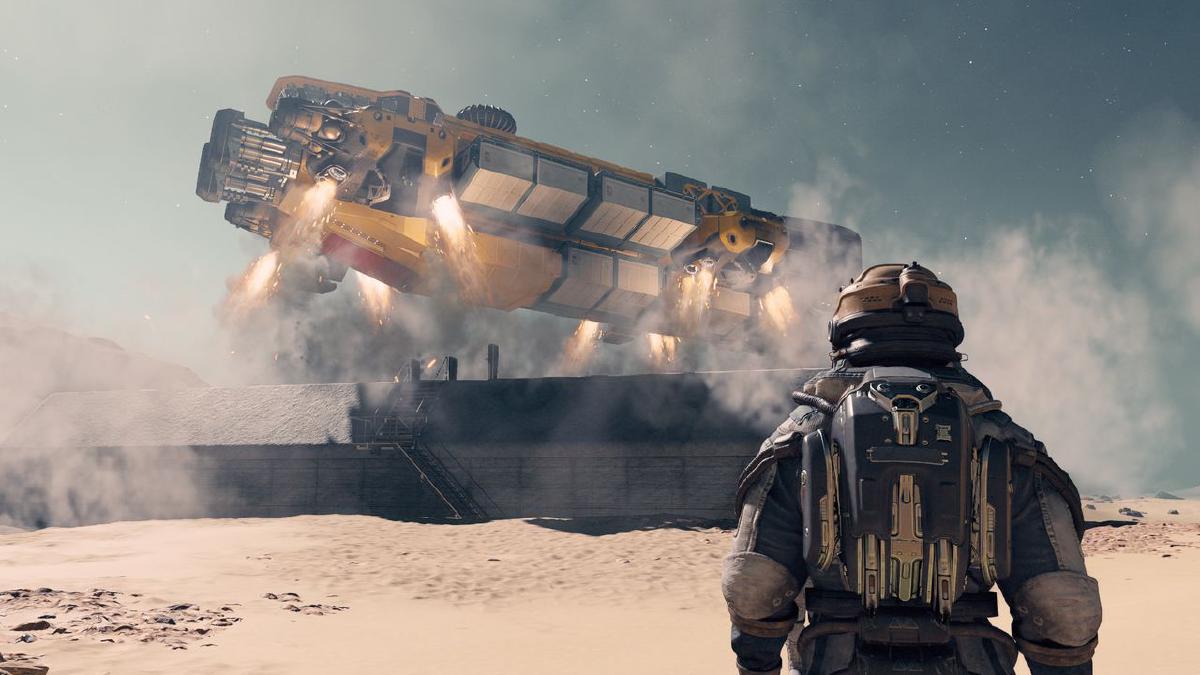
In a recent discussion regarding the launch of Starfield, a former Bethesda artist shared insights into the game’s development challenges. As first reported by PC Gamer, the artist indicated that nearly all of the complaints raised by players were already known to the development team before the game’s release. This acknowledgment highlights a disconnect between player expectations and the realities of game development, particularly for a title as ambitious as Starfield.
The former artist noted that “every single developer” was aware of about 95% of the issues that players encountered at launch. However, Todd Howard, one of the key figures at Bethesda, communicated that the team faced limitations in their ability to address every concern prior to the game’s release. This insight underscores the complexities involved in developing large-scale open-world titles, where balancing scope and quality can be a formidable challenge.
Starfield, which launched amid considerable anticipation, is Bethesda’s first new IP in over 25 years. The game combines traditional RPG elements with space exploration, allowing players to traverse various planets and engage in intricate storylines. However, the launch was met with a mixed reception, with players expressing frustration over bugs, performance issues, and certain design choices that did not meet their expectations.
The former artist’s comments shine a light on the often hidden pressures and constraints of game development. With large teams and vast projects, communication can become challenging. Issues identified during development may be deprioritized as teams race against deadlines and logistical hurdles. As Howard noted, while the team strives for excellence, not all issues can be resolved without significantly delaying the release.
The artist’s remarks prompted deeper discussions about the industry’s relationship with its audience. Players often expect continuous improvements and fixes post-launch, yet many do not see the extensive planning and compromise involved in delivering a game to market. Although Day One patches and subsequent updates can address some issues, they rarely capture the full scope of player feedback or the complexity involved in implementing changes.
Bethesda has a long-standing history of creating expansive worlds, with titles like The Elder Scrolls and Fallout setting benchmarks in the RPG genre. Starfield aimed to push those boundaries further, yet the challenges highlighted by the former artist suggest that perhaps the ambition exceeded the feasibility of the development cycle.
Moving forward, players can anticipate updates that may address some of their concerns, as Bethesda has committed to supporting Starfield with future patches. However, the conversation around the initial launch issues remains crucial, as it speaks to broader themes in game development,particularly the balance between ambition and execution in a landscape that is increasingly demanding.
Starfield’s release and the subsequent discussions surrounding its performance serve as a reminder of the trials that developers face in a competitive market. As the gaming landscape continues to evolve, so will the expectations placed upon developers, making it imperative for studios like Bethesda to maintain transparency and communication with their audiences.
Bethesda Game Studios has consistently sought to innovate within the RPG space, and while Starfield’s launch may have raised questions, it also opens the door to critical conversations about game development and player engagement moving forward.
Image credit: PC Gamer
This article was generated with AI assistance and reviewed for accuracy.