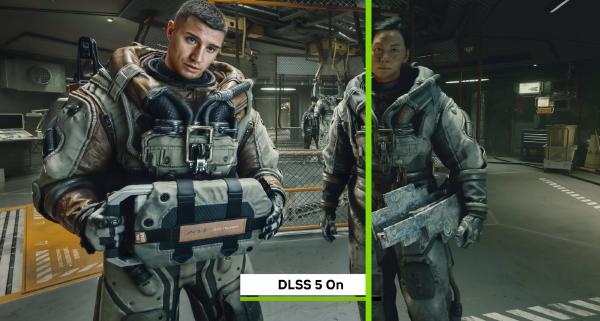
NVIDIA has formally announced the details of its latest technology, DLSS 5, which promises to elevate gaming visuals while fully respecting the creative vision of game developers. As first reported by Wccftech, the new system employs Neural Rendering capabilities to provide a significant boost in visual fidelity, setting new standards for graphical quality in video games.
NVIDIA has announced the upcoming release of DLSS 5, set to launch this fall, which promises to elevate gaming visuals through a groundbreaking AI-powered rendering model. As first reported by Nvidianews, this new technology focuses on real-time neural rendering, enhancing the quality of in-game graphics with improved photorealistic lighting and materials.
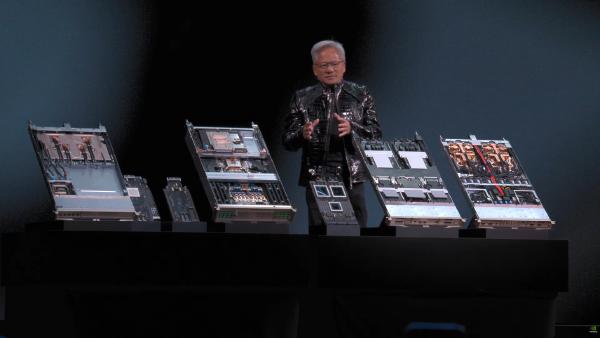
Nvidia has officially announced the upcoming release of Deep Learning Super Sampling (DLSS) 5, set to launch this fall. During a presentation at the GTC 2026 conference, CEO Jensen Huang highlighted the advancements and capabilities of this new technology, which aims to enhance the graphical fidelity of games through advanced AI techniques.
NVIDIA, a leading force in the tech world, is projecting a staggering growth in compute revenue, estimating it could reach $1 trillion within the next two years. This forecast reflects a significant shift in the artificial intelligence (AI) landscape, transitioning from training models to inference, which is driving an unprecedented surge in compute demand.
As the tech landscape grapples with persistent supply chain issues, MSI has made a stark prediction for 2026, labeling it as potentially the most challenging year yet for GPU production. In a recent statement, the company expressed concerns over significant shortages in both memory and graphics processing units, which may lead to steep price increases for consumers.
As GTC 2026 approaches, NVIDIA is anticipated to make a significant shift in its GPU strategy, moving away from the longstanding notion that a single graphics card can meet all computing needs. This evolution comes at a time when the demands for AI infrastructure have dramatically changed, compelling hardware manufacturers to adapt their offerings to cater to more specialized workloads, as first reported by Wccftech.