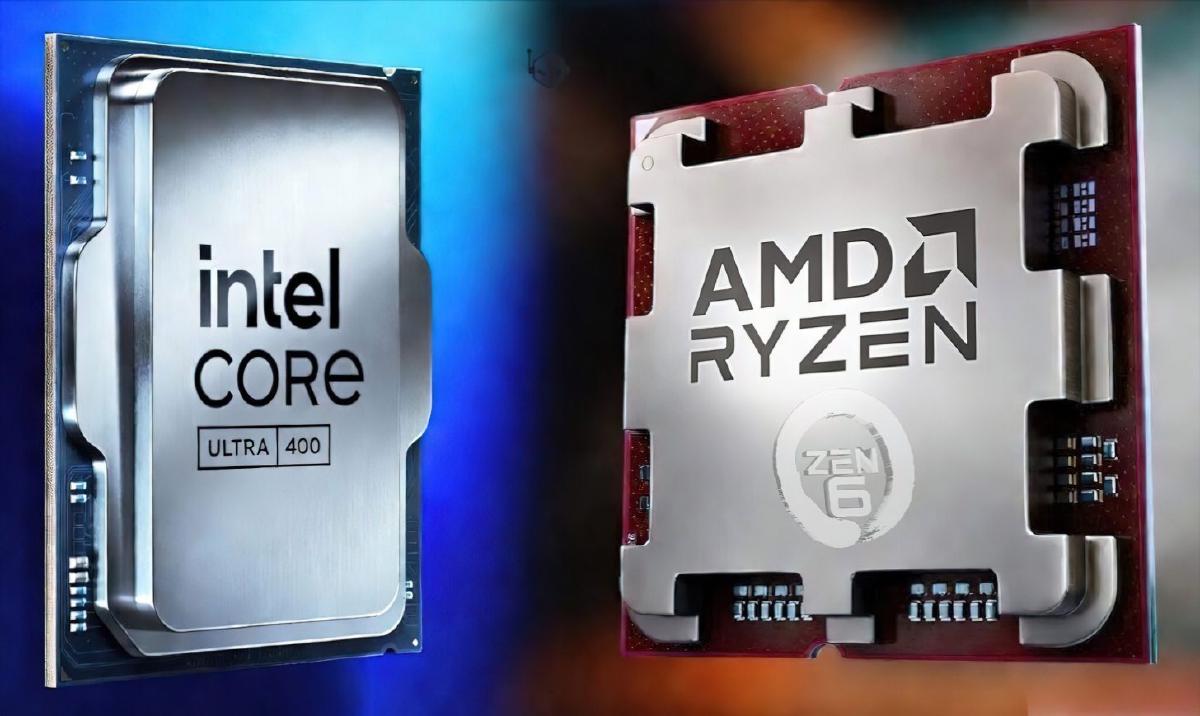
Rumors about Intel’s forthcoming Nova Lake CPUs are making the rounds, particularly regarding their potential performance metrics compared to AMD’s Zen 6 architecture. As first reported by Wccftech, sources indicate that Intel’s Coyote Cove P-Core architecture might deliver higher instructions per clock (IPC) than its AMD counterpart while possibly sacrificing clock speeds.
This speculation stems from a recent tweet by HXL (@9550pro), a prominent leaker in the tech community, who has shared insights on the expected performance of these next-generation CPU architectures. According to HXL, Intel’s Coyote Cove cores are set to be integrated into their Nova Lake lineup, which will also include the Arctic Wolf E-Cores.
If these claims hold any truth, it could position Intel favorably against AMD in terms of raw efficiency. Reportedly, the IPC offered by Coyote Cove could surpass that of Zen 6, suggesting that Intel may focus on maximizing performance per cycle. However, the trade-off appears to be lower clock speeds, which are crucial for achieving optimal performance in various applications, from gaming to productivity tasks.
In contrast, AMD’s Zen 6 architecture is rumored to prioritize higher clock speeds, possibly granting it an edge in scenarios that rely heavily on single-threaded performance. This contrast between IPC and clock speed could lead to interesting dynamics in the CPU market, where both companies have been fiercely competing for dominance.
While leaks and rumors often circulate before official releases, it’s essential to approach this information cautiously, as no official confirmation has been provided by either Intel or AMD. The landscape of CPU technology is notoriously fluid, and both companies have been known to adjust their strategies in response to competitor developments.
The upcoming release of these processors is highly anticipated, and if accurate, the differences in IPC and clock speeds could have significant implications for consumers and gamers alike. As the tech community waits for more concrete details, the stakes remain high for Intel and AMD as they prepare for the next round of their ongoing rivalry.
For now, potential buyers and enthusiasts will have to keep an eye on further developments. As with all unconfirmed information, these claims should be taken with a grain of caution until more reliable details emerge.
Intel Corporation has long been a leader in semiconductor manufacturing, providing processors for a wide range of devices, while AMD has made significant strides in recent years, challenging Intel’s dominance in the CPU market with its Ryzen line. With both companies poised to launch their next-generation CPUs, the battle for supremacy continues to heat up.
Image credit: Wccftech
This article was generated with AI assistance and reviewed for accuracy.