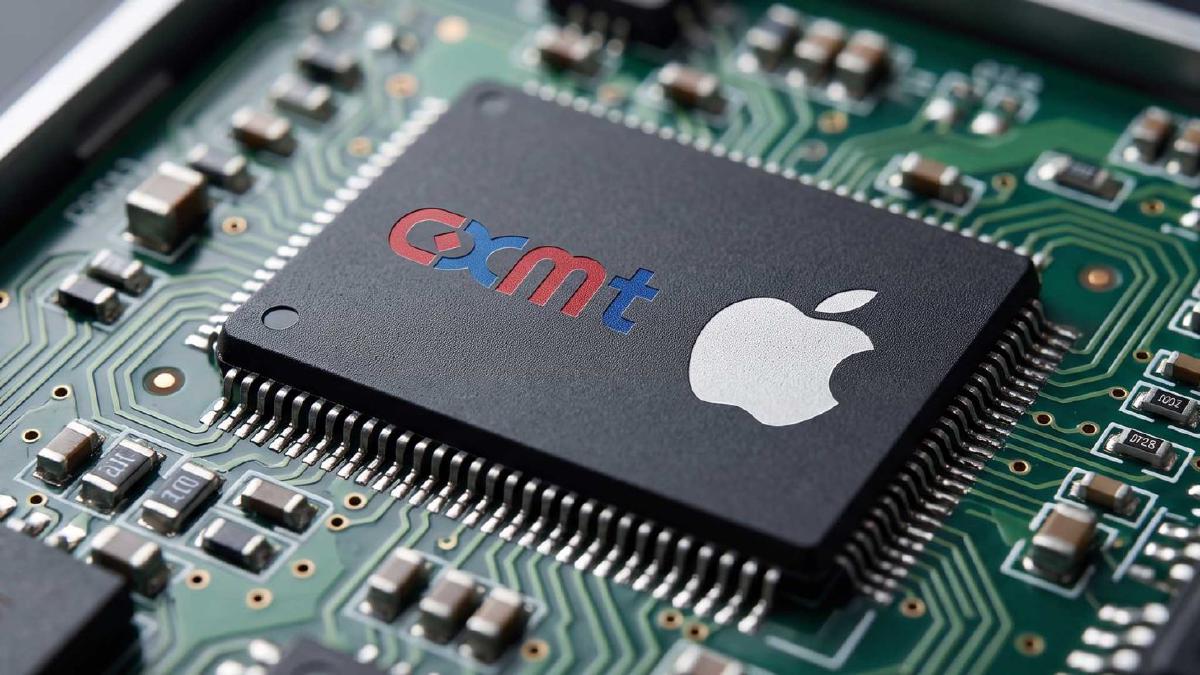
Apple is reportedly seeking a collaboration with CXMT to address its memory sourcing needs in China, but the partnership may be fraught with challenges. As first reported by Wccftech, the tech giant’s demand for roughly 600 million gigabytes of memory could require about 6.6 percent of CXMT’s total capacity by the end of the year. However, the situation appears complicated, as CXMT is currently booked through 2027, creating a significant supply constraint that could persist well into the latter part of the decade.
This demand stems from Apple’s broader strategy to bolster its supply chain in the wake of ongoing geopolitical tensions. There are claims that the Trump administration previously hinted at this potential partnership as a means to negotiate concessions from the Chinese government. While this tactic suggests a strategic maneuver in a larger political game, analysts caution that such a commercial endeavor may not be feasible given CXMT’s existing commitments.
Market dynamics are reportedly shifting, and the competition for semiconductor supplies continues to intensify. The semiconductor industry has been facing supply chain constraints across the board, and CXMT, as a major player in memory manufacturing, is no exception. Reports indicate that the company has secured contracts that fully utilize its production capabilities for several years ahead, further complicating Apple’s aspirations.
If these claims hold true, Apple may find itself in a challenging position as it grapples with an increasing demand for memory components essential for its devices. Industry insiders suggest that even by 2028, CXMT could only meet approximately half of the anticipated demand from China, leaving Apple in a precarious situation as it looks to expand its footprint in the region.
The ramifications of this situation extend beyond mere supply and demand dynamics. Apple’s pursuit of a partnership with CXMT could be perceived as part of its strategy to navigate the complexities of the global supply chain, particularly in light of strained relations between the U.S. and China. Should this partnership materialize, it might influence not only the technology landscape but also the geopolitical balance surrounding trade and technology.
As the situation unfolds, how Apple will adapt its strategy in response to these supply constraints. The company has a history of mitigating risks through diversification of its suppliers, so a pivot to alternative sources may be on the table if the partnership with CXMT fails to materialize as hoped.
For now, this remains unconfirmed and speculative, with the potential for shifts in the semiconductor landscape as various companies jockey for position in an ever-changing marketplace. As Apple navigates these complexities, industry watchers will be keeping a close eye on developments.
CXMT, or ChangXin Memory Technologies, is a key semiconductor manufacturer based in China, focusing primarily on memory solutions. The company is becoming increasingly critical as demand for memory components surges, particularly in the context of global supply chain turbulence.
Image credit: Wccftech
This article was generated with AI assistance and reviewed for accuracy.