In the bustling landscape of PC gaming, players often label titles as “badly optimized” without fully understanding what that entails. This quick judgment usually follows the launch of a highly anticipated game, where players crank settings to Ultra and fixate on their frames per second (FPS) counter. If the frame rate disappoints, the game faces the harsh verdict of being “unoptimized.” Conversely, a smooth performance earns it the title of “well optimized.” However, as first reported by Wccftech, the truth about PC game optimization is far more nuanced than this binary view suggests.
The very nature of PC gaming introduces a multitude of variables that can affect game performance. From hardware configurations to software settings, optimization is a comprehensive puzzle that developers must solve. It begins with understanding that not all systems are created equal. A title that runs smoothly on a high-end rig may struggle on mid-tier or entry-level setups, leaving players frustrated and quick to criticize.
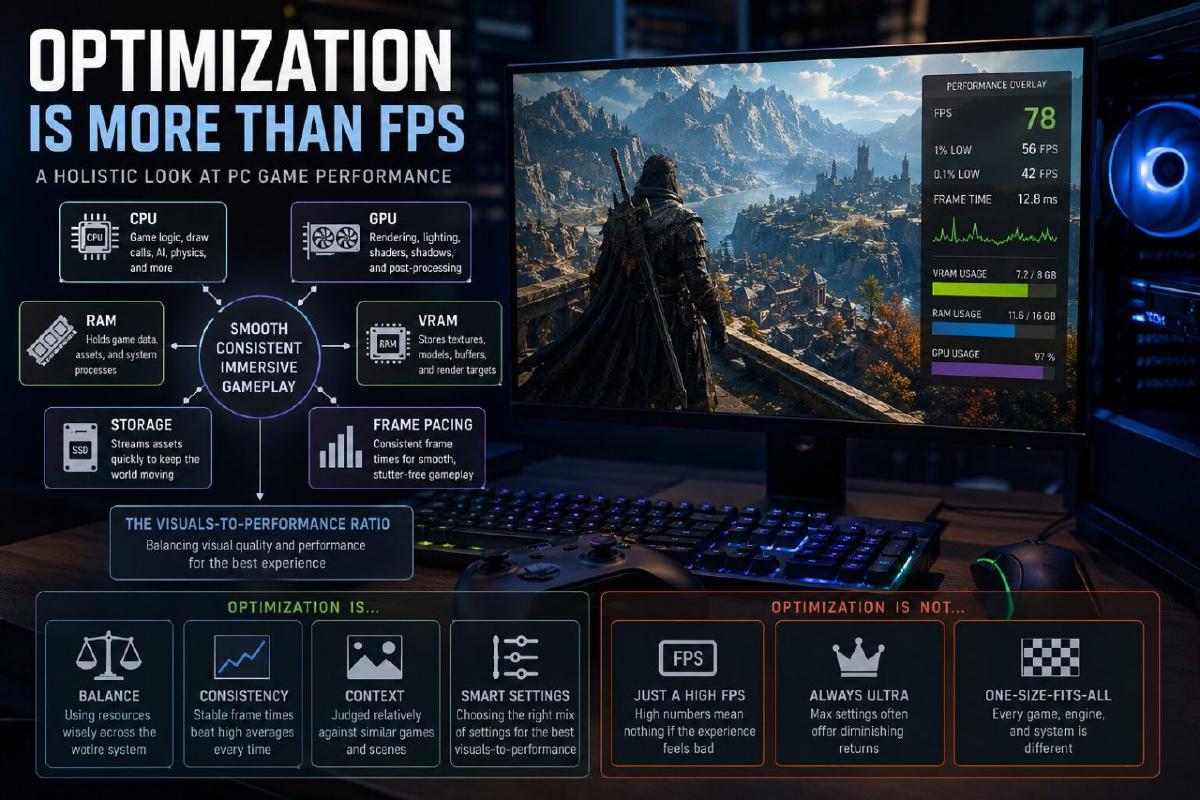
Factors such as CPU and GPU compatibility, available RAM, and even cooling systems can all impact how a game performs. When players crank everything to maximum settings without considering the capabilities of their hardware, they may set themselves up for disappointment. In reality, optimization isn’t solely about pushing hardware to its limits; it’s about achieving a balance that works across a variety of systems.
Moreover, FPS numbers can be misleading. A high frame rate does not automatically equate to a well-optimized game. For instance, if a title is running at a high FPS but experiencing significant stuttering or input lag, the overall experience can be negatively impacted. Similarly, a game that maintains a more stable but lower frame rate might provide a smoother experience overall.
This complexity is especially pronounced in indie games, where smaller development teams may not have the resources to optimize for every possible configuration. They may focus on delivering compelling gameplay or innovative mechanics over achieving the highest frame rate. Gamers often overlook the artistry and narrative depth in these titles, focusing instead on performance metrics.
As the conversation around optimization continues to evolve, players are encouraged to adopt a more empathetic approach. Recognizing the challenges that developers face may help cultivate a more constructive dialogue. Instead of hastily declaring a game “unoptimized,” consider investigating potential solutions, such as adjusting graphical settings or exploring community mods.
thrives on shared experiences, and developers are often receptive to player feedback. By voicing concerns in a constructive manner, players can help studios identify and address optimization issues in future patches. This collaborative spirit can foster a healthier relationship between developers and the audience they aim to serve.
As we march forward, it’s crucial to remember that the world of PC gaming is not just about raw performance metrics. Optimization is an intricate dance that requires understanding, communication, and often, compromise. By embracing this complexity, players can better appreciate the hard work that goes into crafting the games they love, recognizing that behind every frame rate is a team of passionate developers striving to create memorable experiences.
This conversation not only applies to major titles but also resonates deeply within the indie scene. Studios like Devolver Digital and Team17, known for their unique offerings, often face the same scrutiny. Their innovative approaches remind us that creativity and technical prowess can coexist, even if the optimization may not always shine at the highest levels.
Ultimately, the next time you boot up a new game, consider taking a moment to reflect on the many factors at play. Your FPS counter may not tell the whole story, but the journey of exploring and enjoying these unique experiences certainly will.
Image credit: Wccftech
This article was generated with AI assistance and reviewed for accuracy.