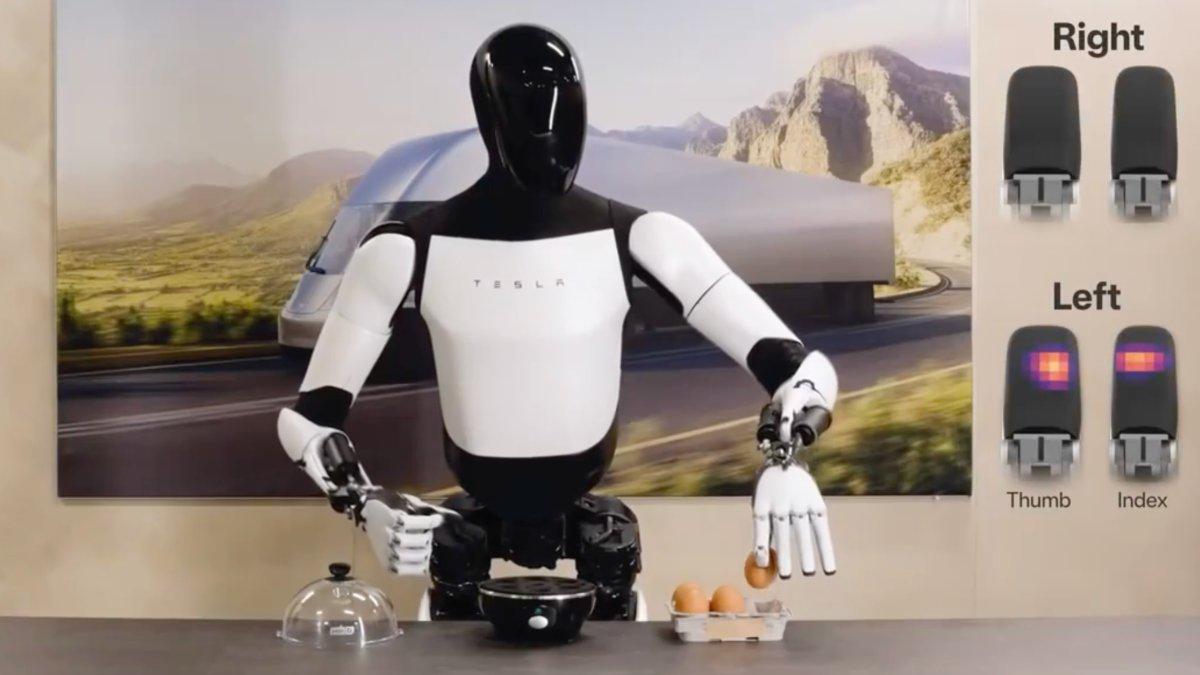
Tesla is on the verge of initiating mass production of its humanoid robots, as reported by Wccftech. The company, led by CEO Elon Musk, is shifting its focus from electric vehicles to robotics, emphasizing its belief that Tesla is evolving into a robotics firm. Musk’s strategic pivot signifies a growing interest in artificial intelligence and robotics, with the company’s ambitious plans for its humanoid robot, dubbed Optimus, taking center stage.
Recent reports from Taiwan’s supply chain indicate that Tesla is collaborating with local suppliers to procure essential components for the Optimus robot. Among these components are harmonic reducers and joint modules, crucial for the robot’s mobility and functionality. Production is slated to take place at Tesla’s facilities in California and Texas, underscoring the company’s commitment to localized manufacturing.
The Taiwanese firms Mirle Automation and Asia Optical are expected to play significant roles in this supply chain. Mirle Automation specializes in automation and robotics solutions, while Asia Optical is noted for its optical and electronic components. Their involvement could bolster Tesla’s capability to produce robots that are not only efficient but also capable of advanced tasks.
As Tesla continues to advance its robotics agenda, Musk has expressed an optimistic outlook for the future of humanoid robotics. He believes that the development of Optimus could lead to transformative applications across various sectors, from manufacturing to domestic assistance. With the anticipated launch of mass production in 2025, Tesla aims to establish a foothold in a market that is increasingly focused on integrating robotics into everyday life.
This shift towards humanoid robots may represent a broader trend within the technology sector, as companies explore the potential of AI and robotics to enhance productivity and efficiency. The growing interest in humanoid robots reflects a burgeoning belief that these machines could alleviate labor shortages and perform complex tasks currently handled by humans.
In parallel, the robotics industry is experiencing significant investment and innovation, driven by advancements in AI and machine learning. Tesla’s entry into this arena could further solidify its reputation as a cutting-edge technology company, with implications for both its existing electric vehicle business and its future ventures in robotics.
Elon Musk’s vision for Tesla extends beyond its current offerings, positioning the company as a leader in the robotic revolution. The successful mass production of Optimus could set a precedent for future developments in humanoid robotics, marking a pivotal moment in both Tesla’s history and the evolution of robotics technology.
As the company gears up for production, eyes will be on Tesla to see how the Optimus robot performs and the impact it may have across various industries. The venture into humanoid robotics is not just a gamble for Tesla, but a calculated step towards redefining its identity in a rapidly changing tech landscape.
Tesla Inc., founded in 2003, is widely recognized for its electric vehicles and renewable energy solutions. With the introduction of humanoid robots, the company is poised to challenge conventional boundaries and expand its influence in the technology market.
Image credit: Wccftech
This article was generated with AI assistance and reviewed for accuracy.