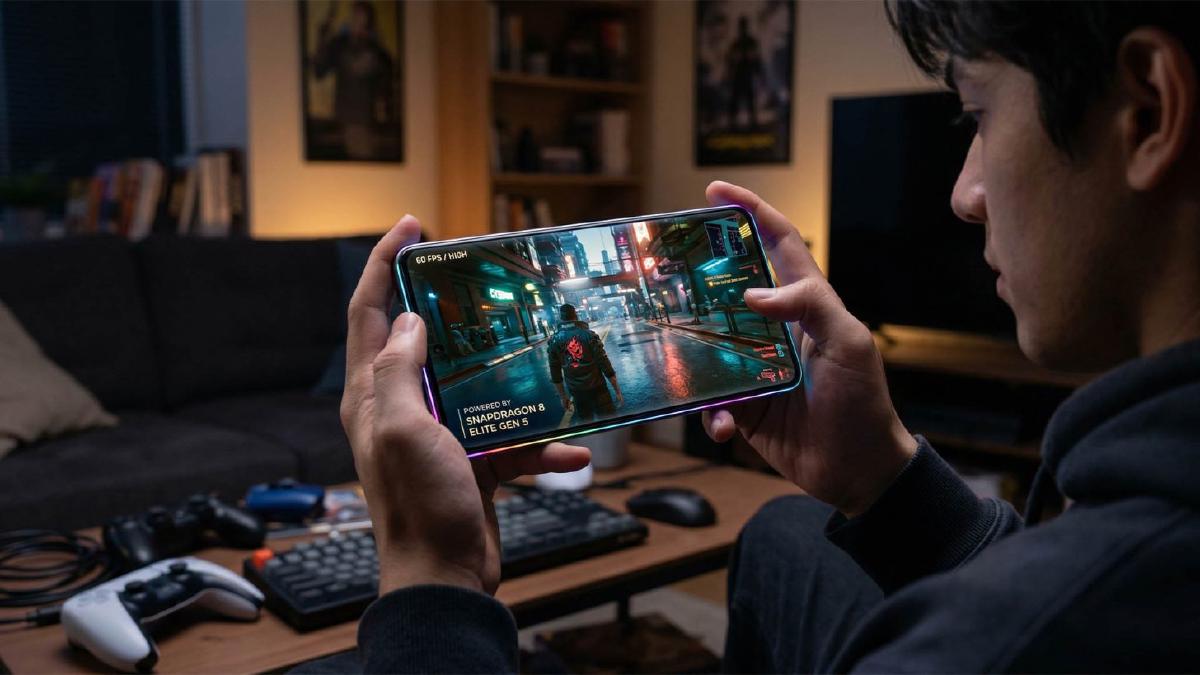
Qualcomm’s Snapdragon 8 Elite Gen 5 processor has demonstrated impressive capabilities in emulating AAA titles on the Android platform. This SoC (system on chip) is engineered to deliver high graphical fidelity and frame rates, allowing users to experience visually intensive games without the need for native support. However, as first reported by Wccftech, the chip’s performance comes at a significant cost in power consumption, which could limit its viability in the long run.
While the Snapdragon 8 Elite Gen 5 can handle demanding titles with ease, it reaches a concerning power draw of nearly 50 watts during gameplay. This level of consumption is alarming, particularly for a mobile processor, as it can lead to overheating and reduced battery life in devices that rely on this SoC. The trade-off between performance and power efficiency appears to be skewed in favor of performance, raising flags about the long-term sustainability of this approach.
The chip employs advanced architectural features and optimizations to enhance performance, yet such prowess does not come without its drawbacks. Users who prioritize extended gaming sessions may find themselves frequently tethered to a charging cable, undermining the portability that mobile gaming typically promises. This problem is compounded by the growing demand for longer battery life and optimized power management in mobile devices.
For Qualcomm, addressing the power draw issue in future iterations, such as the anticipated Snapdragon 8 Elite Gen 6, will be crucial. The company may need to explore strategies to balance performance gains with more efficient power usage to stay competitive in the mobile gaming landscape. As mobile gaming continues to evolve, the ability to run demanding titles without draining battery life will be a key factor for both developers and consumers alike.
Developers aiming to leverage the capabilities of the Snapdragon 8 Elite Gen 5 for game emulation can rest assured that the hardware is robust enough to handle their needs. However, they will need to consider the limitations posed by the power consumption, especially for players who might not have access to charging solutions during extended play sessions.
The Snapdragon 8 Elite Gen 5 represents a significant step forward in mobile gaming technology, but its high power draw serves as a reminder that innovation must be accompanied by practicality. As Qualcomm prepares for the next generation of mobile processors, striking the right balance will be imperative for ensuring the success of future devices.
In summary, while the Snapdragon 8 Elite Gen 5 opens new avenues for AAA gaming on mobile platforms, its nearly 50W power consumption raises critical questions about feasibility and user experience. Qualcomm’s next steps in addressing this issue will be closely watched by both gamers and industry analysts alike.
Qualcomm, headquartered in San Diego, is renowned for its advancements in mobile technology and chip design. The Snapdragon series has been instrumental in pushing the boundaries of mobile gaming, yet as this latest iteration shows, balancing performance with efficiency remains a crucial challenge.
Image credit: Wccftech
This article was generated with AI assistance and reviewed for accuracy.