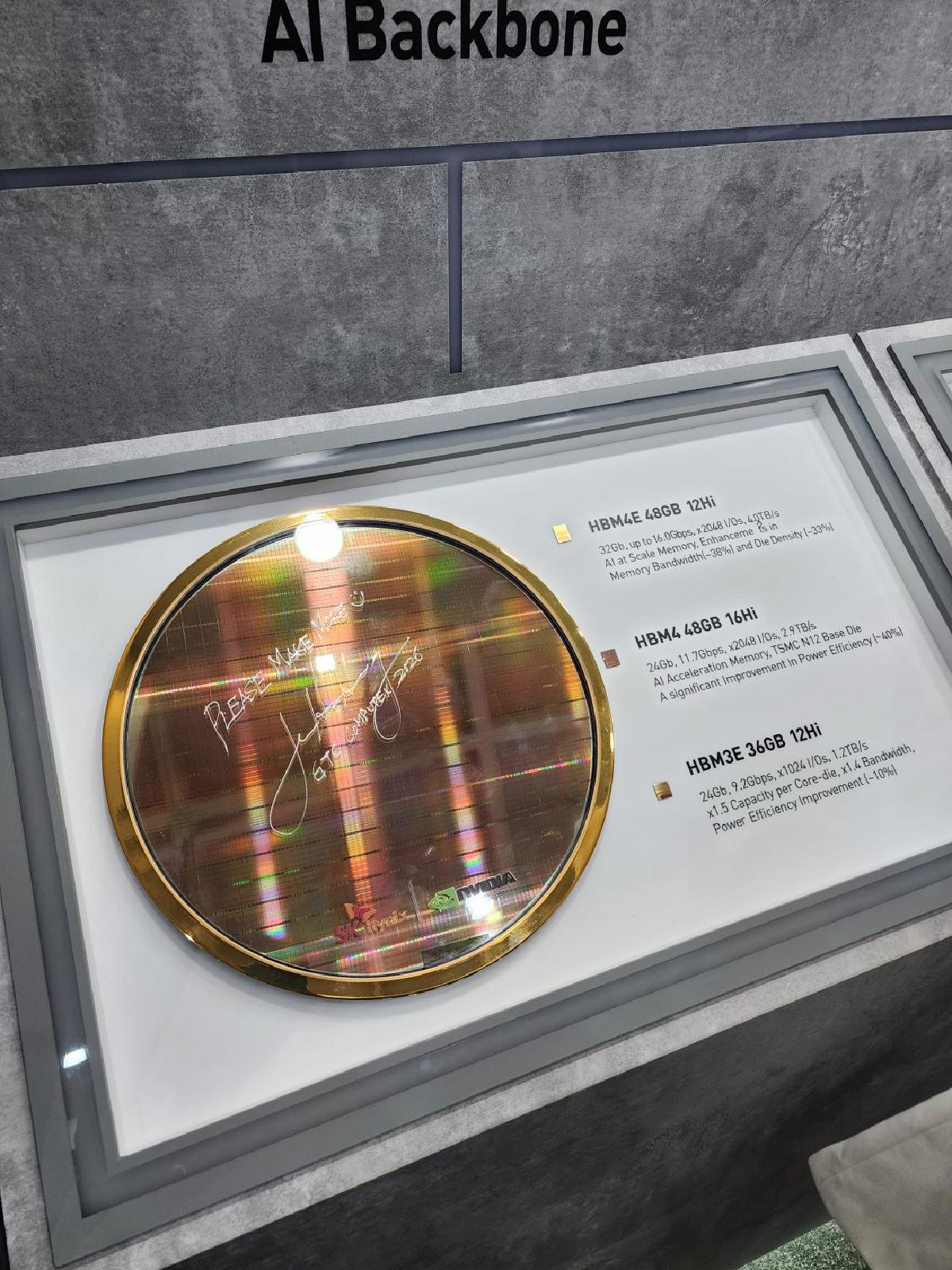
SK Hynix has initiated the sampling of its next-generation HBM4E memory, which features impressive specifications, including speeds of up to 16 Gbps and capacities reaching 48 GB. This development comes as DRAM manufacturers feel the pressure from the increasing demand for high-performance memory solutions driven by advancements in artificial intelligence technology, as first reported by Wccftech.
In the competitive landscape of memory manufacturing, SK Hynix is positioning itself to rival Samsung in the race to deliver the first HBM4E memory modules. These cutting-edge memory solutions are critical for next-generation data centers, where they will support powerful processing units such as NVIDIA’s Rubin Ultra and AMD’s Instinct series. The HBM4E memory’s capacity and speed are essential for applications that require rapid data transfer rates and substantial bandwidth, particularly in AI workloads.
The push for faster and more efficient memory solutions is largely fueled by the rapid development of AI technologies that demand significant computational resources. AI applications often require real-time processing capabilities, which can be bottlenecked by traditional memory solutions. HBM4E aims to bridge that gap by offering higher bandwidth and lower latency, making it more suitable for tasks that involve extensive data handling, such as machine learning and deep learning.
The sampling stage marks a significant milestone in the manufacturing process, allowing partners to evaluate the performance of HBM4E memory under real-world conditions. This phase is crucial as it enables SK Hynix to gather feedback and make necessary adjustments before full-scale production begins. The company’s aim is to ensure that the memory can meet the stringent requirements set by leading tech firms that are rapidly developing AI-driven solutions.
As companies like NVIDIA and AMD ramp up their production of advanced processors designed for AI and machine learning, the need for high-bandwidth memory has never been more pronounced. The competition between SK Hynix and Samsung is intensifying, with both firms eager to establish dominance in the high-performance memory market. The outcome of this race could have significant implications for how AI applications evolve and the efficiency of data centers worldwide.
Moreover, HBM4E is expected to offer improvements over its predecessor, HBM3, particularly in terms of energy efficiency and thermal management. This is particularly important for large data centers that face stringent operational cost challenges. A more efficient memory solution can lead to reduced power consumption, contributing to overall operational savings and environmental sustainability.
With the introduction of HBM4E, SK Hynix is not just responding to current market demands but also anticipating the future needs of AI and data processing technology. By investing in the development of high-capacity, high-speed memory, the company is setting the stage for the next generation of computing capabilities.
SK Hynix is a major player in the semiconductor industry, known for its innovation in memory solutions. The company has a long history of delivering advancements in DRAM and NAND flash technologies that cater to various applications, including consumer electronics and enterprise solutions. The transition to HBM4E is a reflection of the ongoing evolution within the tech sector, driven by the need for greater performance and efficiency in an increasingly data-driven world.
Image credit: Wccftech
This article was generated with AI assistance and reviewed for accuracy.