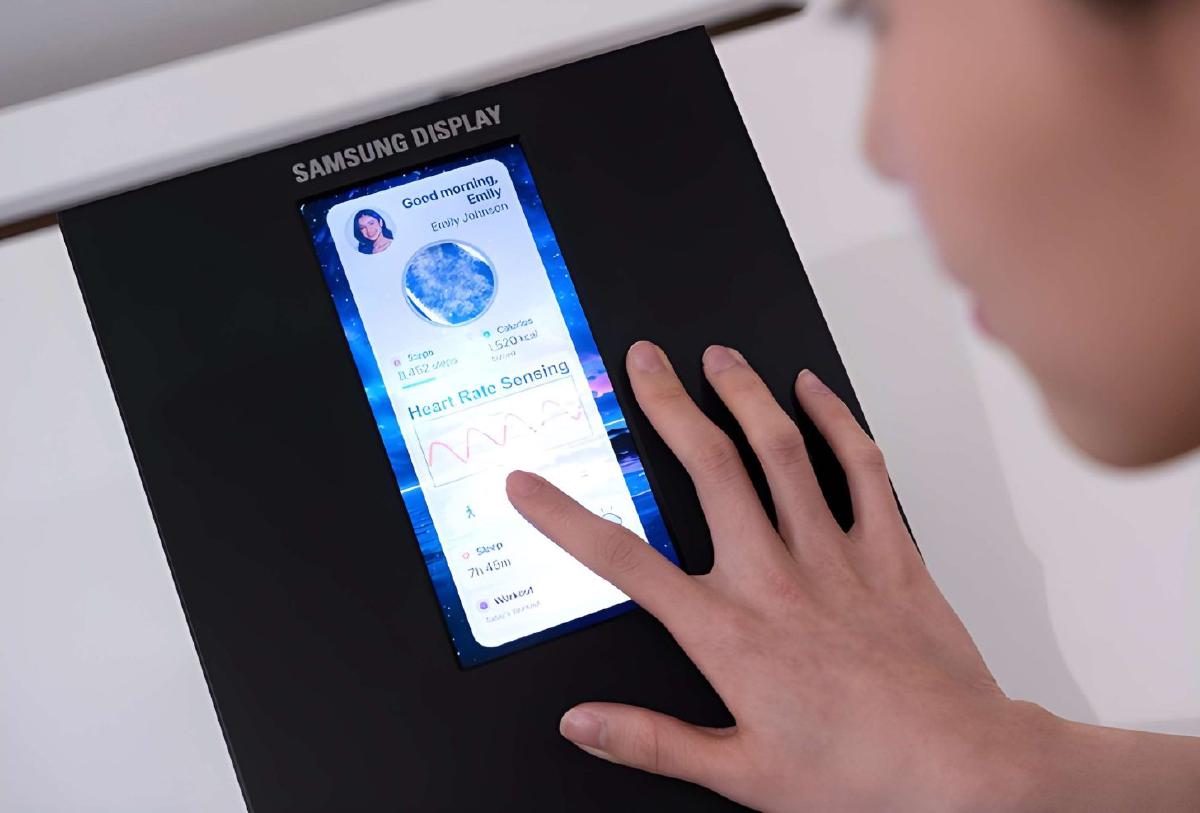
Samsung has once again showcased its penchant for innovation with the introduction of two groundbreaking display technologies at the SID (Society for Information Display) exhibition in the United States. As first reported by Wccftech, the company revealed its “Flex Chroma Pixel” and “Sensor OLED” displays, which open up a range of biomarker-driven applications, including an impressive capability to measure blood pressure with a single touch.
The Flex Chroma Pixel technology leverages next-generation emissive materials, including phosphorescent sensitized fluorescence (PSF). This approach not only enhances display quality but also integrates advanced sensor functions, marking a significant leap in the way users can interact with their devices. The development of Flex Chroma Pixel is indicative of Samsung’s commitment to blending display performance with health-monitoring capabilities, a trend that could redefine user engagement in mobile devices.
On the other hand, the Sensor OLED technology further enriches the user experience by integrating sensors directly into the display itself. This allows for real-time biometric monitoring without the need for additional hardware. The implications are substantial, particularly for health-conscious consumers looking for seamless ways to track their vital signs. Imagine being able to monitor your blood pressure simply by tapping your smartphone screen,this could streamline personal health management in previously unimaginable ways.
Samsung’s recent innovations arrive at a time when health tech integration into consumer electronics is gaining traction. The demand for more intuitive health monitoring solutions continues to rise, and companies like Samsung are poised to capitalize on this need. By embedding advanced sensing capabilities directly into displays, Samsung is not only enhancing its product offering but also potentially transforming how consumers approach personal health monitoring.
Data from industry analysts indicate that the health tech market is expected to experience significant growth over the next several years, particularly in areas where technology intersects with wellness. With the introduction of these new display technologies, Samsung is well-positioned to lead in this expanding market segment.
In addition to their health applications, the Flex Chroma Pixel and Sensor OLED displays are also designed to enhance visual performance. The use of emissive materials allows for brighter screens with improved color accuracy and contrast ratios, which is essential for media consumption and gaming. As gaming increasingly leans toward high-fidelity graphics and immersive experiences, having a display that not only performs well but also offers health monitoring features could attract a new audience of gamers who prioritize both entertainment and wellness.
Looking ahead, Samsung’s ability to merge display technology with health monitoring may set a new standard for future smartphones and other handheld devices. As mobile technology continues to evolve, the incorporation of such features could very well become commonplace, raising the bar for competitors and pushing the industry towards more integrated solutions.
Samsung, a leader in consumer electronics, has a long history of innovation that stretches across various product categories. With its focus on both display technology and health integration, the company is carving a niche that enhances user experience while addressing modern health concerns. As new technologies emerge, it will be intriguing to see how these advancements will influence not only Samsung’s product lineup but also the broader tech landscape.
Image credit: Wccftech
This article was generated with AI assistance and reviewed for accuracy.