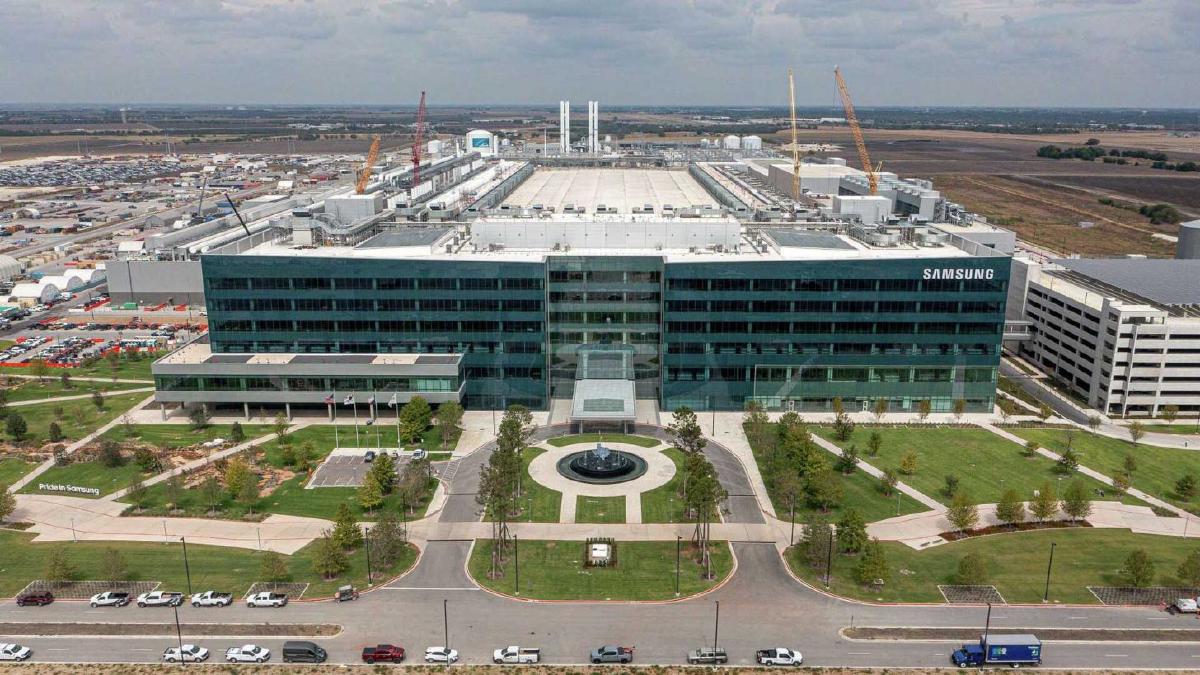
Samsung is making significant strides in semiconductor manufacturing, as the company commences trial production of 2nm chips at its Taylor plant in Texas. This development positions Samsung ahead of TSMC, which has opted not to mass-produce 2nm chips in the United States, as first reported by Wccftech.
The progress in Samsung’s 2nm production is encouraging. Yields for the company’s Gate-All-Around (GAA) architecture are estimated at approximately 60 percent. This level of yield has provided Samsung with the confidence to shift its Taylor facility from its original purpose of 4nm wafer manufacturing to a hub for cutting-edge 2nm chips. This strategic move not only reflects Samsung’s ambition to lead in advanced chip technology but also highlights the competitive landscape of semiconductor manufacturing in the U.S.
Samsung’s Taylor plant is pivotal in the company’s goal to enhance its presence in the American market. The facility was initially designed for 4nm production but is being repurposed to accommodate more advanced technologies. By expanding its capabilities, Samsung is seizing a rare opportunity, particularly as TSMC has restricted its advanced manufacturing technologies from being utilized in U.S. operations. This limitation on TSMC’s part serves as an opening for Samsung, enabling it to establish itself as a dominant player in this critical segment of the semiconductor industry.
The implications of this development extend beyond just Samsung and TSMC. As the demand for advanced semiconductors continues to surge in various sectors, including gaming, artificial intelligence, and automotive technologies, having a local manufacturing facility that can produce cutting-edge chips is increasingly valuable. With the semiconductor supply chain facing global challenges, having a U.S.-based option enhances the resilience of the market.
Samsung has been making substantial investments in its semiconductor manufacturing capabilities. The company’s commitment to expanding its footprint in the U.S. not only demonstrates its strategic focus but also underscores the importance of maintaining technological leadership in a competitive environment. The successful trial production at the Taylor plant could pave the way for full-scale production, which may further amplify Samsung’s position in the semiconductor market.
In light of these developments, industry experts will be closely monitoring the outcomes of Samsung’s trial production. If successful, this could set a new benchmark for semiconductor manufacturing in the U.S., potentially altering the dynamics of competition between Samsung and TSMC, as well as influencing the broader global landscape.
Samsung’s aggressive approach to scaling up its production capabilities reflects a larger trend in the semiconductor industry. The race to develop smaller, more efficient chips has intensified, with companies vying for technological supremacy. As the landscape evolves, the focus on U.S.-based manufacturing will likely become a critical aspect of strategic planning for semiconductor companies.
Samsung Electronics is a major player in the global semiconductor industry, known for its innovations in memory chips and processors. Its Taylor plant symbolizes the company’s dedication to advancing manufacturing technologies and meeting the growing demand for high-performance chips in various applications. As the semiconductor race continues, Samsung’s ability to successfully scale its 2nm production could significantly impact its market positioning and the future of chip technology.
Image credit: Wccftech
This article was generated with AI assistance and reviewed for accuracy.