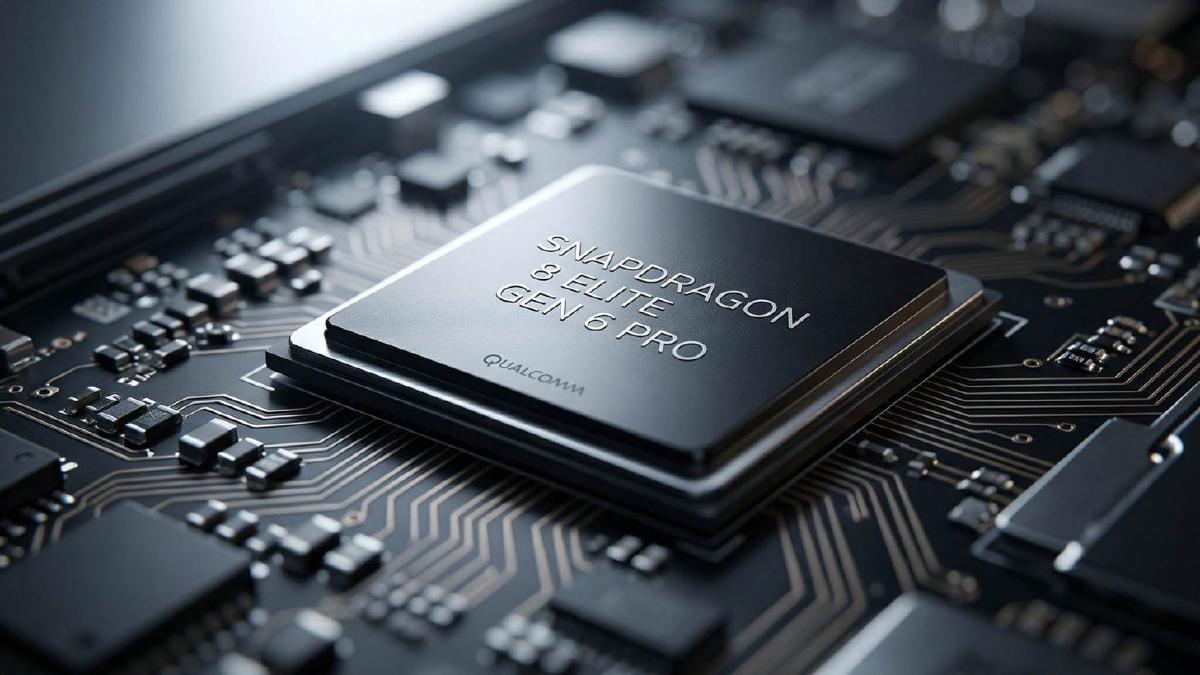
Qualcomm’s upcoming Snapdragon 8 Elite Gen 6 Pro is generating buzz due to its transition to TSMC’s 2nm manufacturing process, a change expected to enhance both CPU and GPU performance. However, as first reported by Wccftech, early rumors suggest that the CPU performance may not meet expectations, raising concerns for mobile gaming and device enthusiasts.
The Snapdragon 8 Elite Gen 6 Pro will feature a new CPU architecture with a ‘2 + 3 + 3’ configuration. This structure is designed to deliver improved efficiency and performance. Yet, despite these enhancements, sources indicate that the compute performance may not differ significantly from its predecessor, the Snapdragon 8 Elite Gen 5. This news is particularly disappointing considering the high hopes tied to the shift to a smaller process node, which typically offers greater performance gains and power efficiency.
One of the key improvements in the Snapdragon 8 Elite Gen 6 Pro is the upgraded GPU, which is expected to mitigate the CPU’s underwhelming performance. The new architecture promises enhanced graphical capabilities, which could be crucial for mobile gaming experiences. Qualcomm’s focus on GPU and AI enhancements suggests a balancing act between raw processing power and graphical fidelity, which is essential for demanding applications and gaming.
In addition to the GPU upgrades, Qualcomm is also emphasizing artificial intelligence capabilities with the Snapdragon 8 Elite Gen 6 Pro. These advancements are expected to improve various tasks, from optimizing game performance to enhancing camera functionalities. While the CPU may struggle to impress, the integration of AI could provide significant benefits in terms of efficiency and smart performance scaling.
As the mobile market grows increasingly competitive, especially in the gaming sector, the expectations for performance are higher than ever. Devices powered by the Snapdragon series are anticipated to compete with recent releases from competitors like Apple and Samsung. Therefore, the ability of the Snapdragon 8 Elite Gen 6 Pro to stand out will rely heavily on its graphical prowess and AI integration, as the CPU performance may not provide the edge many were hoping for.
The Snapdragon 8 Elite Gen 6 is set to launch later this year, and all eyes will be on how Qualcomm manages to position this SoC against its rivals. Developers and gamers alike will be keen to see how well the new features translate into real-world performance, particularly for mobile gaming titles that require high processing and graphical capabilities.
In summary, while the Snapdragon 8 Elite Gen 6 Pro’s move to a 2nm process initially suggests superior performance, emerging reports indicate that it may not significantly outperform its predecessor in CPU tasks. However, the upgrades in GPU and AI features could provide the necessary compensations for users looking for high-performance mobile experiences.
Qualcomm is a well-known player in the semiconductor industry, particularly for its Snapdragon processors, which power a wide array of smartphones and tablets. As mobile gaming continues to grow, their push for advanced mobile chipsets is crucial in maintaining competitive offerings in this fast-evolving landscape.
Image credit: Wccftech
This article was generated with AI assistance and reviewed for accuracy.