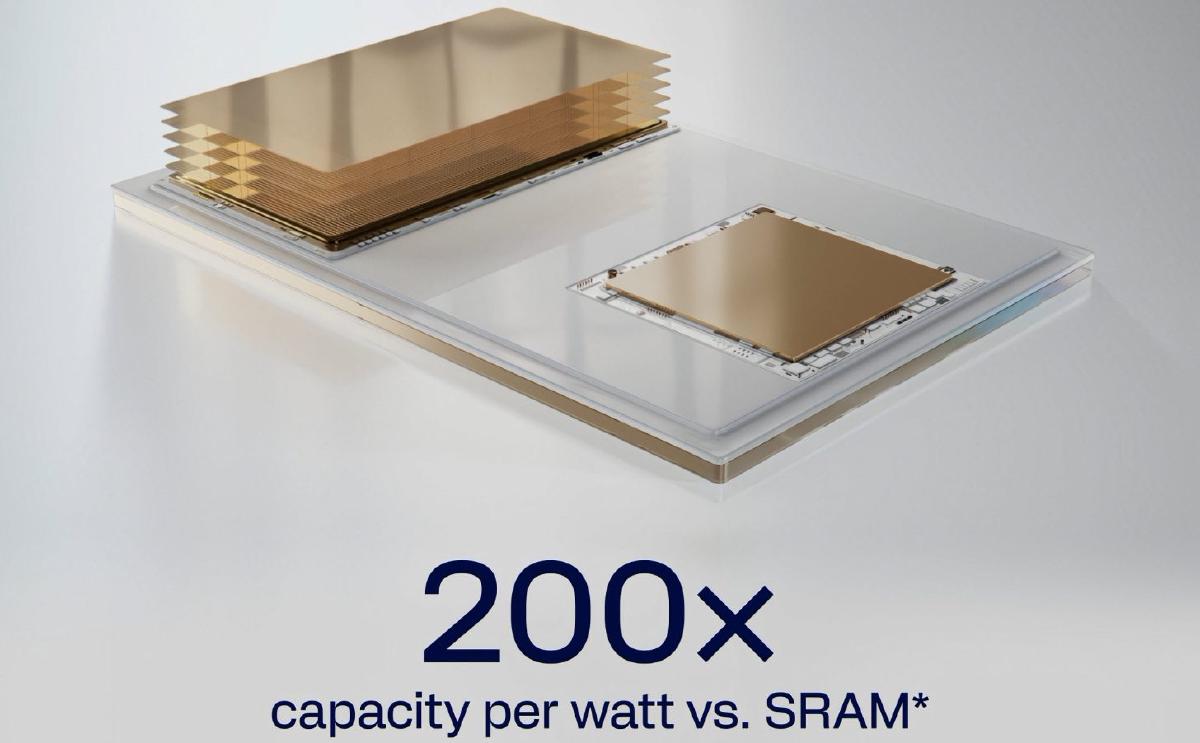
Qualcomm is making waves in the tech industry with the introduction of its High-Bandwidth Compute (HBC) technology, designed specifically for the AI data center sector. As first reported by Wccftech, this innovative architecture seeks to tackle the persistent memory bottlenecks that have hindered AI performance.
Unveiled during Qualcomm’s Investors Day 2026, HBC represents a significant leap forward in memory technology. By stacking compute capabilities beneath DRAM, HBC promises to deliver up to six times the bandwidth per watt compared to traditional High Bandwidth Memory (HBM) configurations. This design not only enhances memory capacity but also optimizes power efficiency,a critical factor for data centers that demand high performance while minimizing energy consumption.
The HBC architecture employs a unique 3D stacked chip design, which integrates purpose-built solutions that place compute resources in close proximity to boosted memory bandwidth. This near-memory approach is a calculated response to the increasing demands of AI workloads, which require rapid data access and processing capabilities.
For developers and companies operating in the AI space, Qualcomm’s HBC could represent a turning point. The ability to accelerate memory bandwidth significantly could lead to more efficient training of AI models, allowing for faster iterations and improved overall performance. By addressing the so-called “memory wall,” Qualcomm aims to empower data centers to handle more complex tasks with greater efficiency.
Qualcomm’s commitment to innovation in this area paints a promising picture for the future of AI applications. Data centers are often the backbone of AI, and enhancing their capabilities can have ripple effects across various industries,spanning from healthcare to finance. With HBC on the horizon, companies may find new opportunities to leverage AI in ways that were previously unfeasible.
As the competition in the AI field heats up, Qualcomm’s HBC could give early adopters a competitive edge. The technology’s potential to efficiently manage memory could lead to breakthroughs in not just machine learning but also in real-time data processing tasks, which are critical for applications such as autonomous driving and smart city infrastructure.
As the tech landscape evolves, Qualcomm’s HBC is a bold step towards breaking down barriers in AI performance, promising a future where data centers can operate at unprecedented levels of efficiency. This advancement not only showcases Qualcomm’s dedication to pushing the envelope in technology but also highlights the increasing significance of memory optimization in the age of AI.
For those unfamiliar with Qualcomm, the company has long been a leader in the semiconductor space, particularly known for its mobile chipsets. With HBC, they are once again proving that they are not just about mobile technology, but are also keenly focused on innovations that will shape the future of AI and data processing. As the rollout of this technology approaches, industry stakeholders will be watching closely to see how it impacts the ever-evolving AI landscape.
Image credit: Wccftech
This article was generated with AI assistance and reviewed for accuracy.