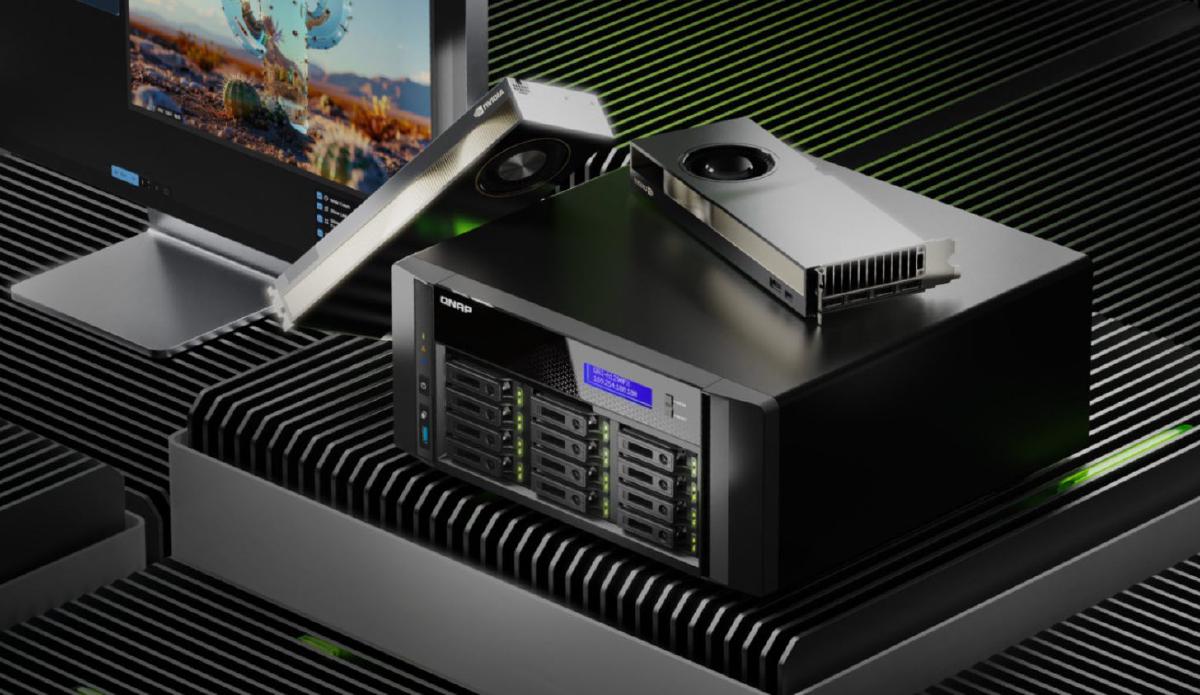
QNAP has launched its latest network-attached storage solution, the QAI-h1290FX, which merges older and newer technology to address the growing demands of artificial intelligence applications. At the heart of this new system is a 16-core AMD EPYC “Zen 2” processor, specifically the EPYC 7302P, coupled with NVIDIA’s formidable 96GB RTX PRO 6000 Blackwell GPU. As first reported by Wccftech, this combination aims to provide robust performance for various AI-driven tasks such as large language models (LLM), retrieval-augmented generation (RAG), and other generative AI applications.
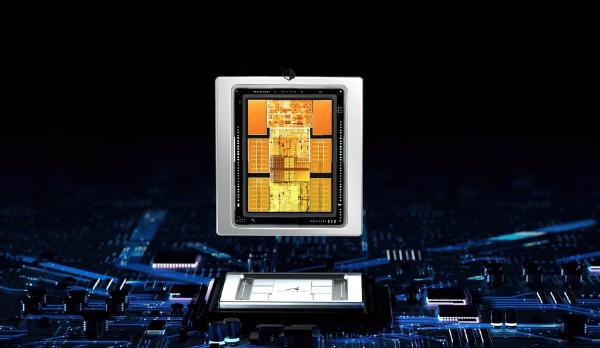
The EPYC 7302P processor, despite being released six years ago, still offers substantial computational power suitable for AI workloads. Its architecture is optimized for high throughput and multitasking, making it a reliable choice for server environments. This is particularly relevant when paired with the RTX PRO 6000, which features NVIDIA’s advanced GPU architecture and a substantial amount of VRAM, allowing for efficient handling of complex data processing and model training tasks.
From a performance standpoint, the QAI-h1290FX is designed with flexibility in mind. The ability to pair a mature CPU with a modern high-end GPU allows for a cost-effective solution while maximizing performance. This is especially appealing for companies or developers looking to harness AI capabilities without investing in entirely new hardware. The system’s architecture supports scalability, enabling users to adjust resources based on their specific requirements.
In addition to its processing capabilities, the QAI-h1290FX emphasizes easy integration into existing workflows. Built to accommodate various AI frameworks and software, the NAS is not limited to one specific use case. This adaptability makes it suitable for a broad spectrum of industries, including finance, healthcare, and creative sectors, where AI-driven insights are becoming increasingly essential.
As AI technologies advance, the need for robust infrastructure has never been more critical. The combination of legacy and cutting-edge technology in the QAI-h1290FX highlights QNAP’s commitment to providing solutions that not only meet current needs but also anticipate future demands.
The storage solution’s design also emphasizes energy efficiency and thermal management, which are crucial for maintaining performance in high-load scenarios. By implementing effective cooling mechanisms and power management features, QNAP aims to ensure that the QAI-h1290FX operates efficiently under various conditions, thus prolonging the lifecycle of its components.
QNAP’s entry into the AI NAS market with the QAI-h1290FX reflects a growing trend among hardware manufacturers to integrate diverse technologies. As businesses increasingly adopt AI applications, having the right infrastructure is paramount for operational efficiency and innovation.
With an eye towards both present and future applications, the QAI-h1290FX positions itself as a versatile tool for developers and enterprises looking to leverage AI technologies effectively. As QNAP continues to evolve its product line, the balance of legacy and new tech in this offering provides a compelling option for those looking to enhance their AI capabilities.
QNAP is a well-known provider of advanced storage solutions and networking equipment, frequently recognized for its innovative approaches to data management. The company has been instrumental in shaping the landscape of NAS systems, particularly for specialized applications like AI and cloud services.
Image credit: Wccftech
This article was generated with AI assistance and reviewed for accuracy.