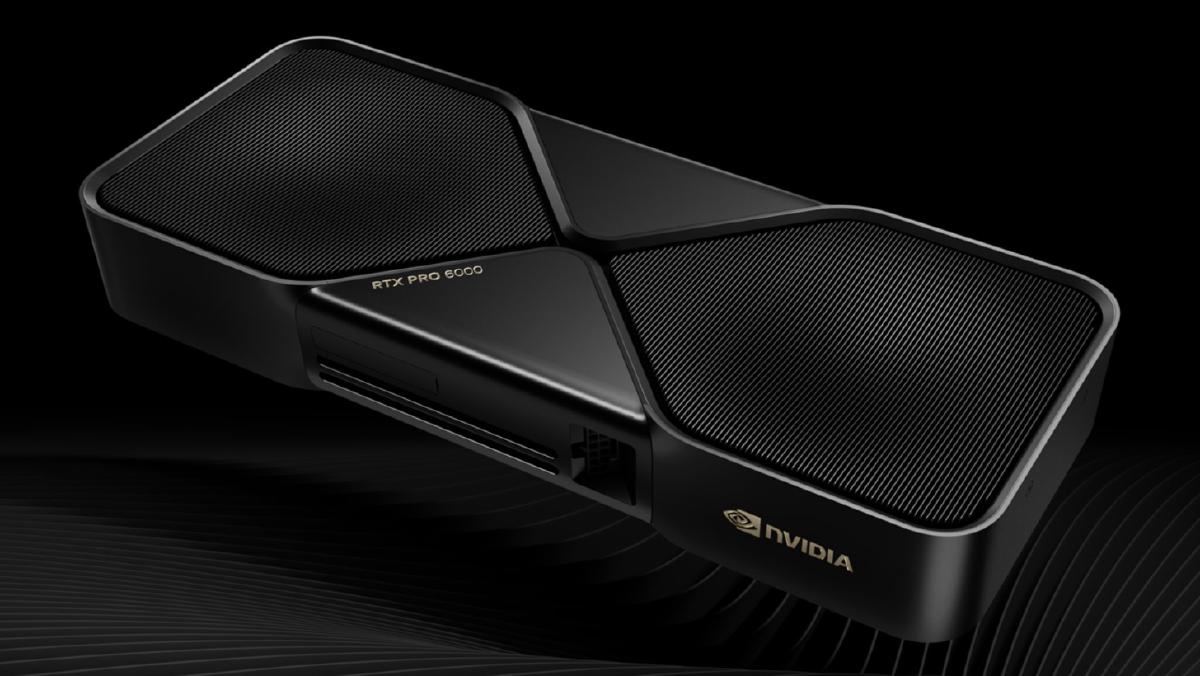
NVIDIA’s latest RTX Pro 6000 Blackwell has made waves in the AI community, showcasing its remarkable capabilities in running large AI models with unprecedented efficiency. Recent benchmarks reveal that a single RTX Pro 6000 can handle a demanding 230 billion parameter AI model while consuming only a quarter of the power required by four RTX 5090 GPUs. This finding highlights the advantages of high-performance single GPUs over traditional multi-GPU setups, especially in AI applications.
As first reported by Wccftech, the performance comparison was conducted by a user named Steveibe on X (formerly Twitter). The benchmark tests utilized the MiniMax M2.7 AI inference model, which is designed to handle extensive data processing tasks. The results demonstrate that the RTX Pro 6000 not only runs the model efficiently but also does so with a significantly lower power draw, emphasizing its potential for developers and researchers working with heavy computational workloads.
In Steveibe’s tests, the single RTX Pro 6000 was equipped to manage a context size of 32k, enabling it to tackle complex AI tasks effectively. In contrast, the four RTX 5090s, while powerful, struggled with energy consumption, drawing much more power without delivering proportional performance gains. This discrepancy highlights a key trend in modern GPU design: the shift toward maximizing performance-per-watt, which is increasingly critical in both gaming and professional environments.
The implications of these findings extend beyond just power consumption. For developers and researchers who rely on large-scale AI models, the RTX Pro 6000 offers a compelling option. Its ability to deliver superior performance with lower energy costs could lead to reduced operational expenses and a smaller carbon footprint, making it an attractive choice for those focused on sustainability.
Moreover, the efficiency of the RTX Pro 6000 positions it well within the competitive landscape of high-end GPUs. It serves as a reminder that in certain applications, especially those involving AI, investing in top-tier single GPUs may yield better results than attempting to scale performance through multi-GPU configurations. The challenges associated with synchronizing and managing multiple GPUs can complicate development, potentially negating any perceived benefits in performance.
For gamers and enthusiasts, while the RTX Pro 6000 may not be the primary focus,given its design for professional use,its performance metrics could foreshadow advancements in future consumer graphics cards. NVIDIA continues to lead the way in pushing boundaries, and this latest demonstration reinforces its commitment to innovation in both gaming and AI technology.
In summary, the RTX Pro 6000 Blackwell stands out not only for its impressive performance but also for its energy efficiency when running large AI models like MiniMax M2.7. As power consumption becomes an increasingly critical factor in GPU design, NVIDIA’s latest offering may set a new standard for what consumers and professionals alike can expect from high-performance graphics technology.
NVIDIA is a well-established leader in the graphics and AI computing space, known for its innovative GPUs and contributions to gaming, AI research, and data centers. The RTX Pro 6000 is part of the Blackwell architecture, aimed at professionals engaged in computationally intensive tasks.
Image credit: Wccftech
This article was generated with AI assistance and reviewed for accuracy.