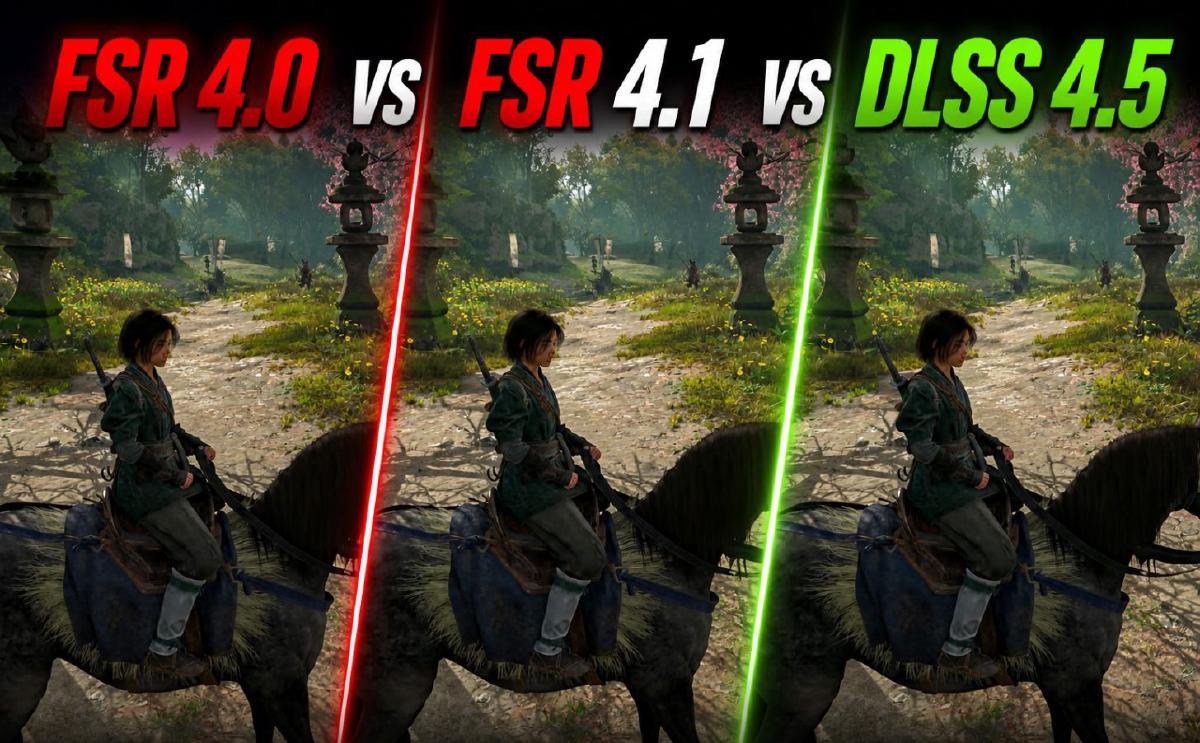
A recent blind test conducted by Computer Base has revealed that NVIDIA’s latest upscaling technology, DLSS 4.5, has a strong preference among gamers when compared to AMD’s FSR 4.1. The findings suggest that users favor the image quality offered by DLSS 4.5, with the technology emerging victorious in six out of the seven titles tested, as first reported by Wccftech.
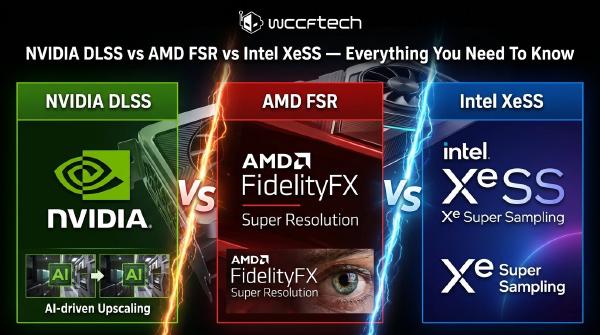
Upscaling technologies like DLSS and FSR are crucial for enhancing gaming visuals, particularly for players using high-resolution displays or those seeking higher frame rates without sacrificing quality. NVIDIA’s DLSS 4.5 has been praised for its advanced image reconstruction and superior visual fidelity, while AMD’s FSR 4.1 is recognized for its accessibility and wide compatibility across various hardware.
In the blind test, participants were presented with gameplay footage from both technologies without disclosing which was which. The overwhelming preference for DLSS 4.5 highlights NVIDIA’s continued edge in this competitive segment. The only title where FSR 4.1 managed to secure a win was in a specific scenario that might have favored AMD’s approach, but overall, the results paint a clear picture of gamer sentiment.
The success of DLSS 4.5 can be attributed to several factors. One key feature is its enhanced sharpening algorithm, which improves the clarity of images in real time. This is particularly noticeable in fast-paced titles where motion blur can detract from the gaming experience. Additionally, NVIDIA has made strides in reducing artifacts that can occur when images are upscaled, further enhancing the overall quality.
On the other hand, AMD’s FSR 4.1 is designed to be a more flexible solution, compatible with a broader range of GPUs, including older generations. However, it appears that gamers are currently leaning towards the more sophisticated image enhancements offered by NVIDIA. This preference may influence future development strategies from both companies as they seek to improve their offerings.
The blind test results could have broader implications for gamers and hardware manufacturers alike. As the battle for supremacy in upscaling technology continues, these findings may prompt AMD to further innovate to close the gap. Meanwhile, NVIDIA is likely to build on its success, further solidifying its position in the market.
Both companies have made significant investments in their respective technologies, and as gaming requirements evolve, the competition between them is expected to intensify. The emphasis on performance, visual fidelity, and user preference will shape the next generation of gaming experiences.
In summary, the recent blind test indicates a strong preference for NVIDIA’s DLSS 4.5 over AMD’s FSR 4.1, reinforcing the notion that players are looking for the best possible visual quality. As both companies continue to evolve their technologies, the gaming landscape will likely see further advancements that cater to player needs.
NVIDIA, a leader in the GPU industry, has long been recognized for its cutting-edge technologies, while AMD has made significant strides in recent years to compete in this rapidly changing market. Each company’s commitment to improving gaming experiences showcases the dynamic nature of this sector.
Image credit: Wccftech
This article was generated with AI assistance and reviewed for accuracy.