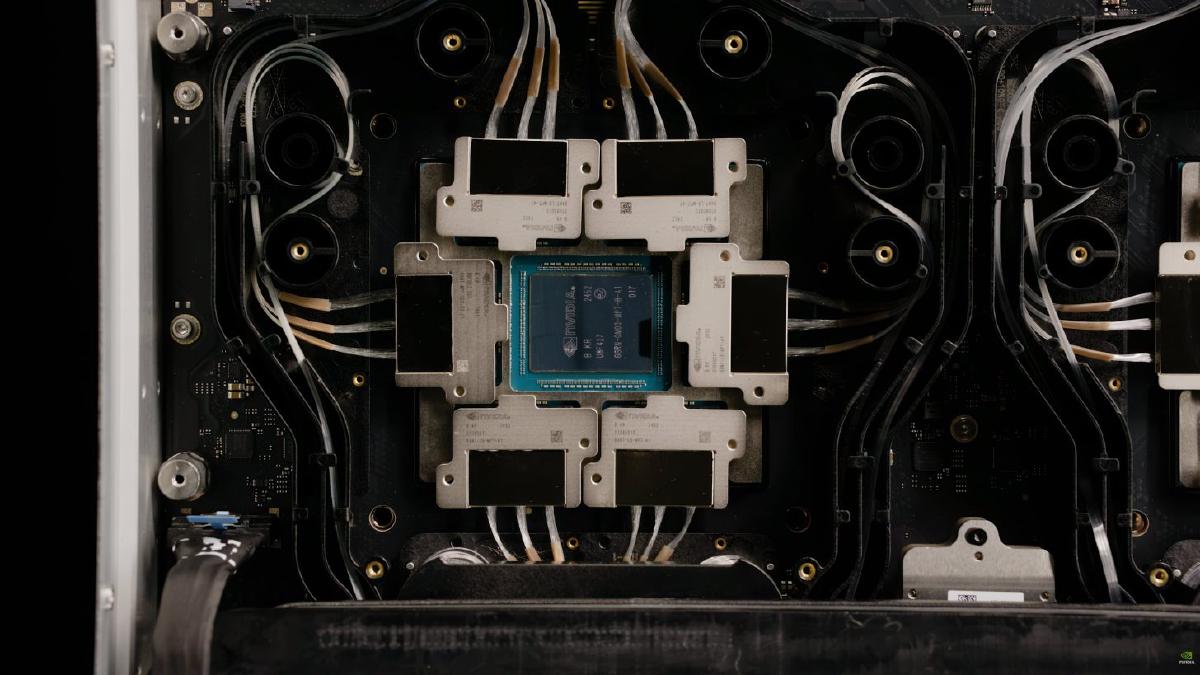
In a recent investor call, partners of NVIDIA working on co-packaged optics (CPO) have addressed growing concerns about potential delays in deployment. Both Lumentum and Coherent, key players in the CPO ecosystem, confirmed that production remains on track, effectively quelling the rumors that suggested years of postponement. As first reported by Wccftech, this update is critical for stakeholders eyeing the integration of CPO technology in data centers.
Co-packaged optics are expected to transform server architecture by integrating optics directly with the processing units. This approach is designed to enhance performance and energy efficiency, which is increasingly vital as data centers face ever-growing demands for bandwidth and speed. The technology aims to reduce latency and power consumption, making it a crucial advancement for future cloud and edge computing environments.
Lumentum’s comments during the investor call indicated a robust demand for ultra-high power CPO lasers, further emphasizing the momentum behind the deployment. The company appears confident in its ability to meet market demand, which is crucial as businesses and data centers increasingly rely on faster, more efficient technologies. Coherent echoed these sentiments, projecting that their scale-out revenue from CPO solutions is set to commence in late 2026, aligning with NVIDIA’s roadmap for broader CPO adoption.
This assurance comes as data centers are transitioning to more advanced architectures to handle the exponential growth of data traffic. The integration of optical technologies within server platforms represents a significant shift, as companies seek to optimize their systems for performance and efficiency. The collaboration between NVIDIA and its partners plays a pivotal role in this transition, ensuring that technologies are not only developed but also deployed in a timely manner.
The clarification from these companies also highlights the importance of maintaining investor confidence amidst speculation. Prior to the call, uncertainty surrounding CPO deployment had the potential to impact stock valuations and market positions. By addressing these concerns directly, Lumentum and Coherent have helped stabilize investor sentiment and reaffirmed their commitment to meeting the outlined timelines.
As the CPO initiative progresses, it remains crucial for NVIDIA and its partners to continue monitoring production timelines and market needs closely. The landscape of data center technology is rapidly evolving, and any misalignment could have significant ramifications for businesses relying on these innovations.
This latest update underscores the ongoing collaboration between NVIDIA and its partners in pushing the boundaries of optical technology. With the anticipated scaling of CPO solutions on track, NVIDIA is poised to maintain its competitive edge in the increasingly crowded data center market.
NVIDIA, known for its pioneering efforts in graphics processing units (GPUs) and AI technology, continues to innovate beyond traditional gaming and computing markets. As the company expands its focus to data center solutions, the successful implementation of CPO technology could redefine performance benchmarks in high-demand environments.
Image credit: Wccftech
This article was generated with AI assistance and reviewed for accuracy.