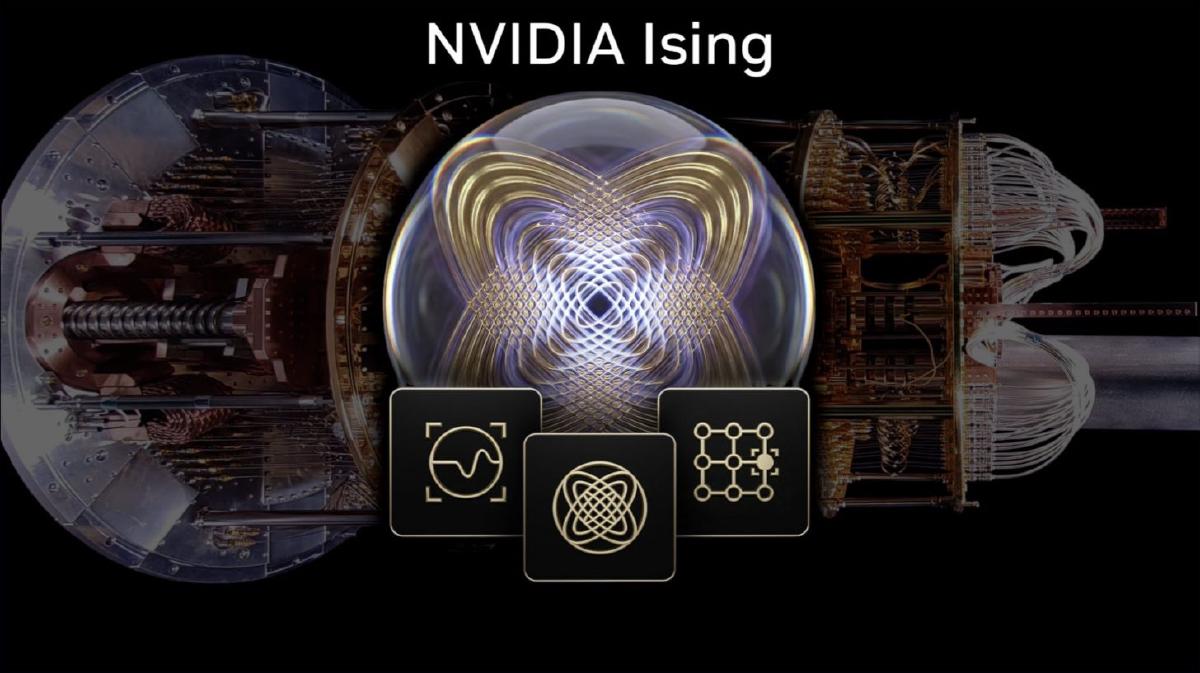
NVIDIA has taken a significant step forward in the realm of quantum computing with the launch of its new Ising AI models, which promise to enhance the practicality and performance of quantum computers. This announcement marks an important moment in a field that has long been touted as the next frontier of computing. As first reported by Wccftech, the Ising models are set to deliver performance boosts of up to three times, potentially making quantum computing more accessible and efficient.
For decades, the promise of quantum computing has been tantalizing yet elusive, with numerous companies vying to unlock its potential. Many have struggled to translate theoretical concepts into practical applications. However, NVIDIA appears to have broken new ground with Ising, which is part of its expanded efforts to provide an open-source development platform tailored for quantum computing,known as CUDA-Q. This platform boasts a “qubit-agnostic” approach, ensuring compatibility with a variety of quantum processing units (QPUs) and qubit modalities.
The significance of this development cannot be overstated. Quantum computers operate on principles vastly different from classical computers, allowing them to tackle complex problems at unprecedented speeds. However, the challenge has been in creating models that can effectively utilize these unique capabilities. NVIDIA’s Ising models aim to bridge this gap, providing developers with tools that can enhance the performance of quantum systems and streamline their application in real-world scenarios.
NVIDIA’s commitment to making quantum computing more practical reflects its broader vision of advancing technology that can benefit various sectors, including healthcare, finance, and logistics. The introduction of Ising is also expected to foster collaboration among developers and researchers, as they can utilize the open-source nature of the CUDA-Q platform to share insights and innovations.
As companies like NVIDIA continue to push the boundaries of what’s possible with quantum technology, the potential applications seem limitless. From solving complex optimization problems to enhancing machine learning capabilities, the road ahead is filled with promise. The release of the Ising AI models not only signifies a leap in performance but also opens the door for smaller developers to innovate within this space.
In an era where traditional computing methods struggle to keep pace with our growing data needs, NVIDIA’s Ising models might be just the breakthrough that the industry has been waiting for. Developers and researchers are already expressing enthusiasm over the potential improvements in efficiency and capability that come with this new model.
As we look forward to further advancements in quantum technologies, the landscape will likely shift as more developers gain access to these powerful tools. The excitement surrounding Ising is palpable, and it could very well lead to a new wave of innovations that leverage quantum computing to solve some of the toughest challenges we face.
NVIDIA is well-known for its leadership in graphics processing and AI technologies, continually pushing the envelope of what is possible. With Ising, the company reaffirms its commitment not just to gaming and AI but to expanding the horizons of computational power through quantum technology. The journey is just beginning, and as developments unfold, the influence of Ising may ripple across various industries, reshaping our understanding and utilization of quantum computing.
Image credit: Wccftech
This article was generated with AI assistance and reviewed for accuracy.