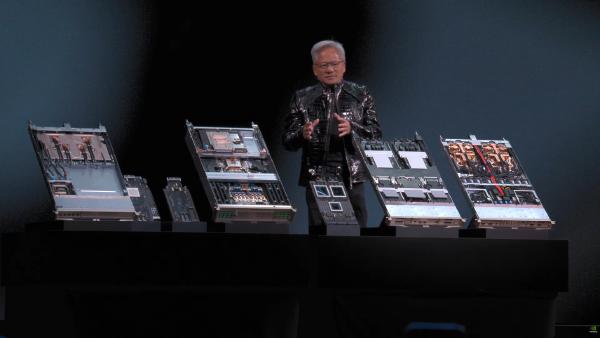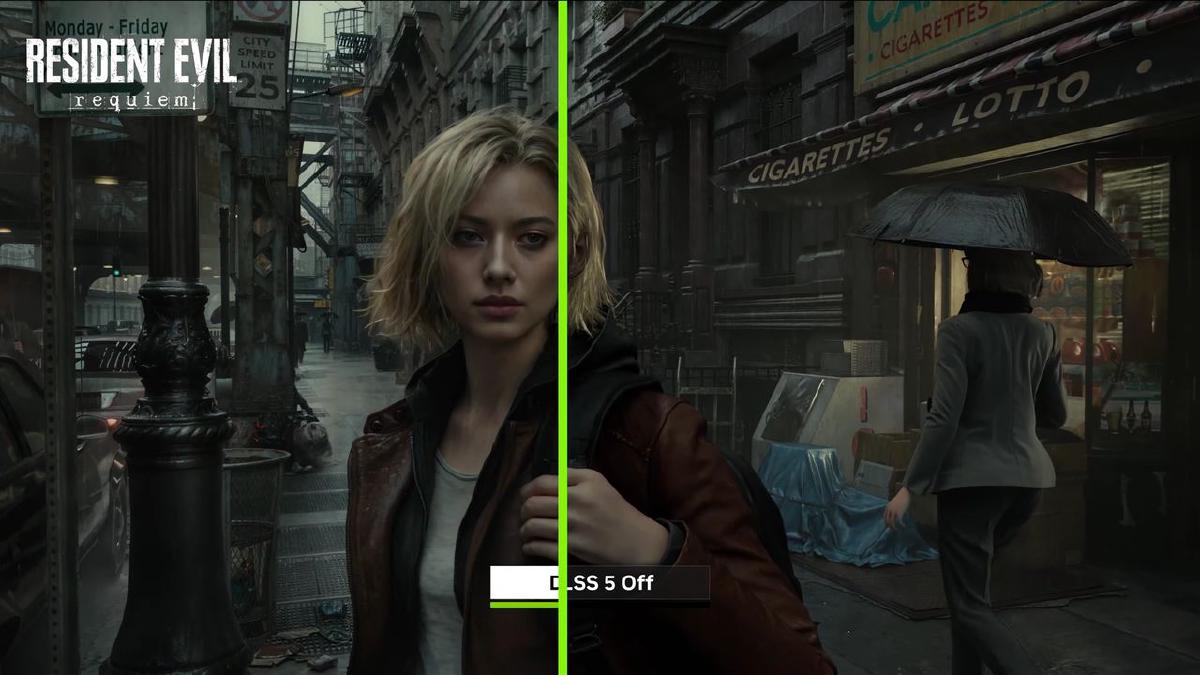
Nvidia has officially announced the upcoming release of Deep Learning Super Sampling (DLSS) 5, set to launch this fall. During a presentation at the GTC 2026 conference, CEO Jensen Huang highlighted the advancements and capabilities of this new technology, which aims to enhance the graphical fidelity of games through advanced AI techniques.
DLSS 5 represents a significant evolution from its predecessors, focusing on delivering sharper and more detailed visuals while maintaining optimal performance. As first reported by PC Gamer, this iteration appears to rely heavily on AI filtering algorithms to elevate image quality in real time. This approach seeks to provide gamers with a more immersive experience, especially in graphically demanding titles.
The new technology is designed to work seamlessly with Nvidia’s latest graphics cards, including the highly anticipated RTX 50 series, which are expected to launch alongside DLSS 5. Huang’s presentation showcased several tech demos that illustrated the capabilities of this new AI filtering approach, where textures, lighting, and even character animations were markedly improved.
Some of the most significant improvements in DLSS 5 include enhanced anti-aliasing and texture sharpening. The AI models have been trained on an extensive dataset, allowing them to recognize and adapt to various visual elements within games. This results in a more natural representation of the gaming environment, where details like foliage, shadows, and reflections are rendered with greater clarity and depth.
Moreover, DLSS 5 reportedly supports a broader range of resolutions and aspect ratios than previous versions. This flexibility is crucial as gaming hardware continues to evolve, with more players adopting ultra-wide monitors and 4K displays. Nvidia’s commitment to maintaining high performance while pushing graphical boundaries is evident, as the company emphasizes that DLSS 5 will be optimized for a wide range of gaming rigs, from high-end PCs to more modest setups.
The announcement has generated substantial buzz among developers and gamers alike. Industry insiders anticipate that the improved visuals could lead to a resurgence of interest in graphically intensive titles, especially as developers begin to leverage the capabilities of DLSS 5 in their upcoming projects. The ability to achieve higher frame rates without sacrificing visual fidelity is a crucial selling point for both Nvidia and its partners.
In addition to gaming enhancements, Nvidia is also exploring applications of DLSS 5 in VR and augmented reality. The technology could potentially redefine how immersive experiences are created, as the need for high-performance graphics becomes even more pressing in these environments.
As we approach the anticipated release date, many in the gaming industry are eager to see how developers will implement DLSS 5 in their titles. The technology’s success will largely depend on its adoption across the gaming landscape, and whether it can deliver on the promises made during Huang’s presentation.
Nvidia has a history of pushing the envelope in graphical technology, and with DLSS 5, the company seems poised to continue that legacy. As gamers prepare to upgrade their systems, the arrival of this new technology could represent a pivotal moment in the ongoing evolution of gaming graphics.
Nvidia is a leader in the tech industry, known for its advancements in GPU technology and AI applications. With a strong focus on gaming, the company continues to innovate, making significant contributions to the development of graphics and computing technologies that enhance user experiences across various platforms.
Image credit: PC Gamer
This article was generated with AI assistance and reviewed for accuracy.