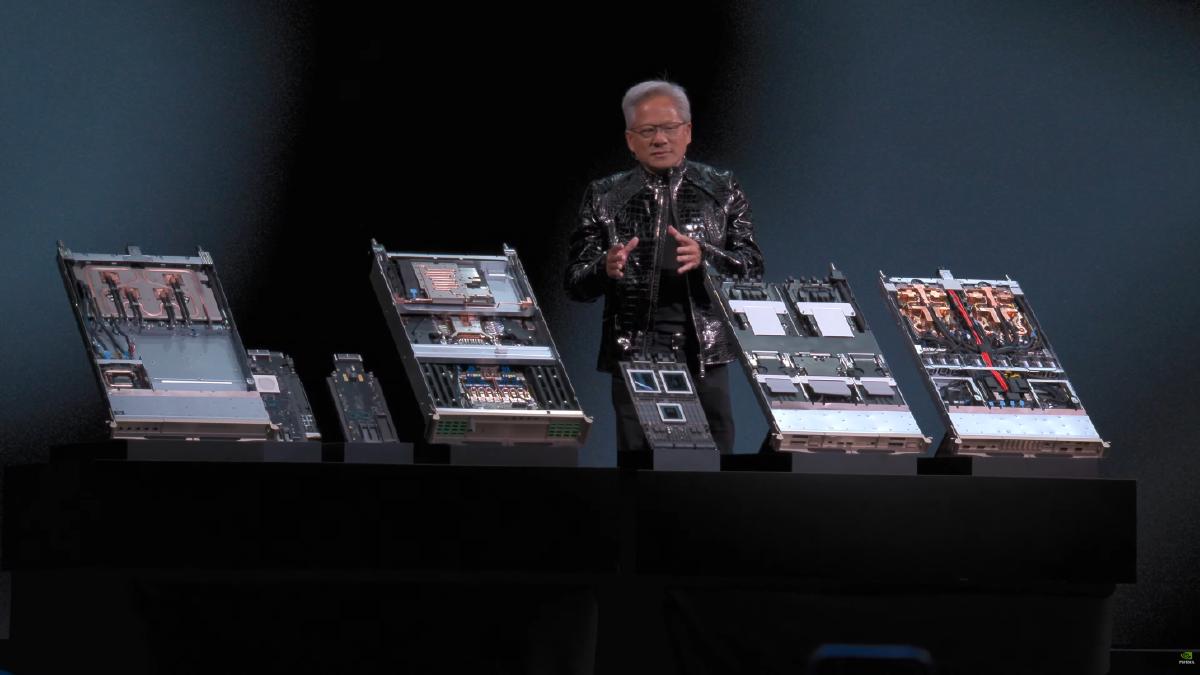
As GTC 2026 approaches, NVIDIA is anticipated to make a significant shift in its GPU strategy, moving away from the longstanding notion that a single graphics card can meet all computing needs. This evolution comes at a time when the demands for AI infrastructure have dramatically changed, compelling hardware manufacturers to adapt their offerings to cater to more specialized workloads, as first reported by Wccftech.
Over the past few years, NVIDIA has seen a surge in popularity for training workloads, largely driven by its Hopper and Blackwell architectures. These advancements have enabled more efficient processing for complex AI tasks. The next frontier for the company appears to be agentic workloads, which involve systems that can act autonomously and make decisions based on collected data. This shift signals a potential diversification strategy for NVIDIA, indicating that they may be preparing to introduce specialized GPUs designed specifically for these emerging computing needs.
The changes in GPU architecture come in the wake of an escalating arms race in AI infrastructure. Companies like AMD are also stepping up their game, recognizing that the general-purpose GPUs of the past may not be sufficient for the future of AI and machine learning. In response, NVIDIA is likely gearing up to present solutions that align more closely with the evolving computational requirements of next-generation AI applications.
Industry experts have observed that the landscape has shifted dramatically since 2022, when the focus on training workloads began to gain traction. With the growing importance of real-time data processing and decision-making abilities in AI systems, there is a clear demand for more specialized hardware. This has led to speculation that NVIDIA will introduce a range of GPUs tailored for specific tasks, offering more efficient performance than their all-encompassing offerings.
While the exact details of the upcoming announcements remain under wraps, analysts predict that NVIDIA will unveil new architectures or product lines that cater specifically to these agentic workloads. Such a move could not only enhance performance for AI applications but also allow for more competitive positioning against rivals like AMD and Intel, who are also exploring specialized hardware solutions.
NVIDIA’s shift in strategy aligns with broader trends within the technology sector, where companies are increasingly recognizing the necessity of specialized solutions to meet the unique challenges posed by AI and machine learning. As we approach GTC 2026, all eyes will be on NVIDIA to see how it plans to navigate this evolving landscape and what innovations it brings to the table.
NVIDIA Corporation, based in Santa Clara, California, is a leading manufacturer of graphics processing units (GPUs) and AI technology. Founded in 1993, the company has been at the forefront of visual computing and AI development, with its products widely used in gaming, professional visualization, data centers, and automotive markets.
Image credit: Wccftech
This article was generated with AI assistance and reviewed for accuracy.