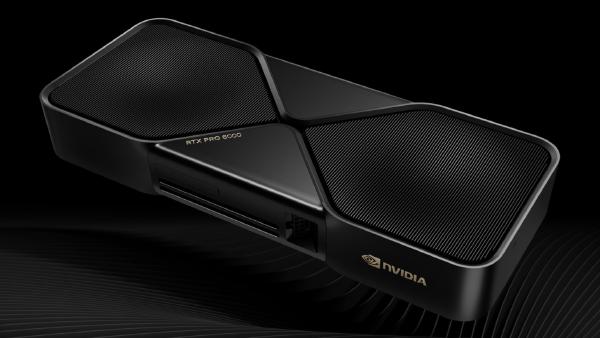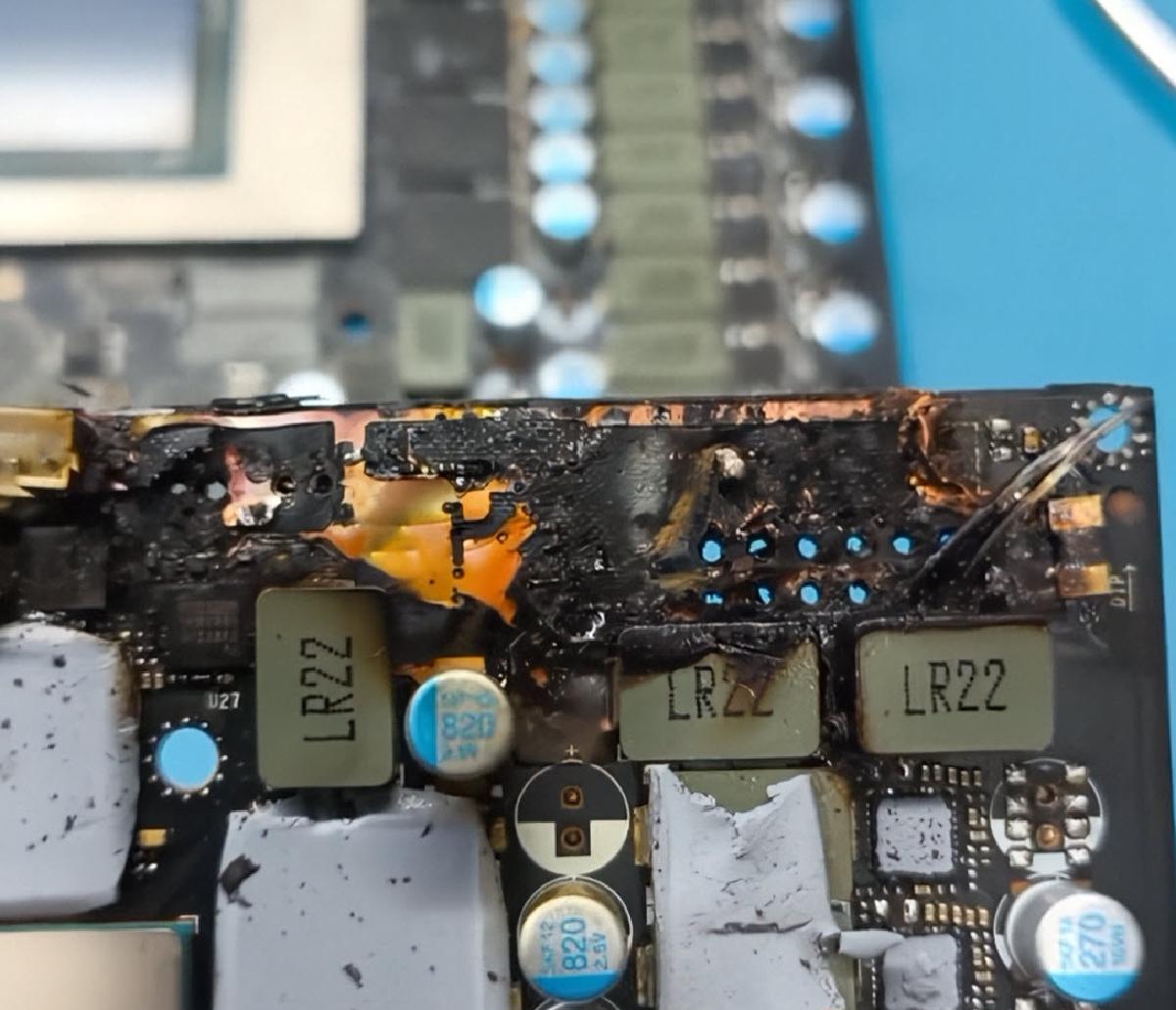
NVIDIA’s latest flagship graphics card, the GeForce RTX 5090, is under scrutiny following reports of a catastrophic failure involving its 16-pin power connector. As first reported by Wccftech, a recent incident highlights just how problematic these power connections can be for high-performance GPUs, particularly those in the RTX 40 series.
The RTX 5090, which is designed to deliver cutting-edge gaming performance, has been marred by ongoing issues related to its power connector. The design utilizes a 16-pin power connector that has been linked to multiple failures across various models, including the RTX 4090. In this latest case, the connector was found completely destroyed, rendering both the GPU and its VRAM inoperable.
Typically, the RTX 5090 requires a power supply capable of delivering between 450W to 600W, depending on the workload. This high power demand is intended for the advanced performance features that NVIDIA has incorporated into the card. However, such requirements may lead to overheating and eventual failure if the connector is not properly managed or if the power delivery fails.
Reports of blown connectors have raised concerns not only about the RTX 5090 but also about other high-performance graphics cards from NVIDIA, including the RTX 4090. Users and PC builders are increasingly worried about the long-term reliability of these components, especially when such failures can lead to significant financial loss due to the cost of the cards themselves.
What makes this situation more troubling is that similar connector issues have also been observed in AMD’s RX 9070 XT variants. This indicates that the problems might not be isolated to NVIDIA’s designs but could reflect broader issues with high-power GPUs and their connectors.
As NVIDIA continues to push the envelope of graphical fidelity and performance, the need for robust and reliable power delivery systems becomes increasingly critical. The failure of the 16-pin connector not only impacts the user experience but also places a spotlight on the engineering behind these high-performance components. Future iterations of graphics cards may need to address these power management issues more explicitly to prevent such failures.
For gamers and professionals relying on the RTX 5090 for their systems, this latest failure serves as a reminder to ensure that power supplies are adequately rated and that proper cooling solutions are in place to mitigate potential overheating. Those investing in high-end hardware should also consider monitoring tools that can help manage power usage effectively.
As this situation continues to unfold, the broader implications for future GPU designs and power management strategies will be closely watched. The RTX 5090’s performance capabilities are impressive, but they must be matched with reliability to ensure that users can maximize their investment without running into critical failures.
NVIDIA, a leader in graphics technology, has been at the forefront of GPU innovation for decades, creating products that have transformed gaming and professional visualization. The RTX 5090 represents the pinnacle of their efforts in the RTX 40 series, but this recent issue raises questions about durability and long-term performance.
Image credit: Wccftech
This article was generated with AI assistance and reviewed for accuracy.