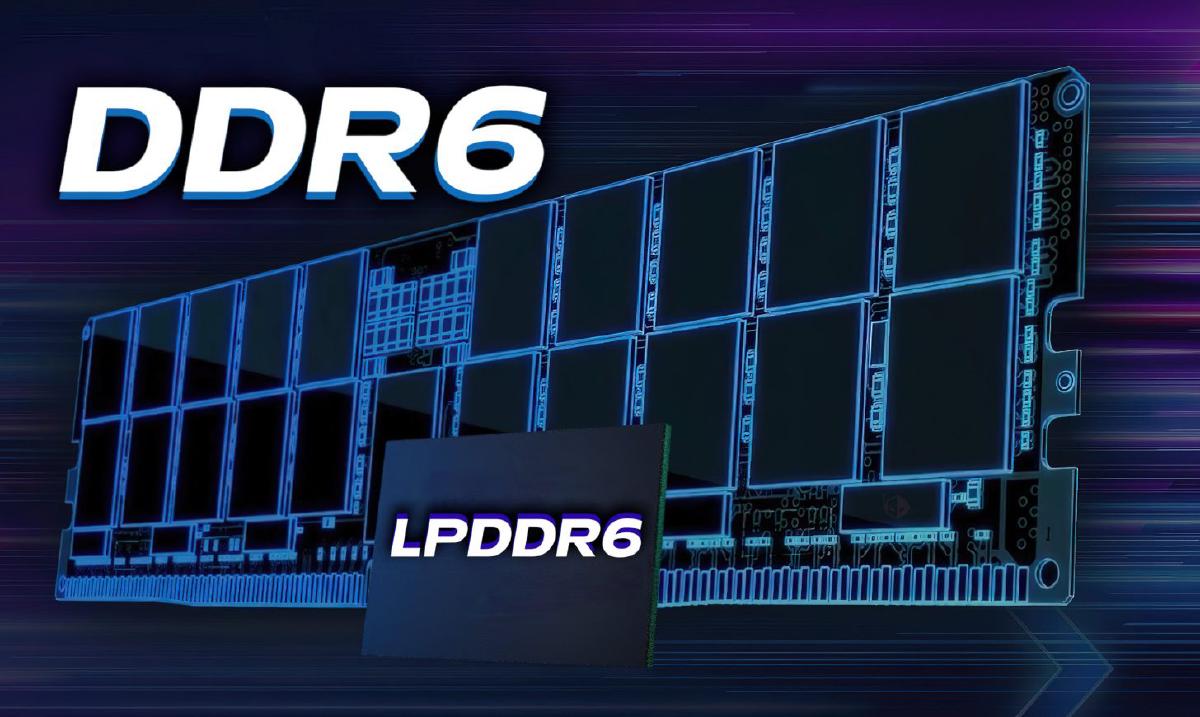
Development of DDR6 memory is gaining momentum as industry giants Samsung, SK Hynix, and Micron work towards commercialization by 2028-2029. This initiative responds to the increasing demands for faster and higher-capacity memory solutions, particularly driven by advancements in artificial intelligence (AI). As first reported by Wccftech, the race to finalize the next-generation DRAM technology is significantly fueled by the growing need for speedier memory that can support emerging AI applications.
The transition to DDR6 memory marks a crucial evolution in DRAM standards. Last year, JEDEC introduced the LPDDR6 standard, which promises enhanced performance and efficiency compared to its predecessor, LPDDR5. The adoption of LPDDR memory has surged within the AI sector due to its superior speed capabilities, which are essential for handling the intensive data processing tasks characteristic of modern AI workloads.
Samsung, SK Hynix, and Micron are not just focused on meeting existing demands; they are also anticipating future market requirements. The ongoing development of DDR6 memory is expected to deliver significant improvements in both bandwidth and energy efficiency. These enhancements will be critical for various applications including data centers and high-performance computing, where AI technologies continue to proliferate.
The competitive landscape for memory manufacturers is heating up, as these companies strive to outpace each other in rolling out innovative solutions. As each player races to achieve commercialization targets, they are also investing heavily in research and development to ensure that their DDR6 offerings will provide tangible benefits over current technologies.
In terms of specifications, DDR6 is expected to bring advancements in terms of speed and latency, pushing the boundaries of what DRAM can currently achieve. This could translate into not just faster load times but also improved overall system performance across a range of devices, from high-end PCs to gaming consoles.
Furthermore, the implications of DDR6 memory extend beyond gaming and personal computing. Industries reliant on AI and machine learning, such as healthcare, finance, and autonomous vehicles, will also benefit from the advancements this new memory standard promises. By enabling more efficient data processing, DDR6 could play a critical role in accelerating innovation across these fields.
As the timeline for DDR6 development unfolds, stakeholders in the tech industry will be watching closely. The successful deployment of this new memory standard could redefine performance benchmarks and open up new avenues for system architecture.
In summary, the race towards DDR6 commercialization is well underway, with Samsung, SK Hynix, and Micron at the forefront of this crucial technological advancement. The evolution of memory standards remains essential as demand for higher performance continues to grow, particularly in AI applications.
The three companies involved are leading figures in the semiconductor industry, each bringing decades of experience and innovation. Samsung and SK Hynix have been pivotal in shaping memory technology, while Micron has made significant strides in enhancing memory solutions tailored for various sectors. With DDR6 on the horizon, these manufacturers are poised to make substantial impacts not only in gaming but across numerous industries reliant on cutting-edge memory technology.
Image credit: Wccftech
This article was generated with AI assistance and reviewed for accuracy.