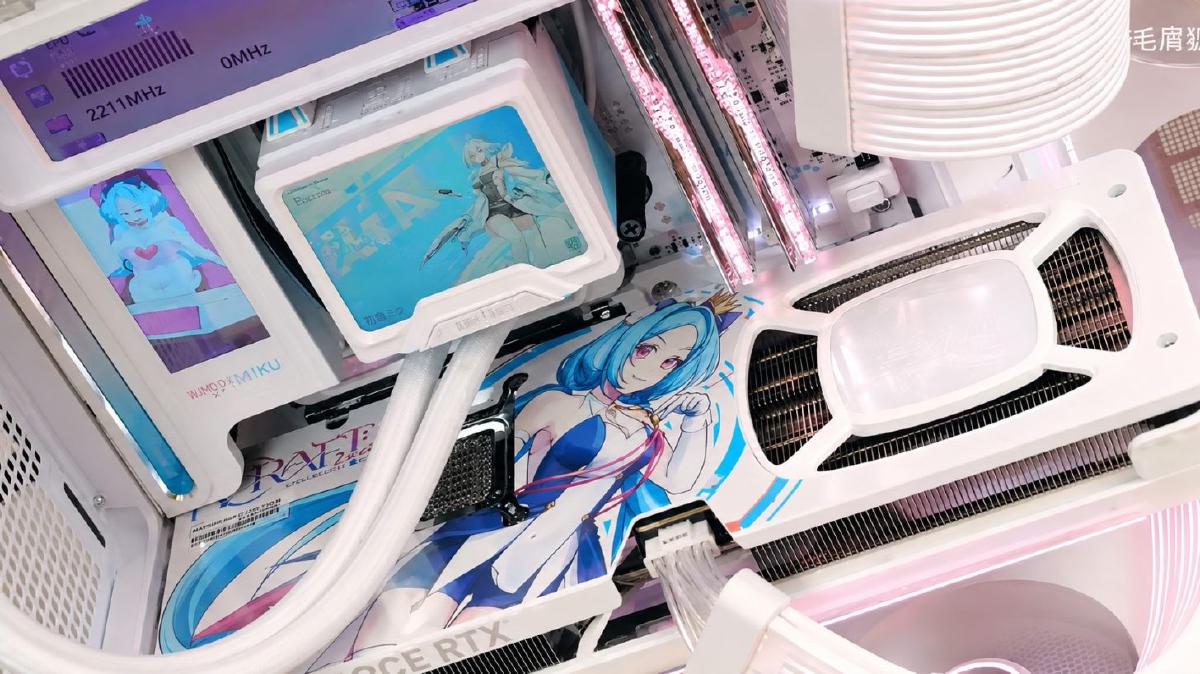
Recent developments in the GPU market indicate that some variants of the GeForce RTX 5060 are transitioning to a 16-pin connector, utilizing the cut-down GB205 die. This shift has raised questions among PC builders and gamers regarding the implications for power delivery and performance.
As first reported by Wccftech, GPU manufacturers Yeston and Maxsun have opted to implement the GB205 die in their newer RTX 5060 models. While the majority of RTX 5060 graphics cards continue to feature the original GB206 die introduced last year, this new trend suggests a move towards a more efficient power management system for certain models.
The GB205 die, which is also found in the GeForce RTX 5070, offers a different performance and power profile compared to its predecessor. While the RTX 5060 is not known for high power consumption, the introduction of the 16-pin connector indicates a potential change in how these graphics cards will be powered. Notably, the use of an 8-pin connector remains standard for many players who are accustomed to the traditional power delivery methods in GPUs.
Initial reactions from the industry suggest that there is no immediate cause for concern regarding performance. The RTX 5060, even with the new 16-pin connector, is designed to operate efficiently within its power envelope. However, some users may still prefer the familiarity and widespread acceptance of the traditional 8-pin connector.
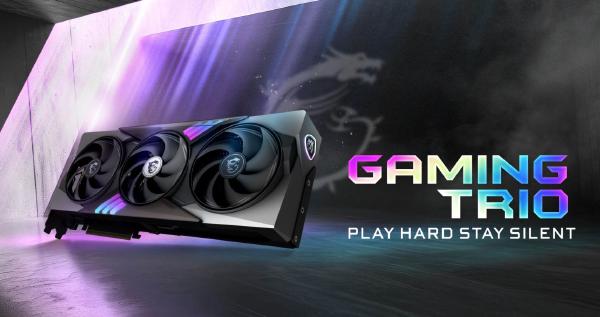
MSI has also entered the fray, recently launching four new RTX 5060 models that adopt this 16-pin connector approach. The move appears to align with broader trends in GPU design, focusing on adaptability and efficiency as gaming and computing demands evolve.
As gaming hardware continues to develop, manufacturers are striving to balance power requirements with performance capabilities. The RTX 5060’s shift to a 16-pin connector could be seen as part of this ongoing evolution, where companies explore new ways to optimize power delivery while maintaining robust performance.
For consumers, the introduction of the GB205 die and the accompanying power connector shift raises important considerations. Buyers should ensure that their power supplies are compatible with this new standard, particularly if they are upgrading from an older model. Furthermore, it highlights the importance of staying informed about the specifications and capabilities of the components being purchased.
In summary, while the transition of some RTX 5060 GPUs to a 16-pin connector and the GB205 die represents a notable shift, it seems to be a well-considered decision aimed at improving efficiency without sacrificing performance. As the market continues to adapt to these changes, users will have to evaluate their individual needs and setups when choosing a new graphics card.
Founded in 1993, NVIDIA continues to lead in the graphics technology space, offering GPUs that cater to both gaming enthusiasts and professional users. The GeForce RTX series exemplifies their commitment to delivering high-performance graphics solutions.
Image credit: Wccftech
This article was generated with AI assistance and reviewed for accuracy.