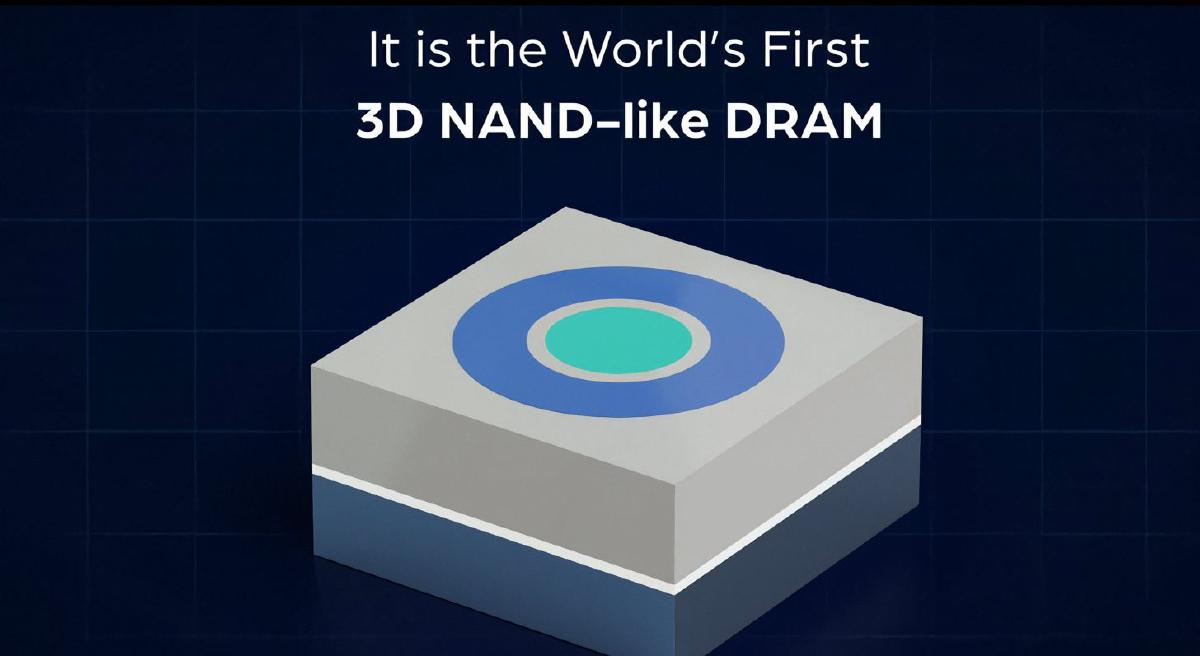
US-based NEO Semiconductor has announced an innovative memory technology known as 3D X-DRAM, which aims to address the growing demands of high-density memory solutions, particularly for artificial intelligence applications. As first reported by Wccftech, this new architecture attempts to overcome traditional DRAM capacity limitations by employing a structure similar to NAND flash memory.
The key feature of 3D X-DRAM is its ability to offer significantly higher densities. NEO Semiconductor has introduced two distinct 3D X-DRAM cell configurations: 1T1C and 3T0C. These cells are engineered to provide memory capacities of up to 512 gigabits, marking a substantial increase compared to conventional DRAM technologies. The increase in density is touted to be up to ten times that of traditional DRAM, which is particularly beneficial for memory-intensive applications such as deep learning and neural network processing.
This approach leverages a three-dimensional architecture to stack memory cells vertically. This innovative design contrasts with the conventional two-dimensional layout of most DRAM chips. By stacking cells, NEO aims to not only enhance density but also improve efficiency and potentially reduce power consumption. This is crucial in a landscape where energy costs and efficiency are becoming paramount for developers and hardware manufacturers.
In addition to density improvements, 3D X-DRAM technology is being developed with high yield in mind. NEO Semiconductor emphasizes the importance of ensuring that memory solutions can be produced reliably and at scale. The combination of high density and high yield could position 3D X-DRAM as a compelling alternative to High Bandwidth Memory (HBM), which is currently favored in high-performance computing scenarios but remains expensive and complex to manufacture.
The introduction of 3D X-DRAM comes at a time when the demand for advanced memory solutions continues to grow, driven by the rise of AI, machine learning, and data-intensive applications. Traditional DRAM technologies often struggle to keep pace with the increasing demands for both capacity and speed, presenting a clear opportunity for NEO Semiconductor’s new approach to gain traction in the market.
Industry experts are closely monitoring NEO’s progress as the company moves from proof-of-concept to potential commercial applications. The implications of a successful rollout of 3D X-DRAM could be far-reaching, impacting not just AI and data centers, but also consumer electronics and gaming, where memory performance is critical.
NEO Semiconductor is positioning itself at the forefront of this evolving landscape, with its innovative approaches to memory technology. Established as a key player in semiconductor development, the company is focused on pushing the boundaries of what is possible in memory solutions. As the technology matures, it will be interesting to see how 3D X-DRAM integrates into existing architectures and what new opportunities it creates for developers and hardware manufacturers alike.
Image credit: Wccftech
This article was generated with AI assistance and reviewed for accuracy.