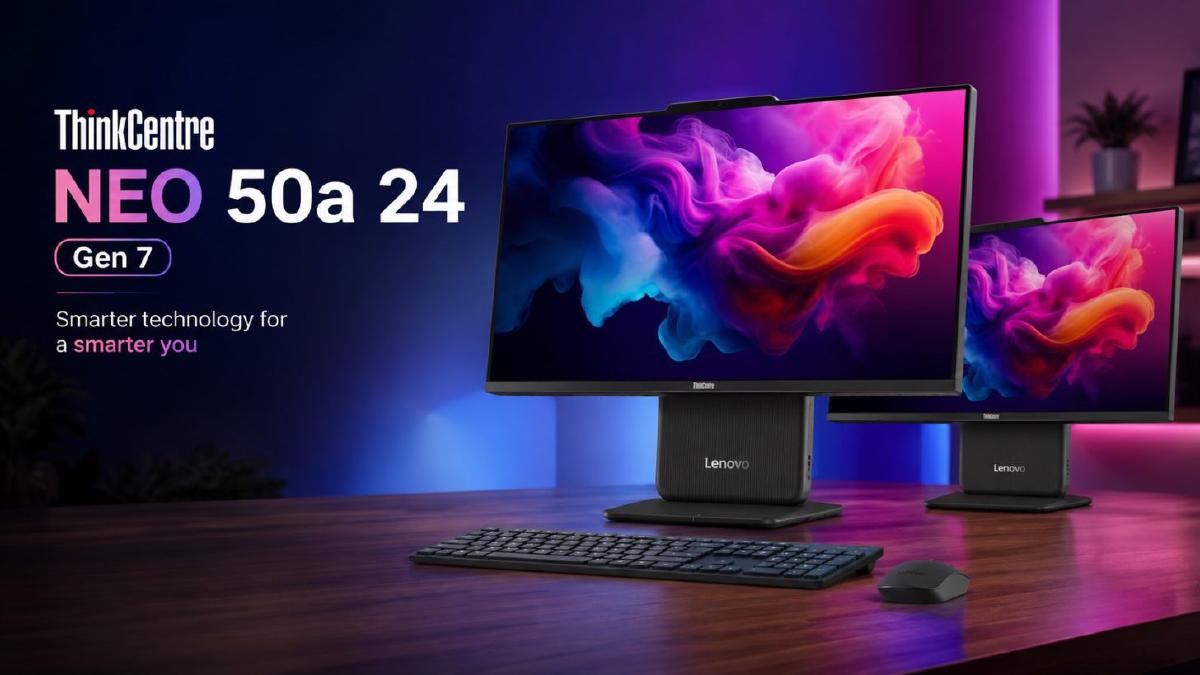
Lenovo has officially announced the launch of its latest all-in-one (AIO) PCs, the ThinkCentre Neo 50a 24 Gen 7 series. This new line comes equipped with advanced Wildcat Lake processors from Intel, specifically the Core i5-320 and Core i7-350 models. As first reported by Wccftech, these new desktops aim to enhance user experience through improved performance and display technology.
The Gen 7 models build on the foundation set by their Gen 6 predecessors, which were introduced just weeks ago. However, the latest iteration marks a significant upgrade, particularly in terms of display capabilities. The ThinkCentre Neo 50a 24 Gen 7 PCs feature a crisp 120 Hz display, designed to provide smoother visuals for both professional applications and casual entertainment.
In terms of specifications, the Neo 50a 24 Gen 7 can support up to 32 GB of RAM, making it suitable for multitasking and demanding workloads. The introduction of the Wildcat Lake processors signals Lenovo’s commitment to incorporating cutting-edge technology into its products, ensuring that users benefit from enhanced performance.
The design of these AIO desktops maintains Lenovo’s focus on functionality and aesthetics. The PCs are tailored for business environments, with an emphasis on space-saving solutions without sacrificing performance. This makes the Neo 50a 24 an appealing option for offices looking to optimize their workstations.
Lenovo’s history as a leading original equipment manufacturer (OEM) for PCs plays a crucial role in its product strategy. The ThinkCentre series has long been recognized for its reliability and robust performance, catering to a variety of professional needs. The Gen 7 versions aim to uphold this reputation, leveraging Intel’s latest technology to provide a significant boost in computing power.
The introduction of the 120 Hz display is particularly noteworthy. With many AIO PCs currently on the market offering standard refresh rates, Lenovo’s decision to incorporate higher refresh capabilities could enhance the visual experience, especially for tasks involving video content or graphics-heavy applications.
Potential buyers will appreciate the versatility of the Neo 50a 24 Gen 7. Its ability to handle a range of applications, from basic office software to more demanding creative tasks, positions it as a formidable choice in the AIO segment. Coupled with Lenovo’s established customer support and warranty options, this new generation of desktops is well-poised for success.
As the Gen 7 ThinkCentre Neo 50a 24 AIO PCs hit the market, Lenovo continues to reinforce its position as an industry leader in PC manufacturing. With the combination of powerful processors, high refresh rate displays, and ample RAM, these desktops are set to meet the evolving needs of modern businesses.
Lenovo, founded in 1984, is a global leader in smart technology and is well-known for its business-oriented devices. The ThinkCentre series, part of Lenovo’s extensive portfolio, is designed to deliver reliable and efficient performance tailored to corporate environments.
Image credit: Wccftech
This article was generated with AI assistance and reviewed for accuracy.