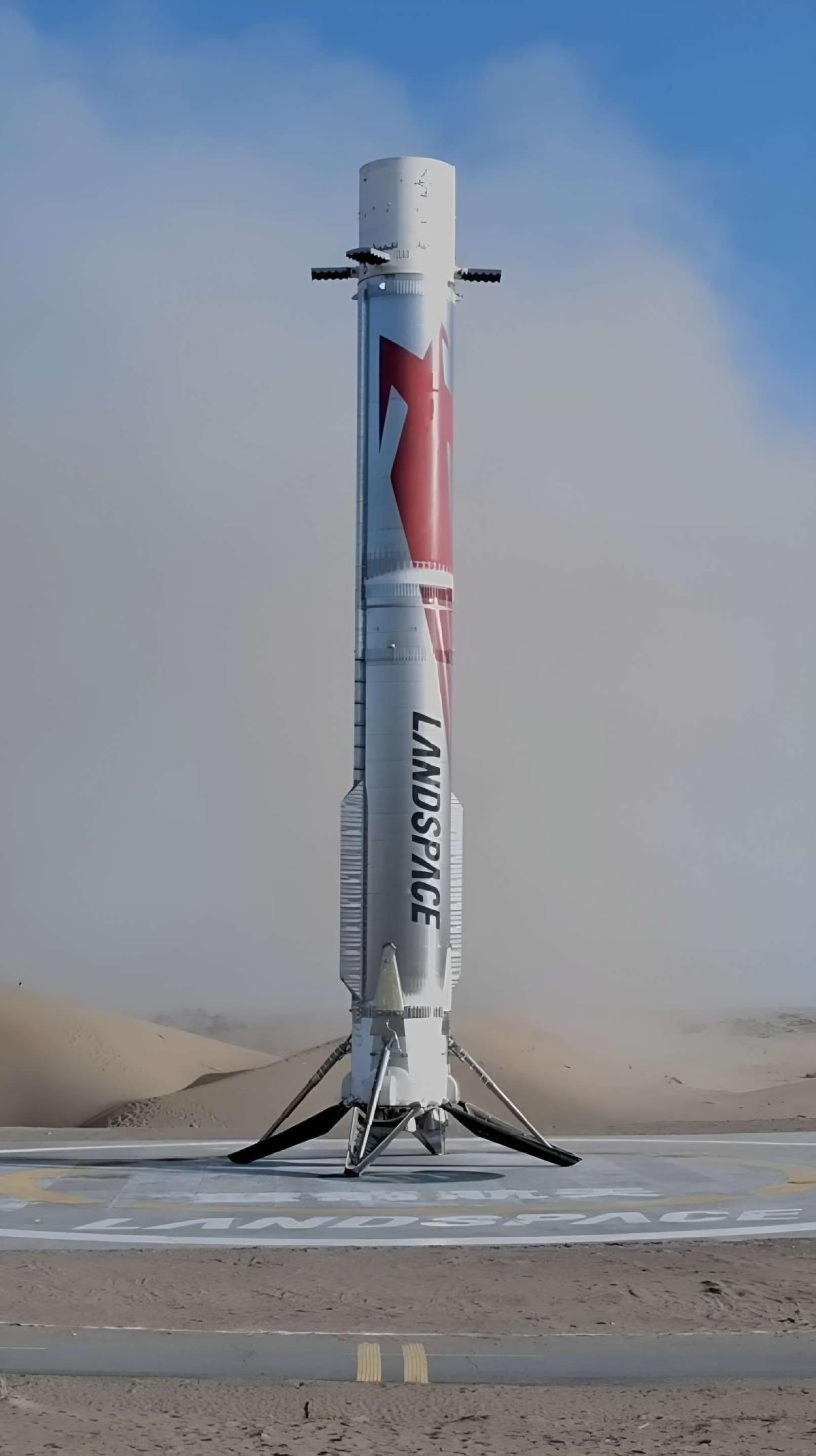
In a significant development for China’s burgeoning space sector, LandSpace has achieved a successful recovery of the booster from its Zhuque-3 (ZQ-3) rocket. This accomplishment positions LandSpace as a formidable player in the race for reusable rocket technology, putting it in direct competition with the state-supported China Academy of Launch Vehicle Technology (CALT) and its CZ-10B rocket. As first reported by Wccftech, this milestone underscores China’s ambitions to expand its capabilities in both public and private space endeavors.
The successful landing of the ZQ-3 booster follows a setback in December when the company faced challenges with a previous launch. This recovery marks a pivotal moment in LandSpace’s journey, demonstrating that it can operate alongside established government-backed players in the growing landscape of space exploration. The implication is clear: China is not only advancing its state-led programs but is also fostering a robust private sector that can compete on an international scale.
China’s commitment to expanding its presence in space is further highlighted by its recent actions. The nation has reportedly reserved over 200,000 orbital slots with the International Telecommunication Union (ITU), with estimates suggesting that the total could rise to approximately 244,000. This aggressive strategy indicates that China is not just planning to participate in space activities but is actively working to dominate the sector.
The ZQ-3 rocket is designed to carry payloads into low Earth orbit and is part of LandSpace’s broader vision for the future of its space launch capabilities. Its successful booster recovery opens doors for potential reusability, which is becoming a critical factor in reducing launch costs and increasing the frequency of space missions. The ability to reuse rocket components can significantly lower the financial barrier for satellite deployment and other space-related projects.
LandSpace’s trajectory reflects a broader trend within the global space industry. With traditional barriers dissolving, private companies are increasingly taking on roles that were once the sole purview of government agencies. The success of the ZQ-3 booster signals that LandSpace could be a key player in this new era of space exploration and commercial endeavors.
In the context of a rapidly evolving space landscape, the significance of LandSpace’s achievement cannot be understated. It not only showcases the technological advancements made by the company but also emphasizes the competitive environment that has emerged as nations and private entities strive for leadership in space exploration.
As China continues to assert its technological prowess in space, the successful recovery of the ZQ-3 booster reinforces the notion that the country is committed to building a sustainable and competitive space industry. With both public and private entities pushing the boundaries of what is possible, the future of space exploration in China looks increasingly promising.
Founded in 2015, LandSpace is one of the leading private aerospace companies in China, focusing on launch vehicles and satellite development. The company represents a significant shift in China’s approach to space, embracing innovation and competition to achieve its ambitious goals.
Image credit: Wccftech
This article was generated with AI assistance and reviewed for accuracy.