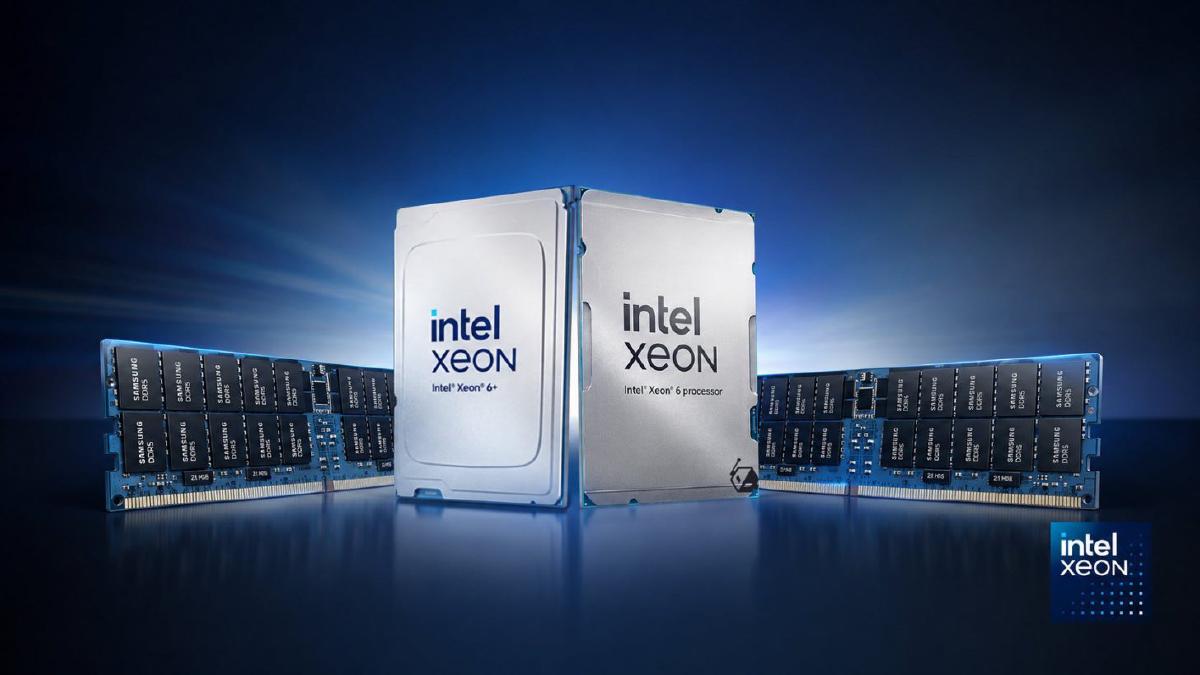
Intel has made a significant announcement regarding its Xeon 6 platform, becoming the first to support 8000 MT/s DDR5 RDIMM. This advancement is crucial as it sets the stage for future developments, particularly with the anticipated 2nd Generation MRDIMM expected to reach speeds of 8800 MT/s by 2027. The push for higher memory bandwidth is largely driven by the increasing demands of advanced AI workloads, which continue to expand at a rapid pace.
As reported by Wccftech, the introduction of 8000 MT/s memory is a pivotal step for data centers attempting to keep up with the growing needs for processing power and data transfer speeds. With AI becoming more integrated into various sectors, the necessity for swift and efficient data handling cannot be overstated. Intel’s Xeon 6 CPUs aim to address this requirement, allowing users to harness the benefits of enhanced memory speeds.
The new memory speeds not only promise increased performance but also signal a shift in how data centers will operate in the coming years. As AI applications evolve, the reliance on higher bandwidth will become more pronounced, making Intel’s advancements critical to future-proofing data center infrastructure.
In addition to the immediate availability of 8000 MT/s memory, the anticipation of 8800 MT/s MRDIMM support highlights Intel’s commitment to keeping pace with technological advancement. This future offering aims to empower AI applications that require swift data processing capabilities, catering to sectors that demand high performance and efficiency.
Intel’s leadership in this technology race also reflects broader industry trends. With competitors working diligently to enhance their own offerings, the development of higher memory speeds will likely become the norm as businesses strive to optimize their operations for AI and other data-intensive tasks.
These advancements are not just beneficial for large enterprises but also for smaller developers who rely on effective data management solutions. As more indie studios and smaller tech companies seek to leverage AI in their projects, the availability of high-performance memory solutions will be essential for their growth and innovation.
Intel has positioned itself at the forefront of this evolution, ensuring that its Xeon 6 platform can meet the future demands of both large-scale operations and smaller developers looking to harness the power of AI. With the release of 8800 MT/s MRDIMM on the horizon, the promise of more significant improvements looms, setting a high bar for competitors to match.
The Xeon 6 family’s capabilities not only highlight Intel’s advancements in memory technology but also reflect its understanding of the rapidly changing landscape of data processing and AI. As the demands of the digital world continue to grow, Intel’s proactive steps provide a glimpse into a future where speed and efficiency will be paramount.
Intel Corporation has a long-standing history in the semiconductor industry, focusing on developing advanced technologies that power a wide range of devices. The Xeon line specifically targets the data center market, providing robust solutions for enterprise needs, particularly in cloud computing and AI applications.
Image credit: Wccftech
This article was generated with AI assistance and reviewed for accuracy.