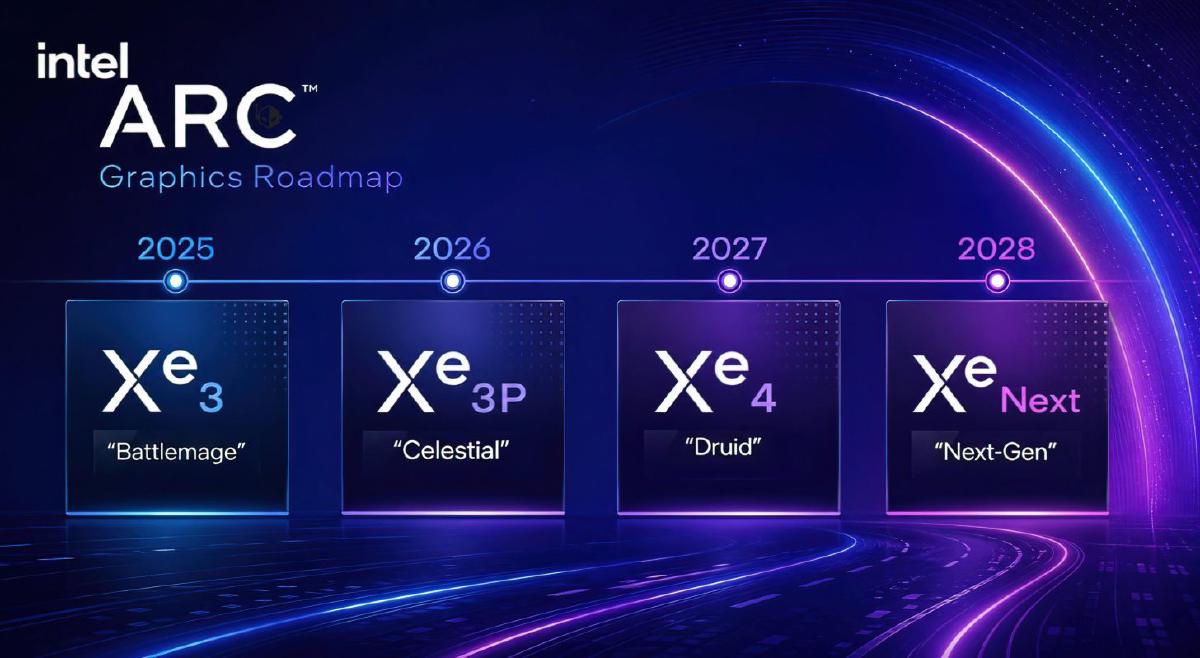
In a significant shift in its GPU strategy, Intel has decided to cancel its Xe3P “Celestial” discrete gaming GPU line, which has been eagerly anticipated by PC gamers and enthusiasts alike. As first reported by Wccftech, Intel is refocusing its efforts on future architectures, with plans to introduce the Xe4 “Druid” in 2027, followed by a next-generation Xe architecture in 2028.
Intel’s ambitions in the graphics card market have been a topic of much discussion. The company had initially aimed to compete with established players like NVIDIA and AMD, but the announcement of the Xe3P’s cancellation raises questions about its long-term strategy. Instead of the discrete gaming GPUs many were hoping for, Intel will concentrate on integrated and AI-focused graphics solutions within the Xe3P microarchitecture, which is expected to launch in 2026.
The Xe4 lineup is poised to debut in 2027, bringing with it renewed hope for gamers who have been wanting a more competitive offering from Intel. The Xe-Next architecture is projected to follow in 2028, potentially changing the landscape once more. This timeline suggests that while gamers may have to wait a while longer for dedicated gaming GPUs from Intel, the company is not giving up on its ambitions in the graphics space.
Intel has a rich history in the tech industry, but its attempts to carve out a niche in the gaming GPU market have often been met with skepticism. The Xe series was seen as a potential turning point for the company, but the cancellation of Xe3P raises concerns about Intel’s ability to keep pace with its competitors.
While the Xe3P may be shelved, integrated graphics solutions are becoming increasingly important as gaming systems continue to evolve. Intel’s focus on this area indicates a willingness to adapt to changing market demands. The decision to forgo a discrete gaming line in favor of integrated options may reflect a strategic pivot aimed at meeting the needs of a diverse range of users, from casual gamers to professional creators.
For fans of Intel’s technology, the Xe4 and Xe-Next announcements provide a glimmer of hope for the future. As the company refines its offerings, it will be interesting to see how these upcoming architectures measure up against existing products from NVIDIA and AMD.
Intel must learn from its past endeavors to ensure that its future products resonate with gamers. The ongoing evolution of graphics technology makes it essential for Intel to innovate and respond to the community’s needs. As the company continues to develop its next-generation GPUs, we can expect a keen eye on performance, efficiency, and gaming experience.
In summary, while Intel has taken a step back from the Xe3P discrete gaming GPU line, its plans for Xe4 and Xe-Next reveal a commitment to remain in the graphics race. Gamers and tech enthusiasts alike will be watching closely as Intel charts its course in the ever-competitive GPU landscape.
Intel, a household name in technology, is still navigating its way through the graphics card market. With the Xe series, Intel aims to create a lasting impact, despite the bumps along the way.
Image credit: Wccftech
This article was generated with AI assistance and reviewed for accuracy.