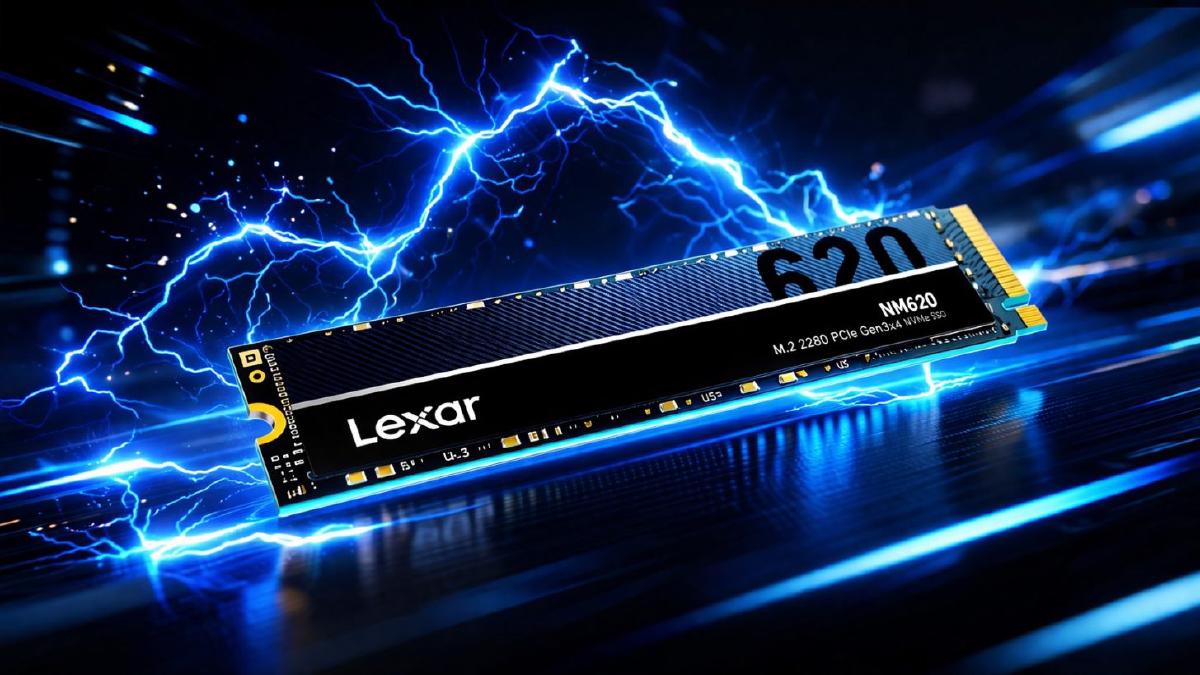
Recent insights from Lexar reveal a significant trend in gamer preferences regarding storage solutions and memory capacities. As first reported by Wccftech, research indicates that gamers are increasingly resistant to accepting smaller capacity solid-state drives (SSDs), a shift that could have major implications for the PC building landscape.
Lexar’s findings highlight a stark difference in attitudes toward SSDs and RAM. While the demand for sub-terabyte SSDs has dropped significantly, many gamers seem to be more flexible when it comes to RAM capacity. This divergence illustrates how priorities are evolving among gamers, who seek performance and speed tailored to their gaming needs.
Over the past few years, the prices of both RAM and SSDs have surged. However, the impact of these components varies greatly. RAM plays a crucial role in gaming performance and multitasking capabilities, influencing how smoothly games run and how many applications can be managed simultaneously. On the other hand, while SSDs significantly improve loading times and overall system responsiveness, they are often seen as secondary to RAM when it comes to gaming performance.
This trend poses an interesting challenge for both developers and manufacturers. Gamers are increasingly demanding higher-capacity storage solutions to accommodate their expansive libraries of games, especially as titles continue to grow in size. The expectation for larger SSDs suggests that developers should focus on producing high-capacity models that meet these evolving demands.
Interestingly, the acceptance of lower RAM capacities suggests a nuanced understanding among gamers of what is essential for their setups. It seems many are willing to compromise on RAM as long as their storage needs are met with sufficient space and speed. This flexibility could indicate that gamers are prioritizing overall system performance and gaming experiences over raw specifications.
The implications for smaller developers and hardware manufacturers are significant. With the gaming market evolving at such a rapid pace, there is an opportunity for companies to cater to these emerging preferences. Developers who are able to provide competitive pricing on larger capacity SSDs while maintaining the quality that gamers expect may find themselves at a distinct advantage.
As the gaming industry continues to adapt to these consumer preferences, it is essential for both established and independent developers to stay attuned to what gamers are looking for. By focusing on larger SSD options and maintaining affordability, there is potential for success in a crowded and competitive marketplace.
Lexar, known for its innovative memory and storage solutions, is clearly paying close attention to these trends. As they continue to observe shifts in gamer preferences, it will be fascinating to see how they respond and what new products they might introduce to meet the demands of .
For gamers looking to build or upgrade their PCs, understanding these trends can provide valuable insights into the components that matter most. The focus on larger SSDs could drive gamers to reconsider their choices, potentially reshaping the landscape of PC gaming hardware for years to come.
In a time of rising costs and evolving preferences, gamers are making their voices heard, and companies like Lexar are taking note. The balance between storage capacity and RAM will undoubtedly continue to play a crucial role in the future of gaming performance.
Image credit: Wccftech
This article was generated with AI assistance and reviewed for accuracy.