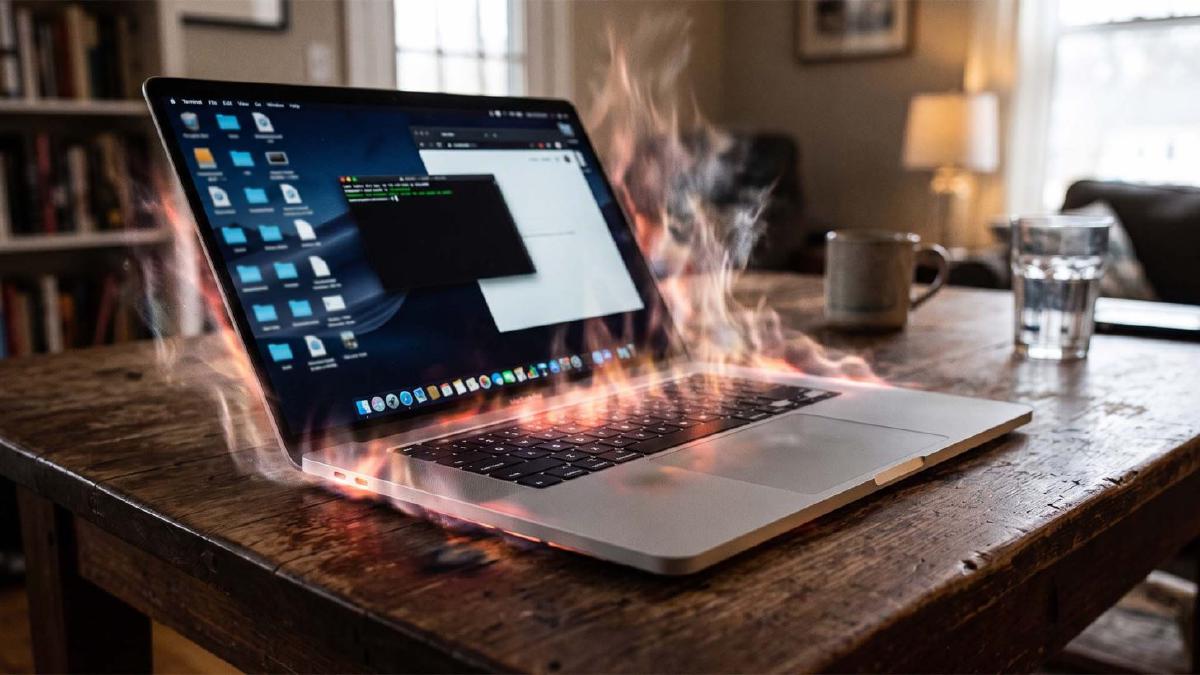
Many users continue to rely on older Intel-powered MacBook Pro models, even as Apple transitions to its own silicon. However, these legacy machines often produce unacceptable thermals and power consumption issues. In a notable breakthrough, one enthusiastic owner has successfully reduced the idle GPU power draw of the Radeon Pro 5300M by nearly 80 percent through the development of an open-source utility that enables a custom refresh rate of 48Hz.
As first reported by Wccftech, the owner utilized Windows Boot Camp to run the MacBook Pro, which traditionally does not support a 48Hz refresh rate. This limitation prompted the user to create a custom refresh mode, allowing the laptop to operate more efficiently during low-demand tasks. The resulting reduction in power draw not only enhances the machine’s thermal performance but could also extend battery life for users who frequently rely on their laptops away from a power source.
The Radeon Pro 5300M, which features a 4GB GDDR6 memory, was designed to handle demanding tasks such as video editing and gaming. However, users often experience significant performance dips and increased idle power consumption, particularly in scenarios where the GPU is not fully utilized. By lowering the refresh rate, the custom utility allows the GPU to enter a state that consumes far less power when the system is not actively rendering high-refresh-rate content.
This innovative solution highlights a broader issue with power management in older hardware, particularly those using higher wattage Intel CPUs. While the transition to Apple Silicon has led to significant improvements in efficiency, many users still depend on these older models for legacy applications or software compatibility. This issue raises questions about the lifecycle of older technology and the demand for performance optimizations that can extend usability.
The open-source aspect of the utility is also notable, as it emphasizes the DIY ethos prevalent in the tech community. Many enthusiasts are willing to share their solutions, improving the experience for other users who might be facing similar challenges. By contributing back to the community, this MacBook Pro owner has not only improved their own device but has also provided a potential solution for countless others grappling with idle power draw issues.
In a market increasingly driven by efficiency and sustainability, utilities like this may become more common as users seek ways to optimize their existing hardware rather than upgrading to newer models. As more individuals experiment with custom solutions, we may see a surge in community-driven applications catering to legacy systems, particularly those stuck on older architectures.
Apple’s transition to its M1 and M2 chips has undoubtedly left some users behind. However, instances like this demonstrate that innovation can still thrive in the hands of dedicated users willing to tinker and explore. This story serves as a reminder that even older technology can find new life through creativity and community collaboration.
The MacBook Pro, known for its robust performance and premium build quality, has long been favored by creative professionals. As new generations of hardware emerge, the challenge remains to maintain performance while minimizing power consumption, a balance that increasingly defines the future of computing technology.
Image credit: Wccftech
This article was generated with AI assistance and reviewed for accuracy.