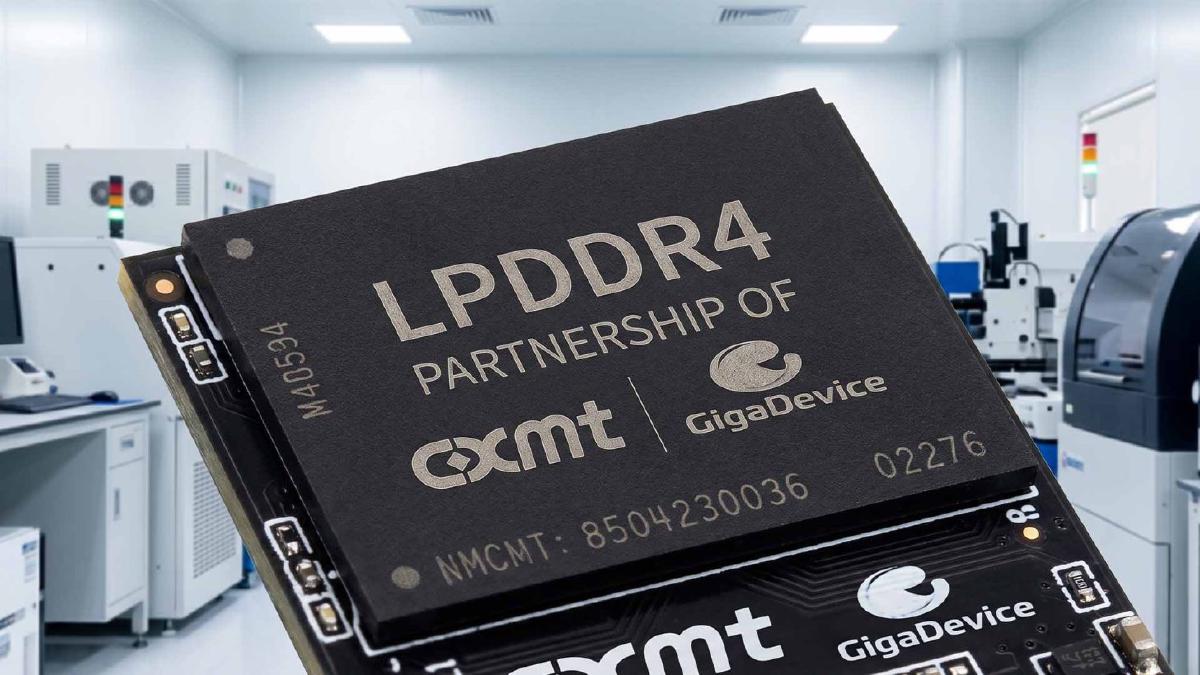
The landscape of the global DRAM market is shifting, as Chinese manufacturers are seizing an opportunity left by Samsung’s recent exit from the LPDDR4 and LPDDR4X business. As first reported by Wccftech, CXMT, a rising player in the DRAM arena, is ramping up production in collaboration with fellow Chinese firm GigaDevice. This partnership aims to fill the gap left by Samsung, which has left many of its customers reeling from the abrupt change.
Samsung, SK hynix, and Micron have long dominated the DRAM market, but CXMT is making strides to challenge this status quo. Their focus on advancing memory standards positions them as a key competitor in a field that has seen limited competition historically. The decision by Samsung to withdraw from LPDDR4 production has sparked concerns among its customers, who are now seeking alternatives. CXMT and GigaDevice’s commitment to LPDDR4 production could provide some much-needed stability in a market that is often unpredictable.
Interestingly, while LPDDR4 RAM does not yield high profit margins, it offers an opportunity for Chinese manufacturers to build long-term relationships with clients. By stepping in to support customers abandoned by Samsung, CXMT and GigaDevice could establish a loyal customer base that values reliability over short-term profitability. This could set the stage for further growth as demand for innovative memory technology continues to rise.
In recent years, the global demand for memory has fluctuated due to various factors, including advancements in technology and shifts in consumer behavior. As the tech industry increasingly leans towards mobile devices and high-performance applications, the need for reliable and efficient memory solutions grows ever more critical.
CXMT’s efforts represent not just a business opportunity but a significant point in the broader context of the DRAM market. The partnership with GigaDevice reinforces the notion that Chinese manufacturers are poised to take on larger competitors and potentially reshape the memory market landscape.
As the dust settles from Samsung’s exit, how CXMT and GigaDevice will navigate the challenges ahead. However, their proactive approach to ramping up LPDDR4 production suggests they are ready to tackle the competition head-on.
CXMT, formally known as ChangXin Memory Technologies, is a state-backed semiconductor manufacturer that aims to become a formidable force in the global DRAM sector. GigaDevice, on the other hand, is known for its expertise in flash memory and has been expanding its product offerings to include DRAM solutions. Together, these companies are not just stepping in to fill a void; they are actively reshaping the dynamics of the DRAM industry.
Image credit: Wccftech
This article was generated with AI assistance and reviewed for accuracy.