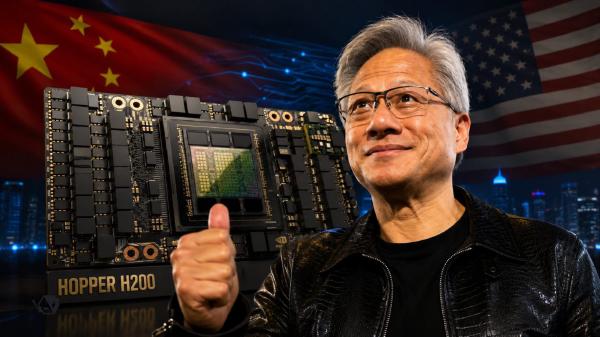
Recent developments indicate a widening gap between the United States and China, particularly in the competitive landscape of artificial intelligence. As first reported by Wccftech, China has implemented new restrictions on its top engineering talent, aiming to prevent an exodus of skills to the United States. This move comes at a critical moment as NVIDIA has entered into a series of strategic partnerships, collectively valued at a staggering $500 billion, to bolster its own AI initiatives.
China’s decision to limit the overseas travel of its leading AI engineers highlights the country’s commitment to retaining its technological brainpower. This initiative reflects broader concerns about losing competitive advantages as countries race to innovate in AI. By curbing access to international opportunities, China hopes to maintain a stronghold in this rapidly evolving sector, which is increasingly becoming a focal point for national security and economic growth.
In contrast, NVIDIA is not standing still. The tech giant has proactively secured significant financing to propel its AI projects forward. The company’s ambitious plans involve partnerships that could reshape the AI landscape, providing necessary resources for research, development, and infrastructure. This initiative not only underscores the importance of AI in the current tech climate but also positions NVIDIA as a key player in the global arena.
As the U.S. and China continue to decouple economically and technologically, the implications for the global AI landscape are profound. China’s efforts to boost its domestic capabilities may lead to increased innovation within its borders, but it also raises concerns about a potential brain drain from other countries. Meanwhile, NVIDIA’s financial mobilization signals a robust commitment to advancing AI technologies, which could have far-reaching effects on the industry.
These developments are reflective of a larger trend where nations are increasingly prioritizing technological sovereignty and security. As countries strive to cultivate their own ecosystems of innovation, the competition is set to intensify. This moment could mark a significant shift in how AI is developed and deployed on a global scale.
Understanding the implications of these actions requires looking at the broader context of AI’s role in society. The technology not only drives advancements in various sectors but also shapes the future of employment, ethics, and governance. As AI continues to evolve, so will the dynamics between nations investing in its growth.
NVIDIA, known for its powerful graphics processing units, has been at the forefront of AI development, leveraging its technology to enhance machine learning and deep learning applications. Meanwhile, China’s focus on nurturing its engineering talent suggests a strategic direction aimed at fostering homegrown innovations that could rival those developed in the U.S.
As both nations navigate this complex landscape, the results of their respective strategies will likely define the future trajectory of AI technology and its influence on global markets. The actions taken today will have lasting repercussions, making it crucial for stakeholders to stay informed and engaged with these unfolding developments.
Image credit: Wccftech
This article was generated with AI assistance and reviewed for accuracy.