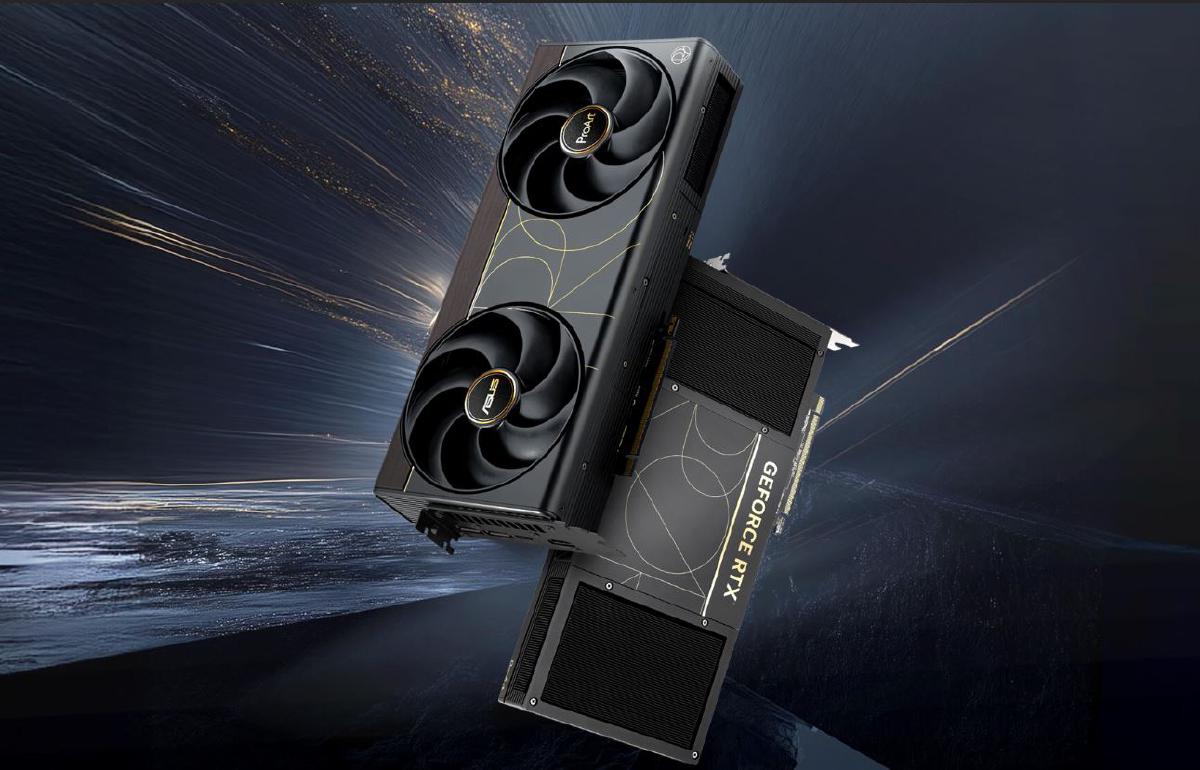
ASUS has officially launched the ProArt GeForce RTX 5090 OC Edition, a graphics card that builds upon the design of the Founders Edition while introducing several key enhancements. This new model, as first reported by Wccftech, features a 2.5-slot thickness and a robust cooling solution aimed at optimizing performance for both creators and gamers alike.
The ProArt RTX 5090 OC adopts the aesthetic of the Founders Edition, known for its sleek design and dual-vented backplate that promotes better airflow. However, ASUS has taken a step further with the ProArt variant, opting for a slightly thicker build. The increased size has allowed for a more powerful cooling system, which includes a vapor chamber and the use of liquid metal, significantly improving thermal management.
One of the standout features of this model is its 32 GB of GDDR7 memory, which is expected to cater to demanding applications and gaming scenarios. The card is designed not only for high-end gaming but also for professional tasks that require substantial graphical power, such as 3D rendering and video editing. The increased VRAM capacity makes it particularly appealing for users who often work with large assets or complex projects.
ASUS has maintained a focus on performance, ensuring that the ProArt RTX 5090 OC can handle the most demanding workloads while maintaining stable temperatures. The incorporation of liquid metal as part of the cooling solution is particularly noteworthy, as it enhances heat dissipation compared to traditional thermal paste. This advancement allows for sustained peak performance without the risk of thermal throttling, an essential factor for prolonged gaming sessions or intensive rendering tasks.
While ASUS initially unveiled the ProArt RTX 5090 OC at CES earlier this year, the recent silent launch signals the company’s confidence in its capabilities. The card’s performance benchmarks are still forthcoming, but early indications suggest that it will compete strongly against existing high-end graphics solutions.
For gamers and content creators alike, the ProArt RTX 5090 OC is poised to be a formidable addition to any high-performance rig. Its combination of advanced cooling technology, ample memory, and enhanced airflow design positions it as a compelling option for those looking to upgrade their systems.
As the graphics card market continues to evolve, ASUS’s latest offering reflects the growing demand for versatility in hardware. With more users pushing the boundaries of gaming and content creation, products like the ProArt RTX 5090 OC are likely to become increasingly vital in delivering the performance users expect.
Founded in 1989, ASUS has established itself as a leader in the hardware space, providing a wide range of components tailored to both gamers and professionals. The ProArt line, in particular, focuses on meeting the needs of creative professionals, delivering products that balance aesthetics, functionality, and performance. The ProArt RTX 5090 OC is a testament to this commitment.
Image credit: Wccftech
This article was generated with AI assistance and reviewed for accuracy.