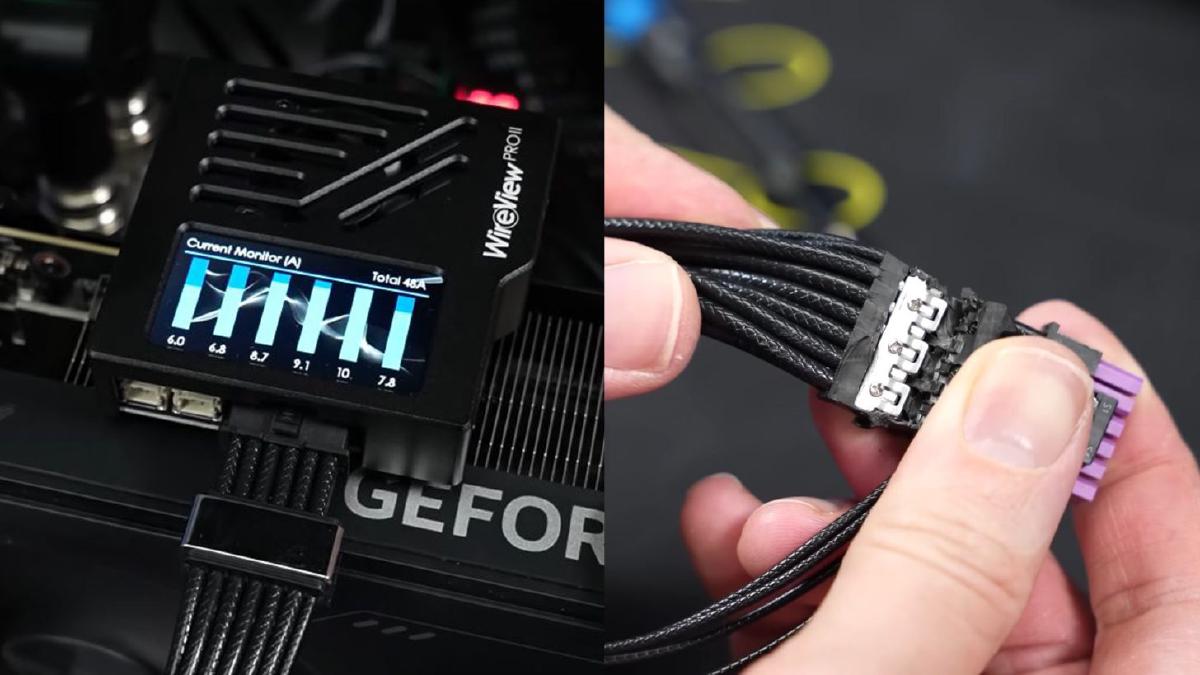
In a surprising turn of events, ASUS’s ROG Equalizer 12V-2x6 cable appears to underperform when it comes to load balancing, a feature the company heavily promoted. This revelation comes from a recent demonstration by Der8auer, a well-known German YouTuber and hardware expert, who has been investigating the cable’s capabilities.
As first reported by Wccftech, Der8auer conducted tests using the WireView Pro II, which revealed a significant current imbalance across the pins of the ROG Equalizer. The expectation was that this cable would provide superior load balancing compared to standard 12V-2x6 connectors, a claim ASUS had put forward in its marketing. However, the findings suggest otherwise, raising questions about the effectiveness of the new product.
Der8auer’s extensive testing included removing the bridge connector, which notably improved the balance of the current distribution. This outcome indicates that the ROG Equalizer may not deliver the promised enhancements over traditional connectors, potentially disappointing users who were looking for innovative solutions in power management for their RTX 5090 graphics cards.
The implications of this imbalance are significant, especially for high-performance PC builders and gamers who depend on reliable hardware to ensure optimal performance. With power-hungry components like the RTX 5090, which demands efficient power delivery, the effectiveness of the ROG Equalizer becomes crucial. As it stands, the findings from Der8auer’s tests suggest that users might be better off sticking to conventional connectors to avoid any performance pitfalls.
This isn’t the first time ASUS has faced scrutiny over its products, but the ROG Equalizer’s shortcomings could tarnish its reputation for innovation in PC hardware. The enthusiastic support from the community for unique solutions often leads to high expectations. When those expectations are not met, it can create a rift between consumers and brands.
Der8auer’s videos, which detail his findings and provide visual proof of the imbalance, have already sparked discussions among tech enthusiasts and industry professionals alike. His approach emphasizes transparency and encourages consumers to scrutinize products before making purchases, a trend that benefits everyone in the long run.
As this situation unfolds, it will be interesting to see how ASUS responds. Will they take steps to rectify the issue, or will they stand by the ROG Equalizer as a viable product? For now, potential buyers should proceed with caution, keeping in mind the importance of power management in high-performance gaming setups.
ASUS has established itself as a leader in gaming hardware with its ROG line, catering to gamers and tech aficionados alike. However, instances like this remind us that even major players can stumble, and it’s often the smaller developers and lesser-known titles that provide valuable lessons in innovation and consumer trust.
Image credit: Wccftech
This article was generated with AI assistance and reviewed for accuracy.