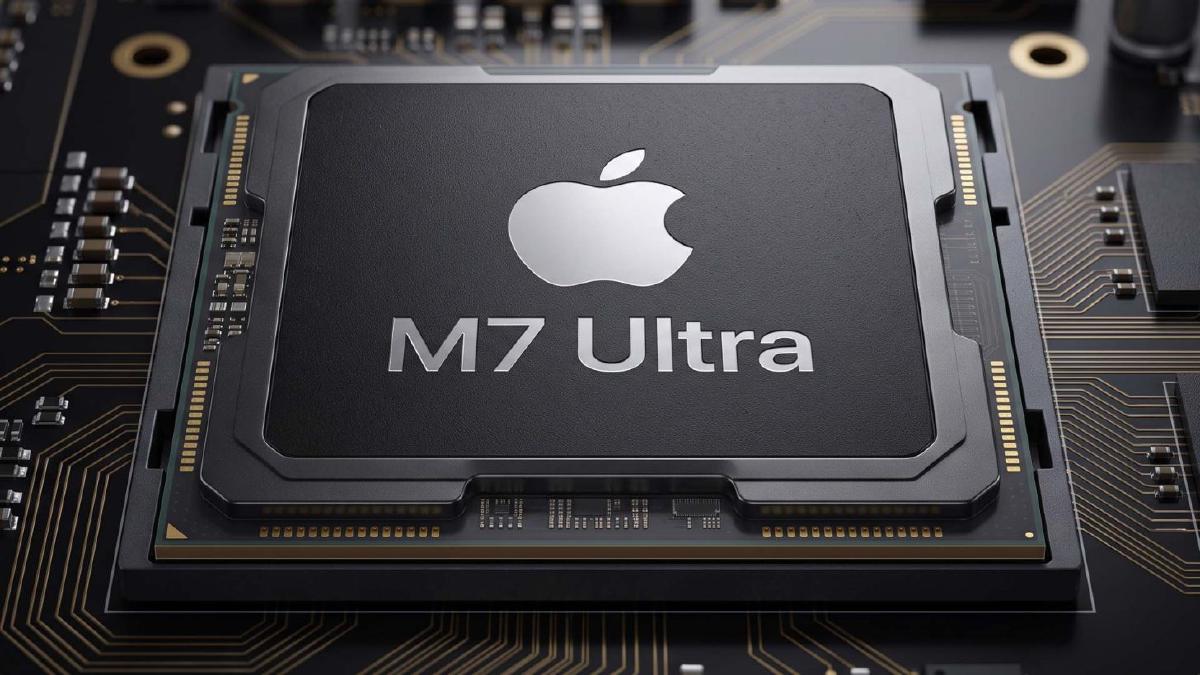
Apple is making strategic moves in its silicon lineup, as first reported by Wccftech. The tech giant has decided to bypass the anticipated M6 Ultra release, focusing instead on rolling out the M5 Ultra this year and subsequently introducing the M7 Ultra. Set to launch after the M7 Pro and M7 Max in 2027, the M7 Ultra aims to significantly improve performance, particularly for users working with complex AI models.
The key highlight of the M7 Ultra is its impressive memory capacity. This chip will feature double the maximum unified memory of its predecessor, the M5 Ultra. For developers and data scientists striving to run multi-billion-parameter AI models locally, this boost in memory is crucial. It effectively removes the memory limitations that have hindered many from deploying sophisticated AI applications on their personal systems.
The implications of this development are substantial. With the ability to handle one trillion-parameter models, the M7 Ultra could unlock new possibilities for machine learning, data analysis, and creative AI endeavors. As the demand for more powerful hardware grows, especially in fields such as artificial intelligence and deep learning, the M7 Ultra positions itself as a favorable option for those looking to push the boundaries of what is possible in local computing.
Apple’s strategy of focusing on high-performance silicon is aligned with the increasing reliance on AI technologies across various industries. As more developers seek to innovate within this space, hardware like the M7 Ultra will be essential. The enhanced memory capacity will likely appeal to not only software engineers and AI researchers but also creative professionals in fields such as gaming and digital content creation.
In a tech landscape where performance remains a critical factor, Apple is poised to make a significant impact with its M7 Ultra. Having observed the growing trends toward larger AI models and more complex computations, this move could also indicate a shift in how Apple perceives its role in the computing market. Their commitment to advancing memory capabilities shows a clear understanding of the evolving needs of developers and researchers alike.
The anticipation surrounding the M7 Ultra reflects a broader excitement for innovative hardware solutions that cater to cutting-edge technology. As Apple gears up to unveil its new lineup, it’s clear that the M7 Ultra could play a pivotal role in facilitating local AI development and research.
To wrap up, Apple’s M7 Ultra release is much more than just a hardware upgrade; it represents a significant step forward in the capabilities available to developers and creators. With its promise of double the memory compared to the M5 Ultra, it is set to empower the next generation of AI applications, fostering creativity and innovation in this rapidly evolving field.
Apple has a long-standing reputation for quality and design in its hardware, striving to equip users with the tools needed to succeed in their creative and technical endeavors. As they continue to evolve their silicon offerings, it will be fascinating to see how the M7 Ultra influences the development of AI technology and beyond.
Image credit: Wccftech
This article was generated with AI assistance and reviewed for accuracy.