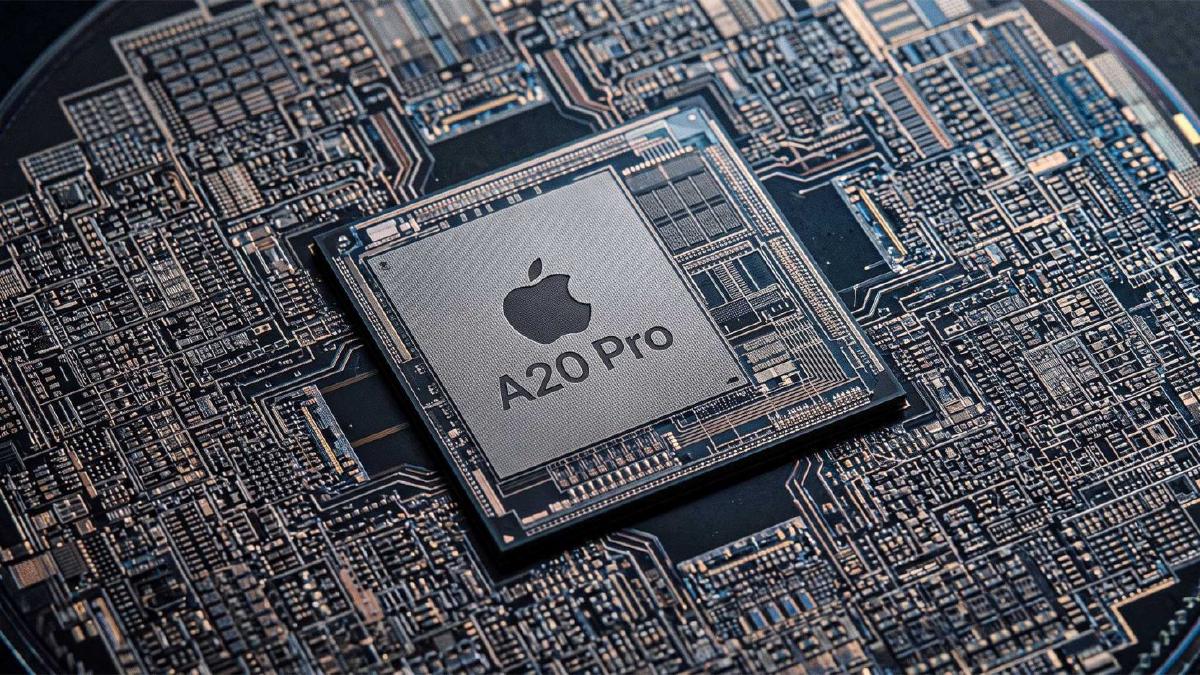
Apple is gearing up for its “Surprise and Shine” event on September 9, which will mark the debut of its highly anticipated A20 Pro chipset, the company’s first 2nm processor designed specifically for the iPhone. As first reported by Wccftech, this new system-on-chip (SoC) is expected to showcase significant advancements in graphics performance due to a record increase in GPU core count and enhanced memory bus capabilities.
The A20 Pro will incorporate Wafer-Level Multi-Chip Module (WMCM) technology, a notable shift from the older InFO_PoP packaging method. This transition could allow for more efficient integration of components, leading to improvements in both speed and power consumption. The first die shot of the A20 Pro reveals a 7-core GPU, an increase from its predecessor’s core count, which suggests that users can expect enhanced graphical fidelity and overall gaming performance on their iPhones.
Apple’s approach to the A20 Pro is indicative of its continued commitment to pushing the boundaries of mobile computing. The increase in GPU cores is not merely a numbers game; it signifies a potential leap in handling more complex graphics and visual effects. This is particularly relevant for gaming, as developers increasingly aim to deliver console-quality experiences on mobile platforms. The advancements could also benefit applications that require substantial graphical processing, such as augmented reality (AR) and 3D modeling tools.
In addition to the increase in GPU cores, the new WMCM packaging technology is expected to allow for a wider memory bus. A broader memory interface can lead to improved data transfer rates, which is crucial for applications that demand high bandwidth, such as high-resolution gaming and video processing tasks. This change may help alleviate some of the bottlenecks associated with data flow that can hinder performance in resource-intensive scenarios.
While Apple has a reputation for innovation, the A20 Pro’s enhancements position it to compete more aggressively with offerings from Qualcomm and other semiconductor manufacturers. As the mobile gaming market expands and evolves, the ability to deliver high-performance hardware becomes essential. The A20 Pro appears to be a strategic response to these industry trends, focusing on delivering the speed and graphics capabilities that gamers increasingly expect from their mobile devices.
As the launch event approaches, anticipation is building around how the A20 Pro will perform in real-world scenarios. Early benchmarks and performance tests will likely provide insights into how well these enhancements translate into user experiences. With Apple poised to unveil its latest advancements, the tech and gaming industries will be closely watching how the A20 Pro shapes the future of iPhone gaming and mobile graphics performance.
Apple has consistently positioned itself at the forefront of mobile technology, and the A20 Pro is no exception. The shift to a 2nm process node and the integration of advanced packaging technology not only represents a significant engineering feat but also underscores Apple’s ambition to redefine mobile performance standards. As we await more details during the upcoming event, it is clear the A20 Pro is set to make a substantial impact in the world of mobile devices.
Image credit: Wccftech
This article was generated with AI assistance and reviewed for accuracy.