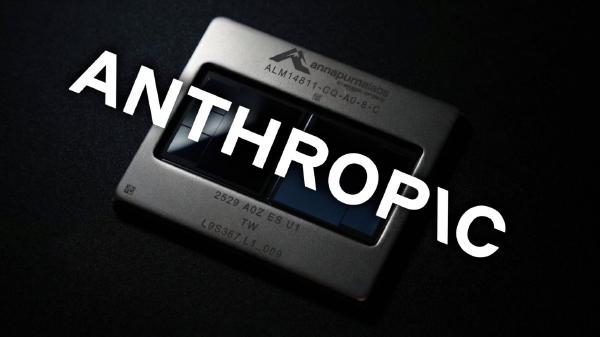
Anthropic, the team behind the Claude AI system, is reportedly in preliminary discussions with Fractile, a UK-based startup known for its innovative SRAM technology. This collaboration could lead to AI inference speeds that are 100 times faster while slashing operational costs to one-tenth of what current solutions, like those from NVIDIA, offer. As first reported by Wccftech, this potential partnership highlights the growing interest in alternative computing architectures as AI demands escalate.
Currently, Anthropic relies on chips from major suppliers such as NVIDIA, Google, and Amazon to support its AI infrastructure. This multi-vendor approach mitigates risks associated with dependence on a single chipmaker. However, as AI applications become increasingly complex and resource-intensive, the need for more efficient computing solutions has become paramount.
Fractile’s technology focuses on fusion architecture, which is designed to significantly enhance AI inference performance. The promise of 100x faster processing times could how AI models are trained and deployed, enabling more complex algorithms to run effectively and efficiently. This is particularly important as Anthropic continues to push the boundaries of AI with its Claude system, which competes with other leading AI models in the market.
The financial implications of this technology are equally compelling. By reducing costs by a factor of ten, Anthropic could drastically improve its margins while also making advanced AI capabilities more accessible. This cost efficiency would allow smaller developers and companies to leverage high-performance AI tools that were previously out of reach, potentially democratizing access to cutting-edge technology.
Anthropic has positioned itself as a key player in the AI sector, with Claude representing a significant advancement in conversational AI. The ongoing talks with Fractile suggest that Anthropic is not only looking to enhance its current offerings but also to future-proof its technology against evolving market demands.
As AI continues to integrate into various sectors,from healthcare to finance,companies must adapt rapidly to maintain a competitive edge. This potential partnership with Fractile could place Anthropic at the forefront of this technological shift, aligning its capabilities with the needs of an increasingly AI-driven landscape.
In the backdrop of these developments, the broader industry is witnessing a surge in interest around AI inference technologies. This is driven by the need for models that can process vast amounts of data with speed and efficiency, which is crucial for applications ranging from natural language processing to complex machine learning tasks.
With the stakes higher than ever, Anthropic’s exploration of Fractile’s SRAM technology represents a critical step in a fast-evolving landscape where performance and cost efficiency are vital. If successful, this collaboration might not only benefit Anthropic but could also set new standards for the AI field as a whole.
As the dialogue between these two entities continues, the potential for transformative changes in AI inference processes is on the horizon. Keeping an eye on this partnership could yield insights into the future of AI technology and its applications across various industries.
Anthropic, founded by former OpenAI employees, is focused on developing safe and beneficial AI systems. Its flagship product, Claude, competes with other AI models in an increasingly crowded market, emphasizing the importance of innovation and cost-effectiveness in driving growth and accessibility.
Image credit: Wccftech
This article was generated with AI assistance and reviewed for accuracy.