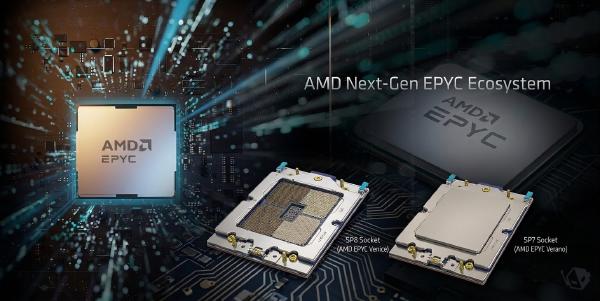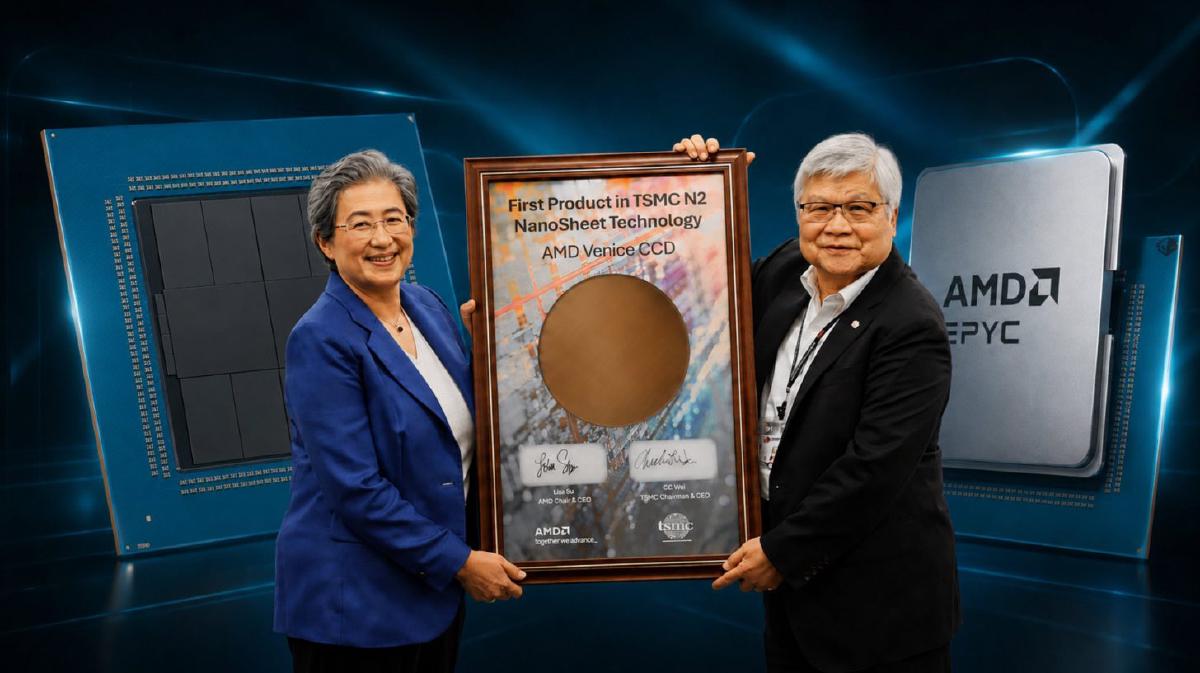
AMD has achieved a significant milestone by entering volume production of its EPYC Venice CPUs, making them the first high-performance computing (HPC) processors to be manufactured using TSMC’s cutting-edge 2nm process technology. As first reported by Wccftech, this advancement positions AMD at the forefront of the ongoing boom in agentic AI, which is driving unprecedented demand in the CPU market.
The EPYC Venice series, built on the innovative Zen 6 core architecture, has been developed to meet the increasing performance and efficiency requirements of modern computing workloads. As enterprises and developers lean into AI capabilities, the demand for high-performance CPUs has surged, and AMD’s latest offering is set to capitalize on that trend.
The transition to 2nm technology is a notable leap for AMD, which has been consistently pushing the boundaries of semiconductor manufacturing. TSMC’s 2nm process is known for its enhanced efficiency and performance compared to previous nodes, allowing for better power management and increased transistor density. This move not only bolsters AMD’s position in the HPC space but also highlights the company’s commitment to leading in advanced computing technologies.
Volume production of the EPYC Venice CPUs is expected to fulfill the skyrocketing demand for processing power in various sectors. The rise of agentic AI applications, which require robust computational capabilities, is a primary driver behind this trend. As businesses increasingly incorporate AI into their operations, the need for powerful, efficient processors becomes critical.
AMD’s EPYC line has already gained traction among data centers and cloud service providers, known for delivering exceptional performance in multitasking environments. The Venice series is anticipated to push these capabilities even further, offering improvements in workload efficiency and processing speeds. This advancement will aid not just AI-driven applications, but also a range of computationally intensive tasks across various industries.
Looking forward, AMD’s strategy seems focused on not just keeping pace with competitors, but setting the benchmark for performance in the high-performance computing market. The implications of these new CPUs extend far beyond gaming and consumer applications; they signal a broader trend towards more powerful computing resources that can handle the demands of next-generation technologies.
AMD’s ongoing partnership with TSMC has proved advantageous, allowing the company to leverage advanced manufacturing techniques like the 2nm process. This collaboration has positioned AMD to better contend with rivals in the CPU market, particularly amid the rising importance of AI and related technologies.
As the tech industry progresses, AMD is poised to play a critical role in shaping the future of computing with its EPYC Venice CPUs. These processors will not only meet the demands of today but also pave the way for innovations that are yet to come.
AMD, founded in 1969, has established itself as a leader in semiconductor technology, offering a range of products from CPUs to GPUs that cater to both consumers and enterprise needs. The company consistently focuses on innovation, ensuring it remains competitive in a rapidly evolving market.
Image credit: Wccftech
This article was generated with AI assistance and reviewed for accuracy.