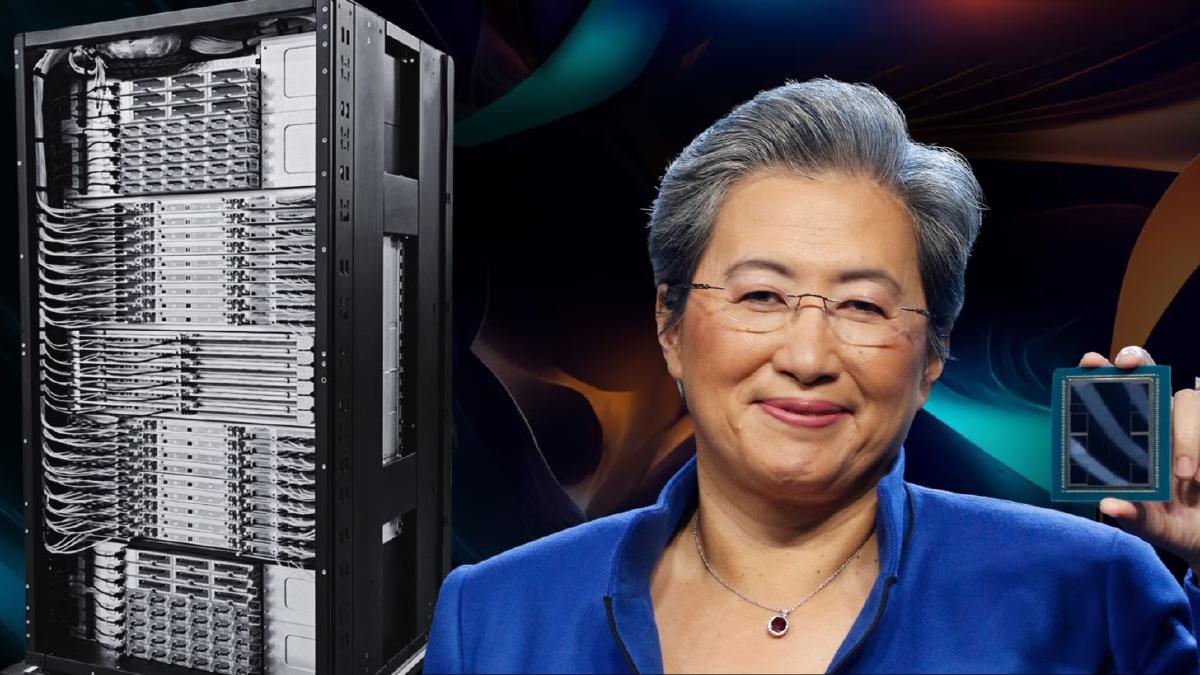
During AMD’s recent fourth-quarter earnings call, CEO Dr. Lisa Su shared insights into the company’s performance and strategic outlook, particularly in relation to the burgeoning market for artificial intelligence (AI). As first reported by Wccftech, Su aimed to quell any fears regarding potential cannibalization between AMD’s CPU and GPU segments, asserting that the rise of agentic AI workloads has been predominantly additive to the demand for accelerator technologies.
Su highlighted the increasing influence of AI on AMD’s business framework, noting that CPUs have emerged as significant players in handling the intricate computations required by AI applications. Her comments come at a time when the CPU market is experiencing heightened interest due to the expanding role of AI in various sectors, including data processing and machine learning.
In contrast, AMD’s larger rival, Intel, witnessed a notable 23% rise in its stock price following a robust earnings report that showcased a considerable profit beat. Intel CEO Lip-Bu Tan underscored the essential nature of CPUs in supporting AI workloads, further emphasizing the competitive landscape that AMD is navigating.
The discussion about potential GPU cannibalization stems from concerns that as AI applications ramp up, the demand for GPUs could overshadow CPU requirements, potentially affecting AMD’s dual-market strategy. However, Su confidently asserted that the current trends suggest a complementary relationship between the two technologies rather than a detrimental one. She stated that the demand for CPUs in AI scenarios is “largely additive,” implying that both CPUs and GPUs will continue to coexist and thrive in their respective roles.
As the AI sector gains momentum, the interplay between CPUs and GPUs will likely evolve. AMD’s focus on optimizing both lines of products positions it well to capitalize on the growth in AI applications. The company has invested significantly in enhancing its CPU architecture to handle diverse workloads more efficiently, thus preparing for the demands expected in the future.
Furthermore, Su emphasized AMD’s commitment to advancing its technology across both CPUs and GPUs, noting that they are developing solutions that cater to the increasing complexity of AI tasks. This focus on innovation and adaptability is essential in a rapidly changing tech landscape where the needs of consumers and industries are continually shifting.
AMD’s strategic response to market dynamics, particularly in the AI realm, reflects its proactive approach to maintaining competitive advantages over rivals like Intel and NVIDIA. With the AI market projected to expand significantly in the coming years, AMD’s dual focus on both CPUs and GPUs may very well be the key to sustaining growth and market relevance.
In summary, as AMD navigates through the complexities of the AI boom, the company’s leadership is resolute in its strategy to leverage both CPU and GPU technologies to meet emerging demands. The insights provided by Su during this earnings call indicate a forward-looking perspective that prioritizes innovation and adaptability in a crowded market space.
AMD, founded in 1969, has built a reputation for high-performance computing and graphics solutions. The company’s products cater to a wide array of markets, from gaming to data centers, making it a significant player in the tech industry.
Image credit: Wccftech
This article was generated with AI assistance and reviewed for accuracy.