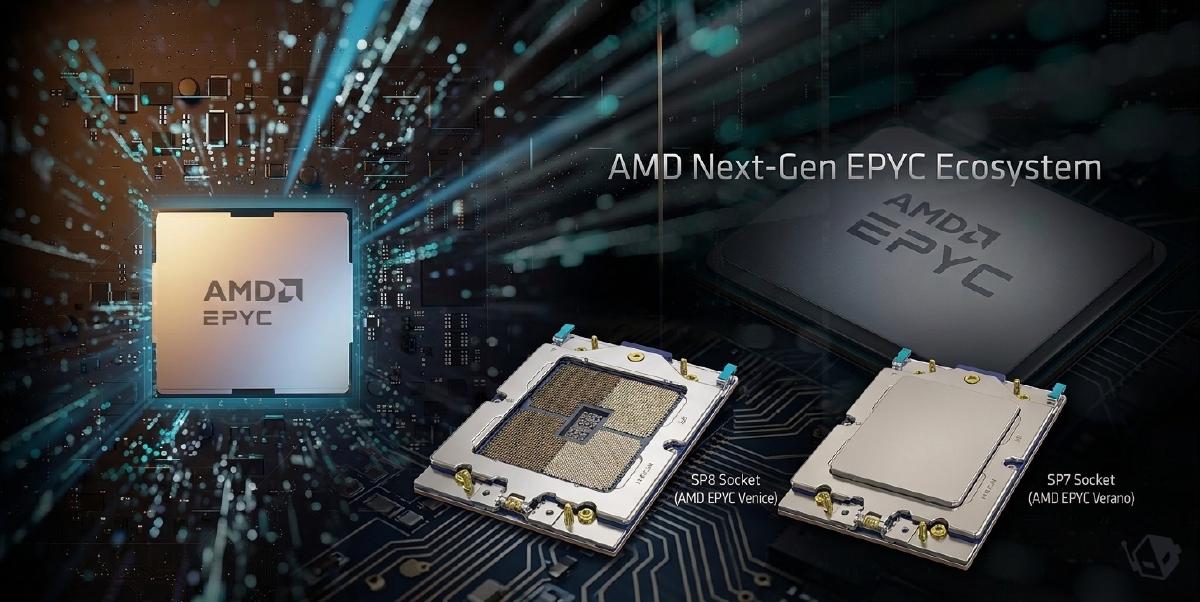
AMD is stepping up its game with the introduction of the SP8 and SP7 sockets, designed to accommodate the upcoming EPYC Venice and Verano CPUs, as first reported by Wccftech. These next-generation sockets are not just a minor upgrade; they are significantly larger than their predecessors, SP5 and SP6, marking a substantial increase in compute density that could reshape enterprise computing.
The EPYC Venice CPU is set to launch in 2026 and boasts an impressive architecture featuring up to 256 cores, built on the Zen 6 architecture. This level of power is aimed at enterprises looking for robust performance to handle demanding workloads. Meanwhile, the EPYC Verano, scheduled for release in 2027, aims to provide a more cost-effective solution while still leveraging the Zen 6 architecture.
Taiwan’s HELM Technology has provided insights into the new socket designs, which suggest a shift in how AMD is approaching high-performance computing. With these new sockets, AMD is not only preparing to enhance the capabilities of its processors but is also making a statement about its commitment to pushing the boundaries of technology.
The increased size of the SP8 and SP7 sockets is expected to facilitate better thermal management and power delivery, which are crucial for supporting the high core counts and performance demands of the next-generation CPUs. These improvements could offer users greater stability, efficiency, and scalability in data centers and enterprise environments.
As competition heats up in the CPU market, AMD’s SP8 and SP7 sockets illustrate its strategy to cater to both high-end and mid-range segments. With a clear focus on enhancing computing capabilities, AMD is ensuring that it remains a strong contender against rivals.
While AMD continues to innovate, it’s essential to consider how these advancements will impact not just large enterprises but also smaller developers and indie studios that depend on powerful computing resources for development and design. The increase in compute density could lead to more accessible options for smaller teams, helping them unlock new possibilities in game development and beyond.
Fans and industry watchers alike will be keen to see how these innovations materialize in real-world applications and what they mean for the future of enterprise-level computing. With the EPYC Venice and Verano CPUs on the horizon, AMD is clearly positioning itself to not just compete, but to lead the way in high-performance processing.
AMD is no stranger to the CPU market, having gained recognition for its innovative processors that balance performance and affordability. The company’s commitment to pushing technological boundaries has made it a favorite among tech enthusiasts and professionals alike. Keep an eye on AMD as it gears up for these exciting releases in the coming years.
Image credit: Wccftech
This article was generated with AI assistance and reviewed for accuracy.