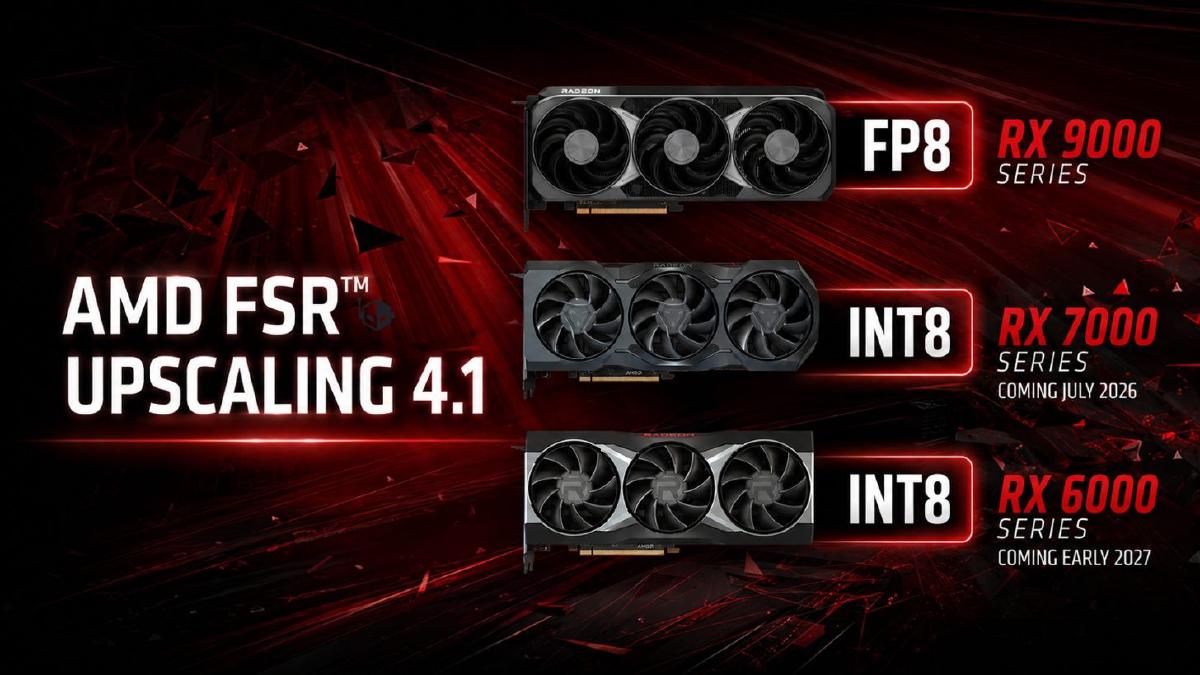
AMD has announced that its highly anticipated FidelityFX Super Resolution (FSR) 4.1 will be available for RDNA 3 GPUs starting in July. This marks a significant update for gamers eager to enhance visual fidelity without compromising performance. As first reported by Wccftech, the release will support over 300 games at launch, reinforcing AMD’s commitment to delivering high-quality gaming experiences.
The launch of FSR 4.1 comes after a period of criticism surrounding AMD’s silence on the availability of this technology for its previous-generation RDNA 2 GPUs. While AMD unveiled FSR 4.1 back in March, details about its compatibility with older hardware were scarce. This has been in stark contrast to NVIDIA, which has actively extended its Deep Learning Super Sampling (DLSS) technology to older graphics cards, leaving some AMD users feeling overlooked.
FSR 4.1 introduces several improvements over its predecessors, including better upscaling algorithms and enhanced image quality. This update is designed to provide gamers with a smoother performance while playing graphically intensive titles. The ability to upscale lower resolution images to higher resolutions without a substantial hit to frame rates is a crucial factor for many players who rely on AMD’s RDNA architecture.
Furthermore, AMD has confirmed that FSR 4.1 will also be made available for RDNA 2 GPUs, but users will have to wait until early 2027 for this feature. The extended timeline raises questions about AMD’s strategy in keeping its older hardware relevant in a fast-evolving gaming landscape. With continually pushing for advancements, the delay might impact users who are yet to upgrade to the RDNA 3 architecture.
The response from gamers has been mixed. While the excitement surrounding the July update for RDNA 3 is palpable, the wait for RDNA 2 support has led to calls for more immediate action from AMD. It’s clear that many players are eager to enjoy the enhanced graphics capabilities that FSR 4.1 promises to deliver.
Moreover, the performance benchmarks for FSR 4.1 are expected to be released closer to its launch date. These metrics will provide insights into how well the technology performs across various titles and settings, allowing gamers to make informed decisions about their hardware choices. The initial reports suggest that the new features of FSR 4.1 could significantly improve frame rates in demanding games, further enhancing the overall gaming experience.
In summary, AMD is taking a significant step forward with the upcoming release of FSR 4.1 for RDNA 3 GPUs in July, while those with RDNA 2 GPUs will have to wait until early 2027. As the competitive landscape in the graphics card market continues to evolve, how AMD handles these transitions will be critical in retaining its user base and attracting new gamers to its ecosystem.
AMD has been a key player in the graphics card industry, known for its innovative technologies and strong performance in the gaming sector. The company’s RDNA architecture has been well-received, and with continued updates like FSR 4.1, it aims to keep its users engaged and satisfied.
Image credit: Wccftech
This article was generated with AI assistance and reviewed for accuracy.