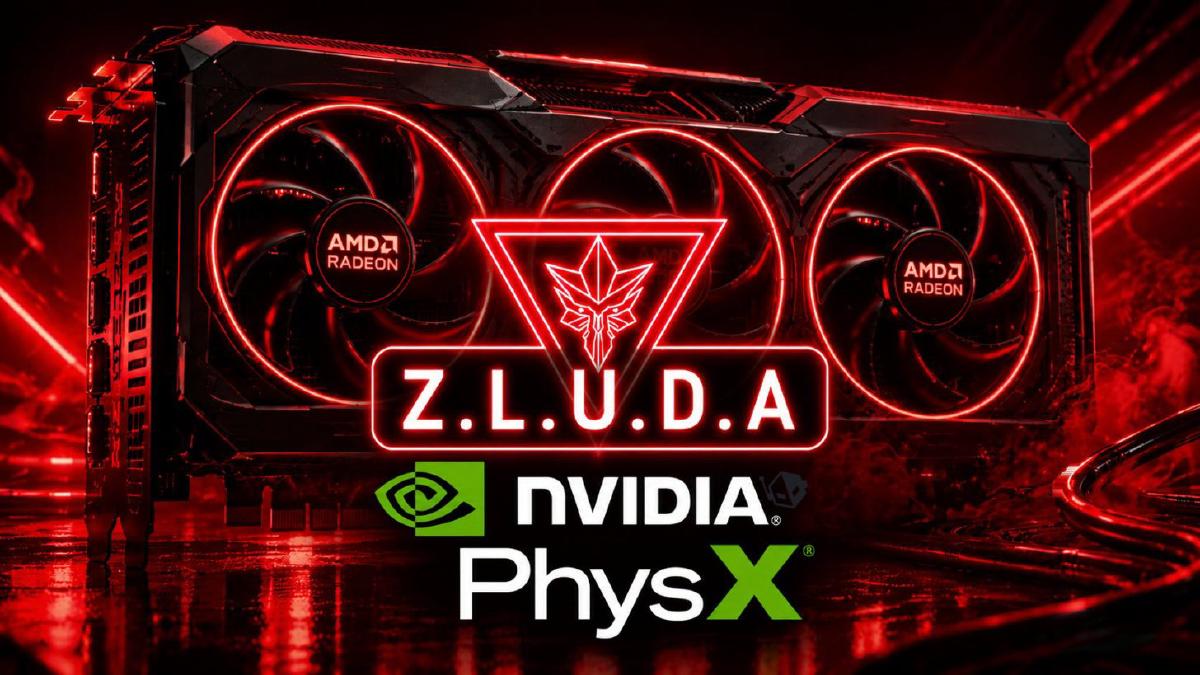
AMD Radeon GPU owners can now experience NVIDIA’s PhysX technology in their games, thanks to the latest release of ZLUDA version 6. As first reported by Wccftech, this open-source library significantly enhances performance in PhysX games on Radeon hardware, delivering up to a threefold increase in frame rates compared to previous implementations.
ZLUDA has been making waves in the graphics community by enabling non-NVIDIA GPUs to run applications that typically rely on NVIDIA’s CUDA framework. The recent iteration of ZLUDA not only brings support for PhysX but also shows the potential for expanding graphical capabilities for AMD users, who have traditionally been left out of certain proprietary technologies.
The ZLUDA team has worked diligently to refine and expand the library’s features, although they have faced challenges related to compliance with legal terms. Their efforts have borne fruit, allowing users with Radeon cards to enjoy PhysX-enabled titles without the need for a dedicated NVIDIA GPU. This could change the landscape for PC gaming, particularly for users who may have been hesitant to invest in NVIDIA’s hardware for exclusive features.
With ZLUDA v6, the performance leap is significant. Games that utilize PhysX for advanced physics simulations can now run more smoothly on AMD hardware, allowing players to take advantage of enhanced environmental interactions and more realistic visuals. This improvement is especially beneficial for action-packed titles where fluid motion and dynamic elements are crucial to gameplay.
While ZLUDA’s development has been met with some legal hurdles, its release represents a crucial step toward democratizing access to powerful graphical features. AMD users now have an alternative that allows them to experience a wider array of gaming titles, particularly those optimized for NVIDIA’s technology.
It is important to note that ZLUDA is an open-source project and, as such, depends on community contributions and support for its ongoing development. The team is currently operating without commercial backing, which poses its own set of challenges. However, the enthusiasm and engagement from the community could help propel the project further.
For gamers looking to boost their experience on AMD hardware, the ability to utilize PhysX games without an NVIDIA card makes a compelling case for the versatility of their existing setup. As developers continue to refine their titles to leverage this new capability, users can expect a richer gaming experience that was previously limited by hardware constraints.
In the broader context, this development speaks volumes about the growing interoperability between different hardware ecosystems. With the lines blurring between the capabilities of competing graphics cards, gamers may find themselves with more options than ever before, allowing them to build systems that suit their needs without sacrificing performance.
ZLUDA’s progress highlights the importance of community-driven initiatives in the tech space, particularly in gaming, where player experience is paramount. As they continue to innovate, their contributions may pave the way for a more inclusive gaming environment, where technological prowess is no longer tied exclusively to specific brands or hardware.
AMD, known for its high-performance processors and graphics cards, has been a significant player in the gaming market, especially with recent advancements in its RDNA and RDNA 2 architectures. Meanwhile, NVIDIA has long dominated the GPU market with its cutting-edge technologies, such as PhysX and ray tracing, creating a competitive landscape that drives innovation for all users.
Image credit: Wccftech
This article was generated with AI assistance and reviewed for accuracy.