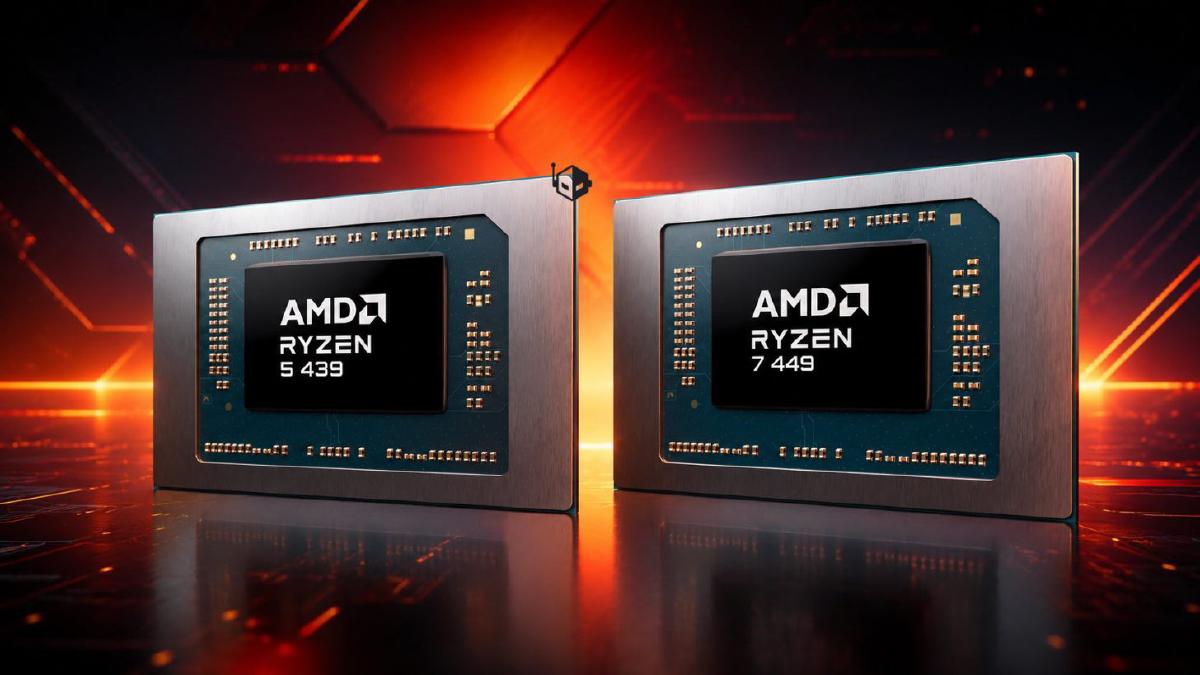
AMD has just unveiled its latest mainstream APUs, the Ryzen 7 449 and Ryzen 5 439. One of the standout features of these new processors is their omission of a Neural Processing Unit (NPU), which has become commonplace in modern chips aimed at enhancing AI capabilities. By steering clear of NPU integration, AMD has positioned these APUs as an attractive option for everyday users who may not necessarily need the added complexities that come with dedicated AI hardware, as first reported by Wccftech.
The conversation surrounding NPUs has surged recently, particularly as tech giants like Microsoft push for AI integration in personal computing. With the introduction of AI-driven tools such as Copilot+, the demand for chips capable of handling AI tasks has increased. However, AMD’s latest releases challenge the notion that NPUs are essential for mainstream users. Instead, these processors are crafted with a focus on affordability and accessibility, catering to those who prioritize value over the latest tech trends.
The Ryzen 7 449 and Ryzen 5 439 are part of AMD’s Gorgon range and are designed to offer robust performance without the added cost of an NPU. By eliminating this component, AMD is sending a clear message: not every user requires AI-driven technology, and sometimes simplicity is preferred. This could be particularly appealing for small businesses, students, or anyone looking for a reliable computing solution without breaking the bank.
As the market continues to saturate with AI-focused products, AMD’s decision to forgo NPUs in these models may resonate with consumers who feel overwhelmed by the rapid pace of technological advancement. The Ryzen 7 and Ryzen 5 series have historically been known for balancing performance and price, and this latest release is no exception.
The Ryzen 7 449 boasts impressive specifications aimed at gamers and creative professionals, while the Ryzen 5 439 is positioned as an excellent choice for casual users and efficiency-minded individuals. AMD’s strategy here seems to be a direct response to the growing divide between budget-conscious consumers and those eager to embrace the latest AI capabilities.
While competitors are racing to include AI features in their products, AMD appears to be carving out a niche that champions affordability and straightforward performance. By doing so, they may not only attract more traditional users but also those who are skeptical about the rapid push towards AI integration in personal computing.
The launch of these APUs comes at a time when consumers are carefully weighing their tech purchases, especially in a market where prices are generally on the rise. By choosing to omit the NPU, AMD is betting that consumers will appreciate a more uncomplicated product that aligns with their needs rather than the industry hype surrounding AI.
As we look ahead, it will be interesting to see how these new APUs perform in real-world scenarios and how they stack up against competitors that have leaning heavily into AI. AMD’s focus on providing high-quality, accessible computing solutions may very well resonate with a wide audience, potentially redefining what users prioritize in their next laptop or desktop upgrade.
Founded in 1969, AMD has a long history of innovation in the semiconductor industry, known for delivering high-performance computing solutions. With its Ryzen series, the company continues to push boundaries while remaining mindful of consumer needs.
Image credit: Wccftech
This article was generated with AI assistance and reviewed for accuracy.