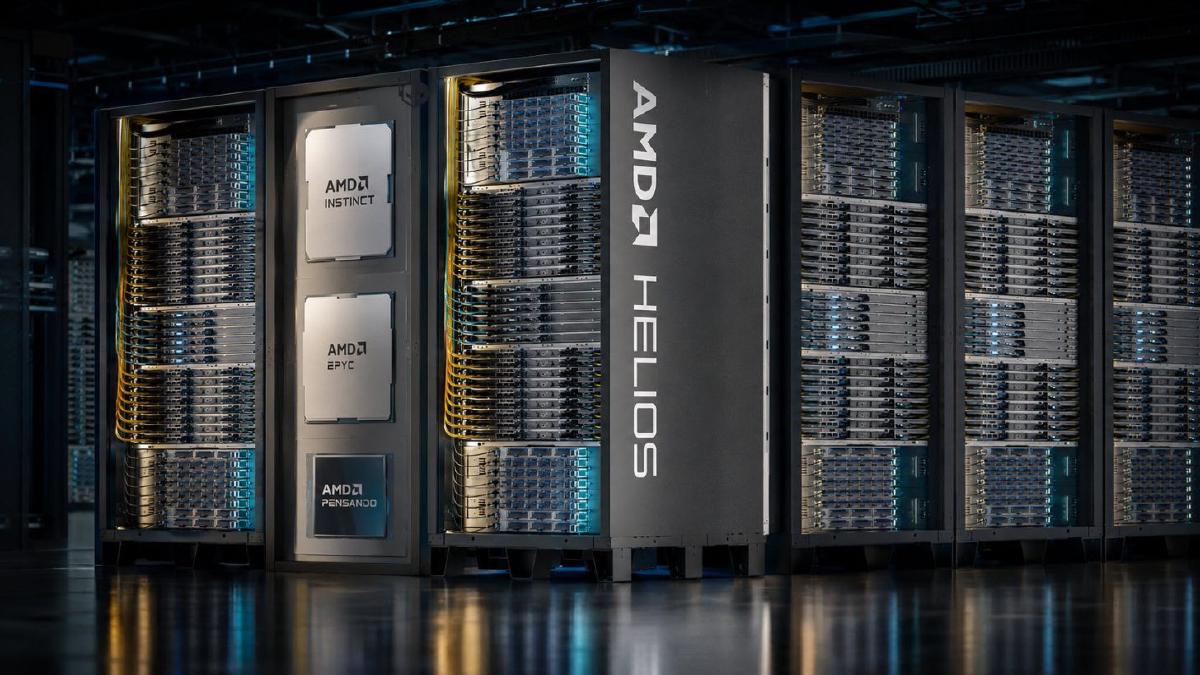
AMD has officially unveiled its Helios AI Rack, a cutting-edge solution designed to tackle the escalating demands of AI workloads. Featuring the advanced MI455X GPUs and 6th Gen EPYC CPUs, Helios is positioned as a formidable competitor to NVIDIA’s established presence in the AI infrastructure market. As first reported by Wccftech, this announcement marks a significant step for AMD as it aims to capture a larger share of the AI and sovereign computing sectors.
The Helios AI Rack is engineered to support large-scale inferences, addressing the increasing complexity and resource needs of modern AI applications. This initiative follows AMD’s initial reveal of the Helios concept during the Advancing AI 2025 conference last year, where the company showcased its vision for a robust AI computing framework.
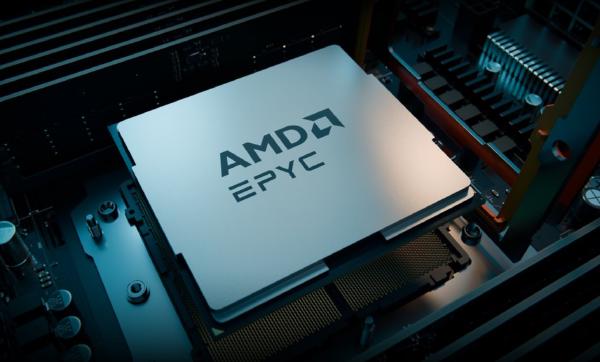
At the heart of the Helios AI Rack is the MI455X GPU, which is built specifically for high-performance AI tasks. The GPU is part of AMD’s Instinct family, designed for optimal performance under intensive workloads. Complementing this is the 6th Gen EPYC CPU, which offers substantial improvements in processing power and efficiency, ensuring that the system can handle multiple tasks simultaneously without bottlenecks.
AMD is also integrating Pensando networking chips into the Helios architecture, which are crucial for reducing latency and enhancing data throughput across the system. This combination of advanced hardware is tailored to meet the needs of organizations that require fast and efficient AI processing capabilities.
The launch of Helios is particularly timely, as enterprises are increasingly seeking out solutions that provide both performance and scalability in their AI initiatives. With AI applications becoming ubiquitous across various industries, AMD’s newest offering is expected to attract interest from businesses looking to optimize their computing environments.
AMD’s commitment to advancing AI technology is further underscored by its broader strategy to challenge NVIDIA’s long-standing dominance in the market. While NVIDIA has been a staple in AI computing with its well-established GPU technologies, AMD’s aggressive entry into this space signals a rising competitive landscape that may benefit consumers through broader choices and potentially reduced costs.
The Helios AI Rack is not just about hardware; it also represents a shift towards more comprehensive AI solutions that can adapt to the needs of diverse applications. As businesses continue to navigate the complexities of AI integration, the flexibility and power of the Helios architecture could prove advantageous.
In summary, AMD’s unveiling of the Helios AI Rack, equipped with the MI455X GPU and 6th Gen EPYC CPU, illustrates the company’s commitment to advancing AI technology and its readiness to compete head-on with NVIDIA. As organizations grapple with the demands of AI workloads, AMD’s new offering may provide the necessary tools to facilitate this transformation.
Founded in 1969, AMD has been a key player in the semiconductor industry, known for producing CPUs and GPUs that power a wide range of computing devices. Its recent focus on AI technology is aimed at strengthening its position in a rapidly evolving marketplace.
Image credit: Wccftech
This article was generated with AI assistance and reviewed for accuracy.