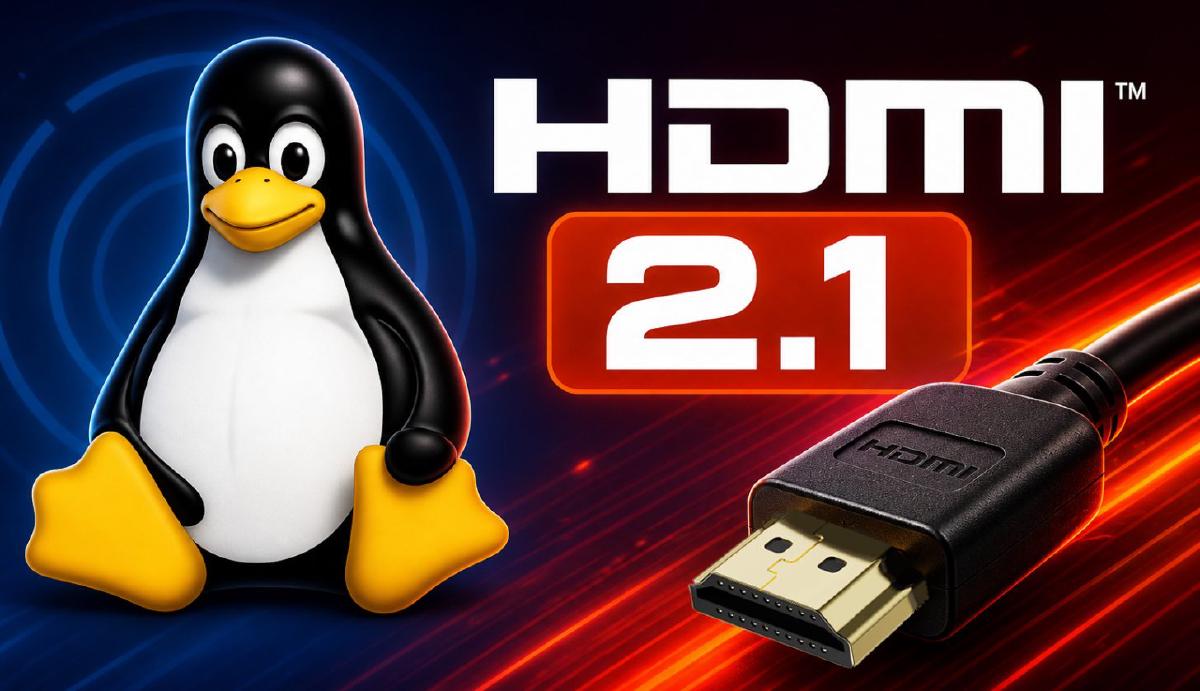
AMD has made impressive strides toward enabling open-source HDMI 2.1 support on Linux, as first reported by Wccftech. The company has submitted new patches for its AMDGPU driver, a move that many users have been eagerly awaiting for years. This development could significantly improve the gaming and media experience for Linux users relying on Radeon GPUs.
For a long time, HDMI 2.1 support has been one of the most significant barriers for AMD’s Radeon graphics cards on Linux. The HDMI Forum’s policies created restrictions that complicated the integration of this crucial feature into the Linux ecosystem. However, with these new Fixed Rate Link (FRL) patches, AMD is finally starting to remove those obstacles.
The introduction of HDMI 2.1 support paves the way for various enhancements, including higher resolutions, increased refresh rates, and advanced features like Variable Refresh Rate (VRR) and Auto Low Latency Mode (ALLM). These improvements are not just technical upgrades; they can significantly enhance the experience for gamers and media enthusiasts alike.
The timing of this announcement is particularly noteworthy, as it comes after a period of increased collaboration between AMD and Valve. The two companies have been working together to improve the gaming experience on Linux, which has historically lagged behind other platforms. This partnership seems to have played a crucial role in pushing AMD to prioritize HDMI 2.1 support, a move that could reshape the landscape for Linux gaming.
Community feedback has played an essential role in this development. Linux users have long expressed their frustrations about limited support for modern graphics standards, and the introduction of HDMI 2.1 is a direct response to those concerns. The open-source community has championed this initiative, rallying around the idea that greater compatibility and functionality should be accessible for all users.
In the wake of these patches, users can expect to see a gradual rollout of HDMI 2.1 support for AMD GPUs on Linux. Although there may be a few hurdles to navigate before it becomes fully operational, the overall outlook is promising. This development not only demonstrates AMD’s commitment to its user base but also emphasizes the importance of community-driven feedback in shaping technology.
For those who have invested in AMD hardware and prefer the Linux operating system, this is a moment worth celebrating. HDMI 2.1 support could elevate the gaming experience to new heights, allowing players to enjoy everything from higher frame rates to stunning 4K visuals without compromise.
AMD’s pioneering efforts in the realm of open-source software and hardware support have not gone unnoticed. As the tech landscape continues to evolve, it’s crucial for developers to listen to user needs and adapt accordingly. This latest milestone is a testament to that ethos, and it opens the door for further advancements in GPU support on Linux.
As users await the full implementation of HDMI 2.1, the community remains hopeful that this is just the beginning of a more integrated and responsive relationship between hardware manufacturers and the open-source world.
AMD has been a key player in the PC gaming space, known for its innovative graphics solutions and commitment to pushing the boundaries of gaming technology. With the introduction of HDMI 2.1 support, the company is solidifying its role as a champion for the Linux gaming community.
Image credit: Wccftech
This article was generated with AI assistance and reviewed for accuracy.