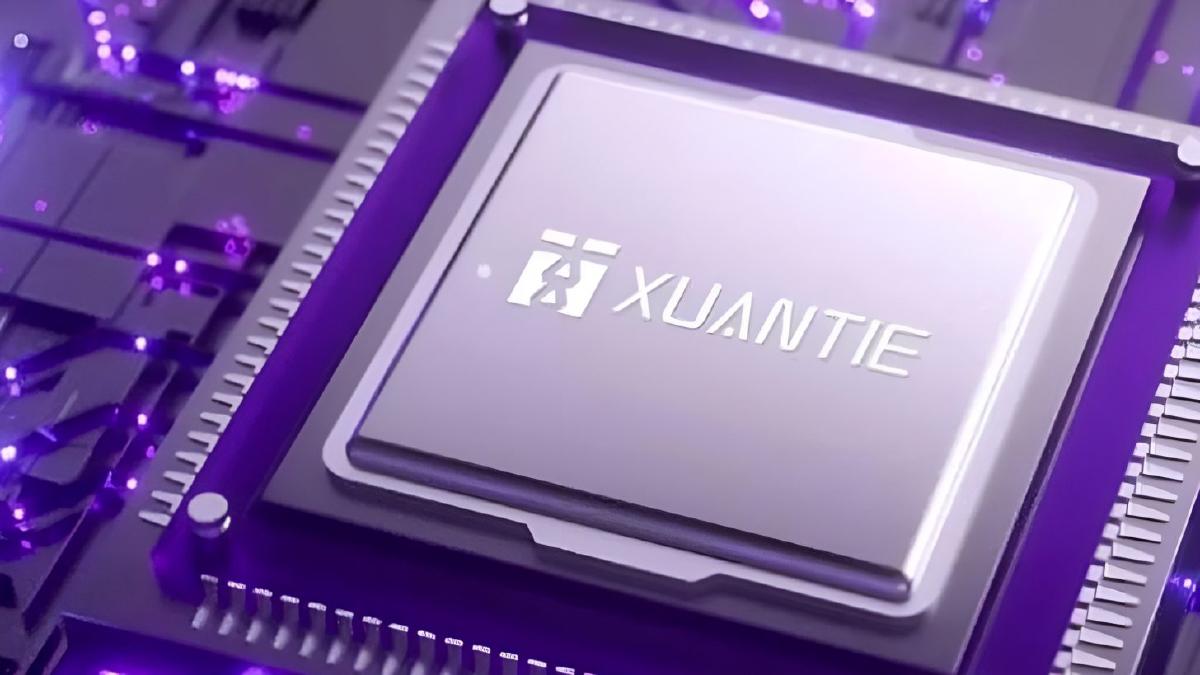
Alibaba has announced that its XuanTie C950 chip can now run the Qwen-3.8 27B AI model natively, marking a significant milestone in the company’s efforts to establish itself in the AI landscape. This development, as first reported by Wccftech, showcases Alibaba’s strategy to emulate NVIDIA’s successful vertical integration model, enabling the company to leverage its proprietary technology to gain a competitive edge.
The XuanTie C950 chip, introduced in March 2026, is built using a 5nm process technology and is optimized for edge AI applications. Unlike traditional application-specific integrated circuits (ASICs), the XuanTie C950 does not rely on graphics processing units (GPUs) for AI tasks. This distinction allows Alibaba to streamline operations, providing both cost efficiency and performance advantages in deploying AI models.
Alibaba’s Qwen-3.8 model stands out for its capabilities, requiring only 32GB of VRAM to operate effectively. By enabling this AI model to run natively on the XuanTie C950, Alibaba is setting the stage for significant advancements in AI deployment within its ecosystem. This integration not only enhances the chip’s utility but also positions Alibaba to capitalize on the growing demand for efficient and powerful AI solutions.
The move toward vertical integration is not without precedent. NVIDIA successfully executed a similar strategy, controlling both hardware and software development to optimize performance across its platforms. By adopting this approach, Alibaba aims to carve a substantial moat within the highly competitive AI market, allowing it to retain more of the value associated with its innovations.
The XuanTie C950’s architecture highlights Alibaba’s commitment to developing in-house solutions that address the specific needs of its AI applications. This strategy could mitigate dependence on external suppliers, ensuring more control over the hardware and software interplay essential for high-performance AI tasks.
As Alibaba expands its AI capabilities, the implications for the tech landscape could be profound. The company’s advancements could influence trends in AI chip design, particularly in the areas of efficiency, performance, and cost-effectiveness. Other technology firms may need to adapt their strategies to keep pace with Alibaba’s developments, particularly in regions where edge AI is becoming increasingly integral to operations.
Looking ahead, Alibaba’s successful integration of the Qwen-3.8 model with the XuanTie C950 opens the door for potential improvements in various applications, from cloud computing to IoT devices. The ability to process complex AI tasks on dedicated hardware could lead to faster response times and lower latency, making Alibaba’s offerings more appealing across a range of verticals.
With this recent advancement, Alibaba is not just making strides in the AI realm but is also reinforcing its position as a formidable player in the semiconductor industry. As the demand for AI capabilities continues to surge, the XuanTie C950 could serve as a crucial asset in Alibaba’s ongoing quest for innovation and market leadership.
Alibaba Group is a multinational conglomerate specializing in e-commerce, technology, and AI solutions. The company has made significant investments in developing its AI capabilities, positioning itself as a leading player in the digital economy.
Image credit: Wccftech
This article was generated with AI assistance and reviewed for accuracy.