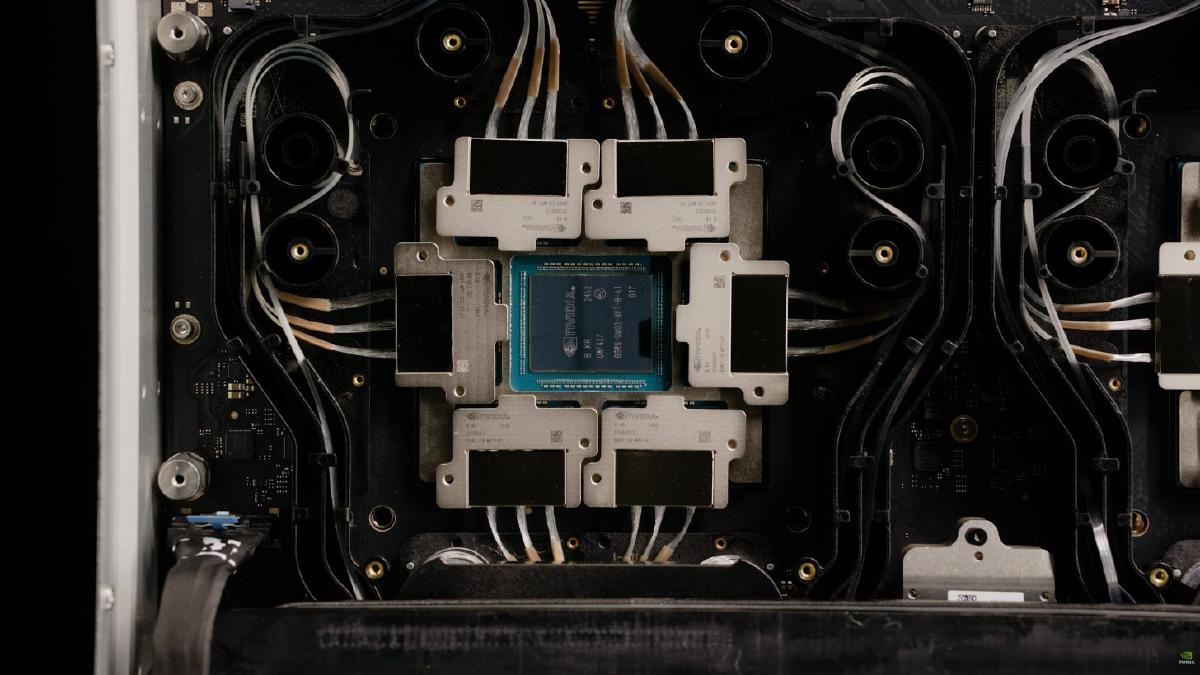
NVIDIA is set to change the landscape of AI hardware with its Feynman GPUs, which will be the first to incorporate Co-Packaged Optics (CPO) technology. This milestone arrives five years ahead of the previously established timeline, showcasing NVIDIA’s agility and innovation in the tech sphere. As first reported by Wccftech, the sudden shift in direction is a testament to NVIDIA’s commitment to pushing boundaries in AI performance and interconnectivity.
Co-Packaged Optics, also known as silicon photonics, is designed to reduce dependence on traditional copper connections by utilizing light for signal transmission. This advancement aims to enhance the efficiency of data transfers between hardware components, specifically between CPUs and GPUs. The integration of this technology allows for faster interconnect latencies, which is critical in building next-generation AI infrastructures.
Originally, the development of CPO was projected to take several more years. However, NVIDIA’s transition to an accelerated timeline reflects a growing need for high-bandwidth connections in AI factories, where performance can be a deciding factor. By packaging CPOs alongside their powerful GPUs, NVIDIA is not just optimizing performance; they are setting a new standard for hardware interconnectivity.
The Feynman GPUs promise to deliver substantial improvements in data processing speeds, essential for the increasing demands of AI and machine learning applications. With the ability to handle massive datasets more efficiently than ever before, these GPUs are likely to play a significant role in the next wave of technological advancement.
NVIDIA’s proactive approach in adopting Co-Packaged Optics illustrates the company’s strategic vision in the competitive AI market. As artificial intelligence continues to evolve, the demand for advanced hardware solutions is becoming more pronounced, and NVIDIA seems poised to stay at the forefront of this evolution.
The gaming industry, particularly in the context of Japanese developers who often explore the capabilities of AI in gaming, could greatly benefit from these innovations. As studios adopt more sophisticated AI tools to enhance gameplay experiences, NVIDIA’s Feynman GPUs could become a pivotal resource in developing next-gen titles.
NVIDIA is not a newcomer to the world of innovative technology. With a legacy of pushing graphics capabilities to new heights, the company has consistently been a leader in the GPU space. The Feynman GPUs and their integration of Co-Packaged Optics suggest that NVIDIA is ready to redefine what is possible, not just in gaming, but in various fields that harness AI technology.
As the industry looks toward the future, NVIDIA’s advancements serve as a reminder of the rapid pace at which technology can evolve, especially when spurred by the demands of AI development. The release of the Feynman GPUs will likely spark conversations and considerations about the next steps in hardware innovation, influencing both gaming design and AI applications down the line.
Image credit: Wccftech
This article was generated with AI assistance and reviewed for accuracy.