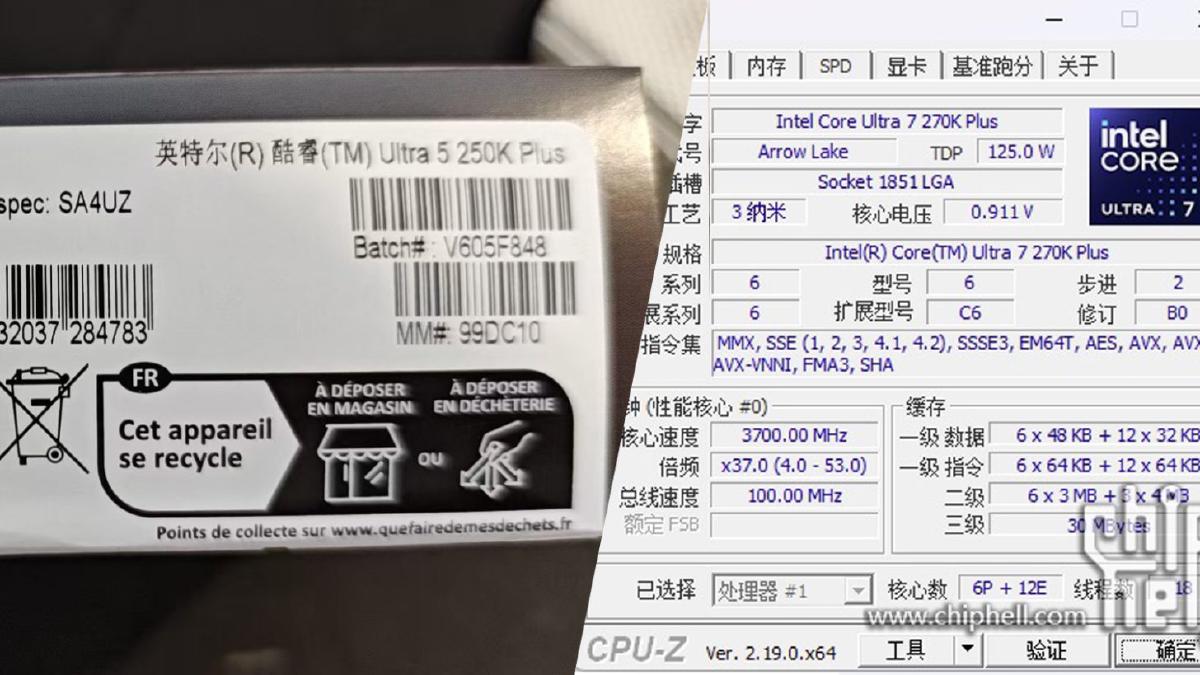
In a peculiar case of hardware misidentification, a user reported that their newly acquired Intel Core Ultra 5 250K Plus was detected as the more powerful Core Ultra 7 270K Plus across multiple platforms. This odd situation unfolded after the user switched motherboards from Colorful to GIGABYTE, as first reported by Wccftech.
The user, who shared their experience on the Chiphell forum, indicated that they were excited about upgrading to the Ultra 5 250K Plus, which offers a boost in core count over its predecessor, the Ultra 245K. However, after swapping the hardware, they were surprised to find that both CPU-Z and Windows were identifying their CPU as the Ultra 7 270K Plus. The confusion was compounded by the 18-core configuration that was visible in the system information.
This case highlights a potential issue with the way hardware identifiers interact with new Intel processors, particularly the Arrow Lake Refresh series. As more consumers begin to adopt these CPUs, the importance of accurate hardware detection becomes critical for optimal performance and user experience. Misidentifying a CPU can lead to concerns about compatibility, performance benchmarks, and even warranty issues.
The Intel Core Ultra 5 250K Plus is positioned within the mainstream segment of Intel’s new lineup, boasting improvements in both performance and efficiency. It is designed to cater to gamers and content creators alike, offering a balanced solution at a competitive price point. The Ultra 7 270K Plus, on the other hand, is a higher-tier model aimed at enthusiasts who demand peak performance for intensive workloads.
For gamers in Japan and around the world, the reliability of hardware detection software is crucial. As continues to evolve with increasingly complex systems and configurations, any inaccuracies could lead to substantial inconvenience. This incident serves as a reminder of the importance of thorough testing and accurate reporting in the world of PC gaming.
As the situation unfolds, Intel may need to examine whether specific BIOS updates or software patches are necessary to align hardware identification processes with actual CPU specifications. For now, users are encouraged to verify their system components directly, rather than relying solely on software identifiers that may yield misleading information.
This instance not only underscores the potential pitfalls of cutting-edge technology but also reflects the broader challenges faced by consumers in navigating the rapidly changing landscape of PC hardware. As developers and manufacturers continue to innovate, ensuring seamless compatibility and accurate identification will remain a priority for both gamers and tech enthusiasts.
Image credit: Wccftech
This article was generated with AI assistance and reviewed for accuracy.