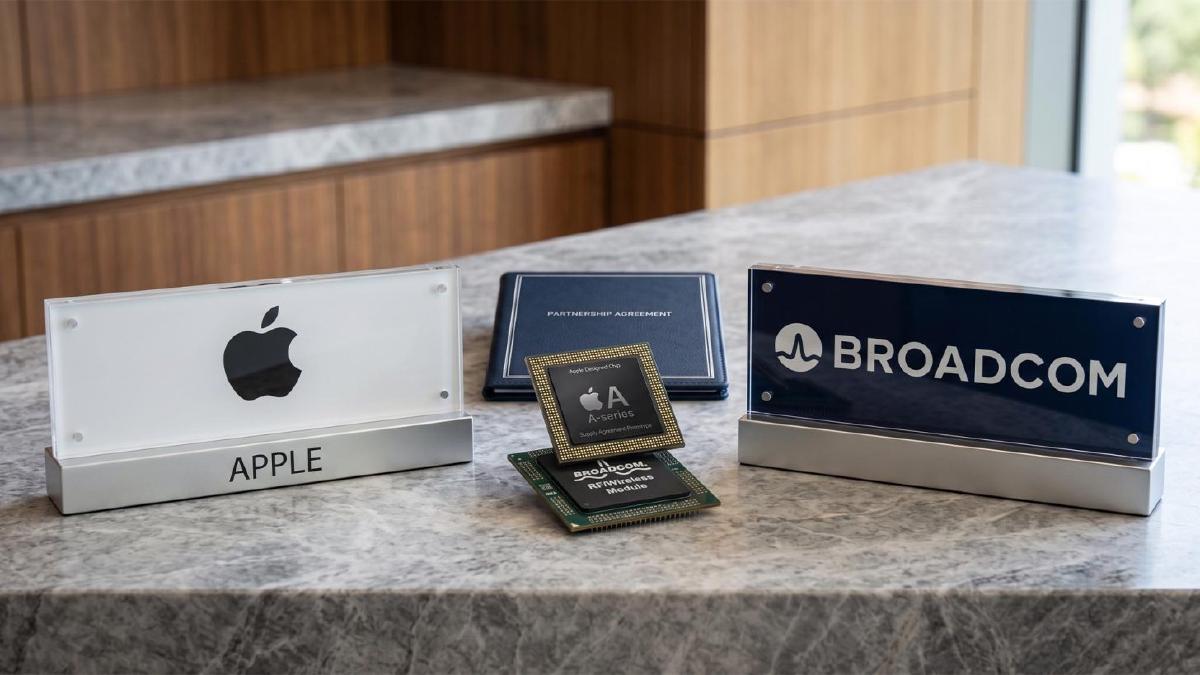
Broadcom has entered into a significant multi-year agreement with Apple, ensuring a stable supply of chips through 2031. This partnership is a strategic move for both companies, enabling them to meet their goals while mitigating the risk of external market pressures. As first reported by Wccftech, this collaboration underscores the critical role that Broadcom plays in Apple’s supply chain, given that approximately 20 percent of Broadcom’s annual revenue is derived from its dealings with Apple.
The new deal comes at a time when Apple is diversifying its supply chain to reduce reliance on competitors, notably Qualcomm. By developing its own custom 5G modems, such as the C1 and C1X, Apple aims to enhance its product offerings and maintain better control over its technology. However, these baseband chips still require various wireless and RF components to facilitate cellular, Wi-Fi, and Bluetooth connectivity, areas where Broadcom excels.
For Broadcom, this agreement is not just a lifeline but a strategic necessity. The company’s financial health is closely tied to its partnership with Apple, making this deal crucial for sustaining its operations and innovation. Analysts suggest that Broadcom’s decision to move away from Qualcomm is a calculated risk, allowing it to carve out a more prominent place in the competitive chip manufacturing landscape. This shift could lead to increased market share in the 5G space, potentially enhancing Broadcom’s long-term profitability.
Apple’s decision to engage with Broadcom rather than Qualcomm also reflects its broader strategy of vertical integration. By bringing more technology in-house and developing proprietary components, Apple can better optimize performance and reduce costs associated with third-party suppliers. This strategy has been evident in Apple’s transition to custom silicon, culminating in its successful M1 and M2 chip series.
The partnership between Broadcom and Apple extends beyond just chip supply; it signifies a deeper collaboration that may lead to innovation in wireless technology. As both companies navigate the rapidly evolving landscape of tech and telecommunications, their alliance could foster advancements that benefit consumers through improved device performance and connectivity.
As the tech industry continues to mature, this agreement highlights the importance of strategic partnerships in maintaining competitive advantage. With growing competition in the semiconductor space and increasing consumer demand for faster and more reliable connectivity, stable relationships between chipmakers and device manufacturers are essential.
In summary, the Broadcom-Apple collaboration demonstrates how companies can mutually benefit while adapting to market challenges. With a guaranteed chip supply until 2031, both companies are well-positioned to continue pushing the boundaries of technology in the coming years.
Broadcom, based in San Jose, California, is a leading global technology company that designs, develops, and supplies a broad range of semiconductor and infrastructure software solutions. Apple Inc. is a multinational technology company known for its innovative products, including the iPhone, iPad, and Mac computers.
Image credit: Wccftech
This article was generated with AI assistance and reviewed for accuracy.